 English

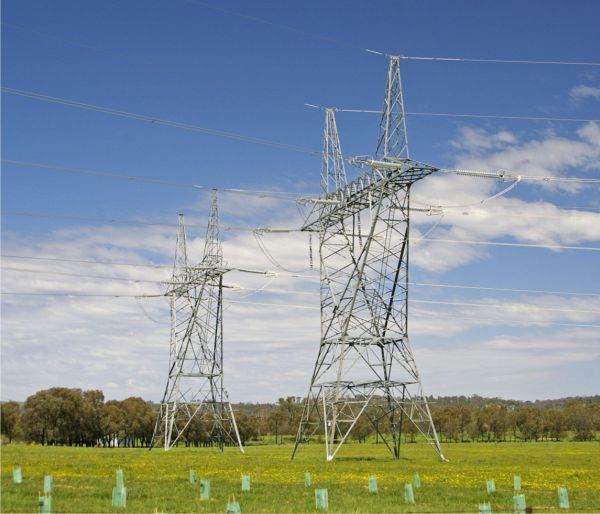
The current energy crisis is having a negative impact on the budgets of small and medium-sized enterprises in our country, said representatives of SME Romania, during a press conference they held yesterday at the headquarters of the employers' confederation. They warn that SMEs risk facing a consistent increase in energy prices in the winter, which will overlap with an increase in consumption, without benefiting from dedicated support mechanisms.
According to representatives of SME Romania, in the coming months many supply contracts signed last summer will expire, and new offers from energy suppliers will incorporate the high costs in the market. For small companies, energy is currently traded at approximately 0.85-1.00 lei/kWh, while the total cost on the bill can reach 1.40-1.80 lei/kWh, excluding VAT.
Energy expert Felix Căprariu, president of the Bucharest-Ilfov SME Association, warned that the new purchase costs will be transferred to consumers and that SMEs do not have a safety net comparable to the measures intended for vulnerable consumers.
"We are still in a period of energy crisis. The solutions adopted by the Government impact the cost of energy and do not present ideal solutions for price readjustment, which denotes the lack of a clear strategy. Romania imports impressive amounts of energy: we export cheaply during peak consumption and import expensively when we need it. We have a cost of 80 bani - 1 leu per kWh. When we invoice ourselves, as Romanian suppliers, we will see an increase of at least 20-25% per purchase, which will be reflected in the consumer's bill. We do not have a strategy to protect the SME sector,” said Felix Căprariu.
According to him, in the cold season the pressure will be amplified by the increase in consumption. In the scenarios presented by SME Romania, a small company could end up paying a final price of 1.65-2.15 lei/kWh in the winter of 2026-2027, excluding VAT, given that contract renewal could bring a 15-20% price increase.
"We estimate that energy consumption in winter will double compared to summer. Renewable energy without storage capacity is not an ideal solution. We propose to the Ministry a working group for solutions dedicated to SMEs. We need an energy efficiency program separate from large companies, because the financial capacity is totally different. Energy is not a luxury, it is a necessity," Felix Căprariu also said.
He specified that small and medium-sized entrepreneurs need a support scheme for the purchase of batteries for storing electricity, a scheme that would be a continuation of the support provided through Electric Up.
"The financing for Electric Up did not come from the state budget, but from the CO2 quota that we also pay. It was not a negative impact on the budget, but a return of money to the economic environment. We have the Environmental Fund and the Modernization Fund. We must not confuse expenses with investments; the latter bring money to the budget in the long term", said Felix Căprariu.
• Reduction in excise duty on diesel, quickly canceled by price increases
The issue of energy costs for companies was complemented by the situation with fuels. Beniamin Lucescu, president of the Federation of Romanian Transport Operators (FORT), argued that the excise duty reduction applied by the Government was not fully reflected in the price of diesel and claimed a legislative loophole that excludes refining and the first sale from the capping of the commercial mark-up.
"A miracle among Romanians lasts three days; this time it lasted only one day. On Sunday we had a 68 bani reduction on excise duty, and on Monday the largest distributor increased the price of diesel by 15 bani. Two other large distributors did the same today. The law is intentionally made wrong so that the capping of the commercial markup cannot be controlled. Law 162/2026 does not cap the markup, so distributors can raise the price as much as they want," said the president of the Federation of Romanian Transport Operators.
Therefore, the transporters are asking Parliament to amend the legislation and introduce an effective mechanism to control the markup. They have notified the Competition Council and are waiting for the report announced for the end of the month, which should clarify the price structure and the evolution of distributors' margins.
"When the barrel was 100 dollars, diesel was 9.2-9.3 lei. Today, with the barrel at 85 dollars and the excise duty low, we have diesel at 10.20-10.30 lei. All neighboring countries have prices below ours. Transporters no longer supply in Romania, so the state budget is losing revenue. We are waiting for the Competition Council's report at the end of the month, to see if there was an agreement between distributors to keep the price high," said Beniamin Lucescu, who added: "There is a loophole intentionally left in the law: the article says that refining activities and the first sale of products resulting from the processing and oil, as well as import and first sale of imported petroleum products, are not subject to the capping of the surcharge. The Minister of Finance told us that they cannot lower the excise tax without a control on the addition, but the current law does not provide us with this control instrument”.
Therefore, in the current context of the energy crisis, IMM Romania demands the launch, in the next two months, of an energy efficiency program strictly intended for small and medium-sized companies, the unblocking of Electric Up and support for batteries, as well as a public calendar of funding calls. The employers' confederation also demands faster connections for companies that produce energy for their own consumption and ANRE rules published in time, so that investments already made are not affected by unpredictable changes. Entrepreneurs' representatives also argue that, in the long term, the future Energy Strategy should include a separate chapter for SMEs, with clear targets regarding self-consumption, storage and energy efficiency, especially for the period 2027-2030, when the Cernavodă reactor 1 will be shut down for maintenance and modernization.












 Euro
Euro Dolar SUA
 Franc elveţian
 Liră sterlină
 Gram de aur





























