 English

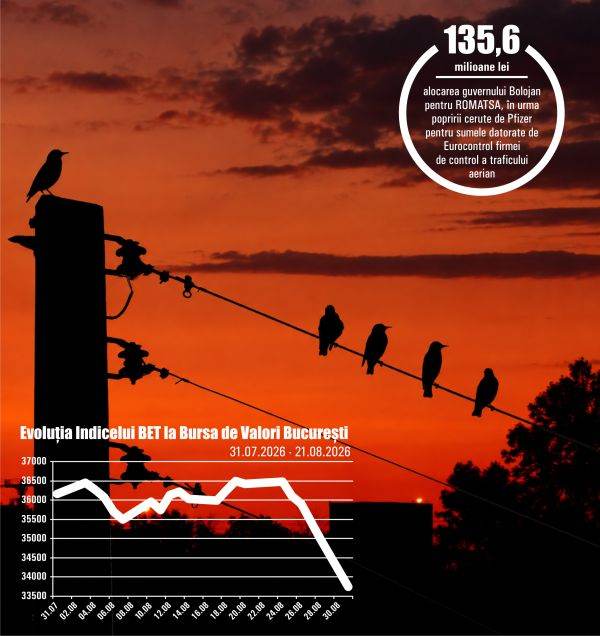
August found Romania in a situation that, just a few months before, state institutions would have presented as improbable: without a fully-fledged Government, with two nuclear reactors temporarily out of production due to the lowest flow of the Danube in the history of measurements, with drones repeatedly entering national airspace or approaching strategic energy infrastructure in the Black Sea, with a public debt exceeding the legal threshold of 60% of GDP and with an open conflict between the Government and the High Court of Cassation and Justice, with approximately 5 billion lei at stake. On top of all this, the August 31 deadline for closing the PNRR turned the last summer month into a race against time to save billions of euros in investments and reforms.
On August 31, Romania had reached 118 days of interim government. The cabinet led by Ilie Bolojan, dismissed by the motion of censure on May 5, continued to administer the country with limited powers, while President Nicuşor Dan and the parliamentary parties failed to form a majority to invest a new Executive. The political deadlock did not prevent the state from facing situations that required quick decisions and coordination at the highest level. The Danube dropped to 1,300 cubic meters per second at Baziaş, although technical documentation previously considered a flow of 2,000 cubic meters per second as the worst-case scenario. The average for August is approximately 3,900 cubic meters per second, and the annual average reaches 5,500 cubic meters per second. Romania has therefore entered a hydrological territory for which the models, infrastructure and procedures had not been designed.
At the same time, the military threat on the eastern border ceased to be a succession of isolated incidents. Two Gerbera drones were found drifting near the strategic Neptun Deep project and destroyed under control by military divers, one drone crashed near Luncaviţa, another was shot down by a Spanish F-18 aircraft on a NATO mission, and on August 20, a new drone crossed the airspace in the Galaţi area and crashed in an uninhabited area in Tulcea County. The series was completed by new RO-Alert alerts transmitted to the population of Tulcea County. Romania was not formally at war, but the war repeatedly penetrated its air and maritime space.
The only favorable macroeconomic picture came from budget execution. The deficit in seven months was reduced to 48.08 billion lei, or 2.34% of GDP, compared to 76.44 billion lei and 3.99% of GDP in the same period in 2025. The correction of 28.36 billion lei allowed Fitch and Moody's to keep Romania in the investment-grade category. However, both agencies maintained their negative outlook, public debt exceeded 60% of GDP, foreign direct investment collapsed, and the interest bill exceeded 40 billion lei in just seven months.
• Drought shuts down both reactors at Cernavoda
The energy crisis that began at the end of July worsened dramatically in August. After the shutdown of Unit 1, the continuous drop in the Danube level led to the shutdown, on August 13, of Unit 2 at Cernavoda. Romania thus lost all nuclear production at Cernavoda, the two reactors providing under normal conditions almost 20% of the electricity produced at the national level.
The government tried to cover the deficit through photovoltaic and wind production, through additional water treatment by Hidroelectrica, by restarting a reserve group at Rovinari and through imports. Prime Minister Ilie Bolojan argued that the National Electroenergetic System could operate without interruptions, but asked the population and companies to voluntarily reduce consumption in the evening hours, when solar production disappears and the need for imports increases.
Data from August 4 showed that the appeal had a measurable effect: although national consumption had been estimated at almost 7,500 MW, between 20:00 and 22:00 it remained between 7,200 and 7,250 MW. The difference of 250-300 MW was equivalent to a significant part of the output of a nuclear reactor and reduced the pressure on imports.
On August 6, the Government approved the Electricity Risk Preparedness Plan, which analyzes nine scenarios: cyberattack, cold wave, extreme winter weather phenomena, fossil fuel crisis, strikes and riots, pandemic, drought, earthquake and military conflict. The document establishes the sequence of interventions, from loading available groups and requesting emergency energy from neighboring states to reducing exports and, as a last resort, limiting consumption for large industrial consumers included in the regulation. Population, hospitals, emergency services and essential infrastructures were exempted.
To maintain the water at the cooling inlet, the Government first allocated 7 million lei for the placement of barges and then another 5.1 million lei for the dredging of 50,000 cubic meters of material at the Cochirleni and Caragheorghe-Turcescu points. The machines worked 24 hours a day, and near the Cernavodă bridge, barges were placed along a length of approximately 200 meters, perpendicular to the bank, to divert the current to the navigable channel, the Danube-Black Sea Canal and the plant inlet.
On August 21, the National Emergency Committee approved new measures: continuing dredging, building a stone embankment, using military divers and topobathymetric measurements, mobilizing high-capacity pumps, and releasing an additional 50 cubic meters of water per second from the Olt reservoirs for five days. For the extreme scenario, Nuclearelectrica prepared a closed-circuit cooling system with demineralized water from wells and reserves transported by road, rail, or special trucks. At the end of the month, the flow at Baziaş was around 1,300 cubic meters per second, representing a third of the average for August and less than a quarter of the annual average. Of the water that reached the Bala bifurcation, approximately 85% flowed towards the Bala branch and only 15% towards the Old Danube and Cernavodă. The authorities have acknowledged that, at such levels, the river's hydraulics become difficult to predict and that the works can create the conditions for directing the water, but cannot guarantee the result.
• Bala 2 project reappears after eight years of waiting
The energy crisis has put the Bala 2 project back on the Government's agenda, the feasibility study of which was completed about eight years ago, and the technical and economic indicators had been approved as early as 2024. The project aims to increase the flow on the Old Danube towards Cernavodă, so that both reactors 1 and 2, as well as the future units 3 and 4, can be cooled.
Interim Prime Minister Ilie Bolojan estimated the financing needs at 150-200 million euros and announced that the money will have to be secured from the state budget. Without this investment, the billion-euro projects for reactors 3 and 4 do not have the basic guarantee of a cooling source. An inter-ministerial committee was tasked with verifying the technical data, riverbed changes, climate projections and the efficiency of the solutions in the feasibility study. The political conclusion of the energy crisis was severe: Romania had invested in photovoltaic and wind production capacities, but had neglected storage, on-grid production and the hydrotechnical infrastructure on which nuclear energy depends.
At the end of August, only a third of the approximately 350,000 prosumers had storage capacities. The government announced two battery financing programs, one of 80 million euros through the Environmental Fund Administration and a second, of approximately 160 million euros, through the Modernization Fund. Hidroelectrica was to install approximately 1,500 MW of storage capacities by 2027-2028 through the hybridization of hydropower plants.
• Deficit falls by 37%, but interest exceeds 40 billion lei
The seven-month budget execution, presented by the Ministry of Finance on August 31, offered the Government its most solid defense before the rating agencies. The deficit of the general consolidated budget was reduced to 48.08 billion lei, respectively 2.34% of GDP, from 76.44 billion lei and 3.99% of GDP in the same period in 2025. The nominal adjustment was 28.36 billion lei, i.e. 37%.
Total revenues increased by 11.2%, to 412.31 billion lei, while expenditures advanced by only 2.9%, to 460.39 billion lei. Tax revenues rose by 15.4%, to 214.32 billion lei, and net VAT receipts increased by 26.5%, to 88.55 billion lei. Funds reimbursed by the European Union reached 37.28 billion lei, 30.3% above the 2025 level.
Personnel expenses decreased by 4.1%, to 95.67 billion lei, and their share in total public expenditures dropped from 22.3% to 20.8%. Investments, on the other hand, increased by approximately 24%, to 76.51 billion lei. Over 71% of investments were supported by European funds and the PNRR, with payments on these axes increasing by over 60%.
However, underlining the favorable picture is the cost of debt. Interest expenses reached 40.12 billion lei, 26.5% more than in the first seven months of 2025. The state thus paid for interest almost the entire accumulated deficit and more than it collected from the tax on salaries and income, which totaled 38.34 billion lei.
• Public debt exceeds 60% of GDP
On August 19, the Ministry of Finance informed the Government that public debt, calculated according to the European methodology, had reached 60.1% of GDP at the end of the first quarter. Exceeding the 60% threshold active the mechanisms provided for in the Fiscal Responsibility Law, including maintaining the debt reduction program and freezing wage and social assistance expenditures, are also in place.
The threshold also has a European significance. For states with debt above 60% of GDP or a deficit above 3%, the European Commission establishes a reference trajectory for net expenditures. Romania must demonstrate that it can put the debt on a downward trajectory and that it can bring the deficit back below 3% of GDP.
Even under these conditions, based on budget execution, Fitch maintained the "BBB-” rating, and Moody's maintained the "Baa3” rating, both with a negative outlook. Fitch estimated a deficit of 5.9% of GDP in 2026, and Moody's a deficit of 5.8%. Both agencies, however, pointed to the same central risk: political instability could block fiscal adjustment after 2026. Public debt is estimated to reach 64.5% of GDP in 2028, and Moody's anticipates that interest alone could represent 3.3% of GDP.
• BNR keeps interest rate at 6.50%, while foreign investment collapses
On August 10, the National Bank of Romania maintained the monetary policy rate at 6.50%, the lending facility at 7.50% and the deposit facility at 5.50%. Annual inflation had fallen in June to 10.42%, from 10.85% in May, but adjusted CORE2 core inflation had risen to 8.3%.
The BNR reconfirmed the stagnation of the economy in the first quarter and the annual contraction of 1.2%. Industrial production has declined further, household consumption has remained weak, and the demand deficit is set to widen under the impact of fiscal consolidation and the energy crisis.
According to the NBR minutes of the August 10 decision, external imbalances have worsened. The current account deficit reached EUR 14.202 billion in the first half of the year, compared to EUR 13.555 billion in the same period in 2025. Direct investments by non-residents have fallen dramatically, from EUR 3.719 billion to just EUR 669 million. Total external debt has increased by EUR 4.309 billion, to EUR 232.772 billion.
As of August 31, the NBR's foreign exchange reserves rose to EUR 64.865 billion, and total international reserves, including gold, to EUR 77.627 billion. The increase was also supported by the SAFE pre-financing of approximately 2.5 billion euros. However, the state had to pay approximately 2.684 billion euros in September on account of the public debt denominated in foreign currency.
• PNRR, compressed to 20.1 billion euros in the last days of implementation
On August 27, the Government redistributed the PNRR budgets to the reform and investment coordinators, following the revision approved by the Council of the European Union on August 5. The total value of the plan was reduced to 20.106 billion euros, of which 13.566 billion euros were grants and 6.541 billion euros were loans.
The revision targeted 94 measures: 68 were modified, 23 were adjusted because they could no longer be fulfilled in their original form, three were eliminated, two received higher budgets, and four new measures were introduced to use the released resources. The government also set up a reserve portfolio of already completed water and waste projects, which could be reported for the fulfillment of milestones in payment requests 5 and 6.
August 31 was the final deadline for the implementation of investments and reforms. Romania reached this milestone with a dismissed government, dependent on Parliament for legislative amendments, and at the risk of losing significant amounts due to unmet milestones.
The political conflict has also contaminated integrity legislation. On August 17, the CCR validated the provision that allowed the termination of the mandate of elected officials declared definitively incompatible or in conflict of interest, a norm dubbed the "Fritz amendment” because it could directly affect the mayor of Timişoara and the president of the USR, Dominic Fritz. The decision triggered protests and accusations of using the law to eliminate a political opponent. Ilie Bolojan warned that retroactive application could expose Romania to a new conviction by the ECHR and jeopardize the PNRR's integrity milestone.
• Political crisis exceeds 100 days and moves governance to Parliament
On August 13, 100 days passed since the dismissal of the Bolojan Government, and by the end of the month the interim government had reached 118 days. After the failure of the June appointments, negotiations between the PSD, PNL, USR and the other parliamentary groups continued without result. The PSD and PNL remained locked in an exchange of accusations regarding responsibility for the fall of the Government and the costs of fiscal adjustment, and the USR radicalized its opposition after the political conflict triggered around the party's president, Dominic Fritz.
The constitution allows a dismissed Government to administer public affairs until the inauguration of its successor, but prohibits it from adopting ordinances and initiating public policies. This limitation shifted the decision to Parliament in the very month in which Romania was supposed to close the PNRR, amend the integrity legislation, adopt acts for public payroll and manage an unprecedented energy crisis.
Parties that could not form a governing majority were forced to build point majorities for each European milestone. The result was a fragmented governance, in which the Executive managed the crises through Government decisions, Parliament took over the projects for which a law was required, and the President continued negotiations for a political formula that no one managed to stabilize.
The blockage had an immediate European cost. Romania risked losing at least 770 million euros due to the delay in reforms regarding public payroll and state-owned companies, according to an analysis published by the Financial Times. The political crisis was no longer just a dispute between parties, but a direct mechanism for losing European money, increasing financing costs and reducing external credibility.
• The first Russian drones near Neptun Deep
On August 11, Romanian military divers destroyed by controlled detonation two Gerbera drones discovered drifting in Romania's exclusive economic zone in the Black Sea, near the Neptun Deep perimeter. The drones were observed by a civilian ship working in the area of the offshore project, and the intervention was decided to protect shipping lanes and energy infrastructure. Ukrainian authorities reported that the devices did not belong to their forces. The incident showed that the threat no longer concerns only the Danube towns, but also the energy investment to which Romania links the prospect of becoming the largest natural gas producer in the European Union starting in 2027.
On August 14, a drone crashed and exploded in the area of the Cetăţuia quarry, near Luncaviţa, in Tulcea County, about five kilometers from the border with Ukraine. The device was said to have flown at an altitude too low to be detected in time by radar systems. The incident raised again the issue of the vulnerability of air defenses to cheap drones, capable of using the terrain and low altitude to avoid conventional surveillance.
Two days later, on the morning of August 16, a drone entered Romania from the Republic of Moldova, about 24 kilometers north of Galaţi. An F-18 aircraft of the Spanish contingent deployed to Romania for the NATO air policing mission made radar contact, received engagement clearance and shot down the aircraft, with the fragments falling between two towns, in an uninhabited area.
On August 20, a new drone entered the airspace near Galaţi and crashed in an uninhabited area near the town of Grindu, Tulcea County. On August 25, the population of Tulcea again received RO-Alert messages regarding the possibility of objects falling from the airspace. The frequency of the incidents changed the nature of the problem: it was no longer about fragments occasionally straying across the border, but about constant pressure on surveillance systems, on military aviation and on communities in the east of the country.
---------------------------
• The European Commission has delivered an advance of euro2.5 billion from SAFE
On August 26, the first tranche of the SAFE program, worth euro2.5 billion, entered Romania's accounts. The amount represents 15% of the total allocation of euro16.68 billion, the second largest in the European Union.
Approximately euro4.2 billion is earmarked for strategic road infrastructure, and the rest for defense, security and military industry development projects. The loans have a maturity of 45 years and a grace period of ten years.
The program offers Romania access to advantageous financing at a time when drone incursions demonstrate the urgent need for anti-aircraft and anti-drone systems. However, it increases public debt and does not replace the need to build domestic industrial capacities. The real benefit will depend on the proportion of orders executed in Romania, on the transfer of technology and on the speed with which the equipment reaches operational service.
---------------------------
• Disaster on the railway network: almost three quarters of the lines are technically exhausted
The 2026-2030 railway infrastructure development strategy, approved on August 19 by the Bologna government, provided one of the most severe x-rays of the national infrastructure. In the period 2021-2025, funding covered only 45.76% of the real need, and the deficit for maintenance and current repairs exceeded 12 billion lei.
In 1990, only 10.10% of the railway lines, namely 1,364 kilometers, were overdue for renewal. In 2010, the share had risen to 41.14%, and in 2025 it had reached 72.56%, i.e. 9,753 kilometers of technically exhausted line. In just 15 years, the length of the degraded infrastructure has almost doubled.
The consequences were visible in the market: passenger rail transport has decreased by over 2%, and freight by almost 23%, although the previous strategy aimed for a 25% increase. The new document promises to stop the decline, recover the arrears and integrate into the European railway area, but success depends on the financing that the state has not ensured for three and a half decades.
---------------------------
• The state allocates 135.6 million lei to save ROMATSA's liquidity
The Pfizer scandal, which began in July with the seizure in Belgium of ROMATSA's revenues collected through EUROCONTROL, produced a direct intervention from the budget in August. The government allocated 135.622 million lei from the Reserve Fund to pay for operational expenses, salaries and obligations necessary to maintain air navigation services.
The measure was presented as temporary: if the blocked funds are recovered or transferred later, ROMATSA must fully return the money to the budget. However, the intervention shows how a commercial dispute regarding vaccines contracted during the pandemic has come to affect the financial flows of a strategic institution for air traffic safety.




















 Euro
Euro Dolar SUA
 Franc elveţian
 Liră sterlină
 Gram de aur





























