English

European citizens' trust in public institutions continues to be affected by the overlapping crises of recent years, from inflation and geopolitical tensions to political polarization and disinformation. The latest research carried out at the European Union level shows that national governments and social media platforms are the institutions and services that enjoy the least trust from the population, while the police and the health system remain among the most credible.
• National governments, the weak link in public trust
National governments continue to be perceived as the least credible political institutions in the European Union. According to an analysis published by Euronews, based on data from the latest Eurofound survey on the quality of life in Europe, they obtain an average score of only 3.6 points out of 10, the lowest of the political institutions assessed. In comparison, the European Union institutions enjoy a higher level of trust, with 4.5 points, while local and regional authorities are rated with 4.8 points out of 10. The results reflect the difficulties national administrations face in managing the effects of inflation, the high cost of living, pressures on public finances and the increasingly tense geopolitical climate. In many Member States, citizens' perceptions are also influenced by political instability or the fragmentation of the government scene.
• European institutions retain an image advantage
Despite frequent criticism of the bureaucracy in Brussels, the European institutions continue to inspire more trust than national governments.
According to the Spring 2026 Eurobarometer, 51% of European Union citizens say they trust the EU, a level that in many Member States exceeds the trust placed in their own executives. This result confirms the trend observed in recent years, according to which common responses at European level in areas such as energy, defense or the economy strengthen the positive perception of the community institutions.
• Social networks, last in the trust ranking
The worst result in the entire study is recorded by social media platforms, which obtain an average score of only 3.2 points out of 10. Traditional mass media is slightly above them, with 4 points out of 10, but the press does not manage to fully regain the public's trust either. According to the Euronews analysis, these results reflect the impact of disinformation, the proliferation of manipulative content and the difficulty for the public to distinguish between verified and false information. In recent years, combating disinformation has become one of the priorities of the European institutions, including by adopting stricter rules on the responsibility of large digital platforms.
• Public services with a direct impact remain the most credible
Unlike political institutions, public services with an immediate impact on citizens' lives continue to enjoy a relatively high level of trust.
The police take first place in the ranking, with 5.9 points out of 10, followed by the healthcare system, rated with 5.7 points. Public pension systems score 4.4 points, a result that indicates the existence of reservations regarding their financial sustainability and their ability to meet the challenges generated by the aging European population.
• Important differences between member states
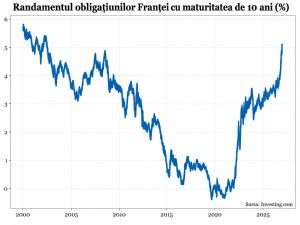
The level of trust in institutions varies significantly from one country to another. According to data analyzed by Euronews, Denmark, Luxembourg and Austria are among the countries with the highest levels of trust in public institutions. At the opposite end are France and Greece, where both national governments and European institutions record some of the lowest levels of trust in the Union. These differences are explained by the economic context, political stability, the efficiency of the administration and the quality of public services provided to citizens.
• Trust in institutions, an indicator of economic stability
The level of trust in public institutions is considered by economists to be an important indicator of economic and social resilience. Trust facilitates the implementation of reforms, increases the degree of compliance with public policies and reduces the administrative costs of the state. However, Eurofound and Eurobarometer data show that the European Union continues to face a trust deficit, especially at the level of national administrations and the information space. In contrast, European institutions and essential public services manage to maintain a credibility advantage, even if trust levels remain moderate and far from indicating a solid consensus among European citizens.

























 Euro
Euro Dolar SUA
 Franc elveţian
 Liră sterlină
 Gram de aur