English

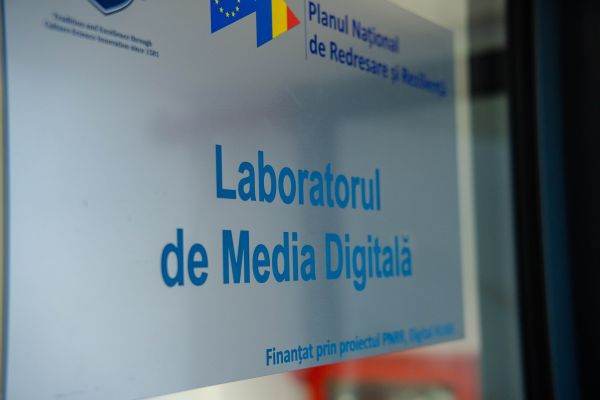
The Faculty of Political, Administrative and Communication Sciences at Babeş-Bolyai University has inaugurated a Digital Media Laboratory, with an investment exceeding one million lei. The project was carried out through the "UBB Digitalization: Providing digital infrastructure for teaching and research purposes (Digital HUBB)" program, financed by the National Recovery and Resilience Plan (PNRR), informs the educational institution.
• Modern infrastructure for student training
The new laboratory has 75 seats, each equipped with high-performance graphics stations, and is intended especially for students from the Digital Media specialization, but remains accessible to all those in the faculty. According to university representatives, the space was designed to support: teaching activities, research projects, interdisciplinary collaborations. The investment reflects the institution's orientation towards adapting the educational process to the demands of the labor market and technological developments.
• Eye-tracking technology and complete multimedia ecosystem
A central element of the laboratory is the integration of eye-tracking technology, used to analyze user behavior in the digital environment. In addition, the infrastructure includes: 360° video cameras, professional drone,
dedicated audio equipment, capture and streaming systems, tools for digital creation and sound design. These facilities allow the implementation of complex projects, from multimedia production to prototyping and data analysis.
• Focus on UX/UI skills and applied research
FSPAC representatives emphasize that the available technology offers students the opportunity to work with real data and observe the impact of design on users. Thus, the laboratory contributes to the development of skills in areas such as: UX (user experience), UI (user interface), digital behavioral analysis. At the same time, the infrastructure facilitates "Living Lab" type projects and collaborations with the professional environment.
• Educational hub adapted to hybrid and international formats
The laboratory is designed for flexible use, allowing the development of activities: face-to-face, in hybrid format, online. This approach facilitates the participation of international guests and integration into global academic networks. Through this investment, FSPAC consolidates its position in the fields of communication and digital media, offering students access to advanced technology and concrete opportunities for professional training. Faculty representatives believe that the laboratory will function as a hub of innovation and collaboration with the socio-economic environment.
















 Euro
Euro Dolar SUA
 Franc elveţian
 Liră sterlină
 Gram de aur