English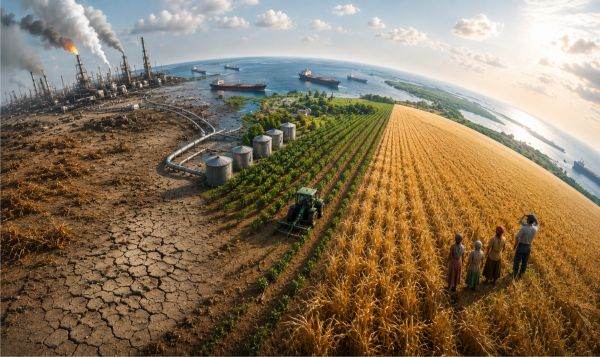
The effects of the war between the United States, Israel and Iran on global food security could be much more serious than the United Nations currently estimates, according to an analysis published yesterday by the European investigative website Follow the Money (FTM). The cited source shows that although the World Food Program (WFP) warns that an additional 45 million people could face acute hunger due to the blockade of the Strait of Hormuz, analysis of the methodology used by the UN agency, corroborated with the opinions of food systems experts, indicates that the real number of people affected could be two or even four times higher.
Shortly after the outbreak of the war with Iran in February, the United Nations issued a stark warning about the economic and food consequences of the conflict.
"If the conflict in the Middle East continues until June, another 45 million people could be pushed into acute hunger due to rising prices,” Carl Skau, acting executive director of the World Food Program, warned in mid-March. The UN official declared, about two weeks after the start of the American and Israeli attacks on Iran: "This would push global hunger levels to unprecedented levels and that is a terrible, terrible prospect.”
The conflict has led to the closure of the Strait of Hormuz, one of the planet's most important energy transit points, through which about 20% of the world's oil trade circulates. In Europe, the consequences have already been translated into higher fuel prices and higher energy bills. In contrast, in the most vulnerable regions of the world, the impact is much more serious, with the risk of a major food crisis.
According to the World Food Program, last year about 318 million people were already facing critical levels of hunger. Following the war with Iran and the blockade of the Strait of Hormuz, the organization estimates that this number could reach 363 million this year. If this forecast is confirmed, humanity will record the highest level of global hunger this century, even surpassing the situation created after the outbreak of the war in Ukraine.
However, the analysis carried out by Follow the Money suggests that this estimate is a conservative one. Bart de Steenhuijsen Piters, a researcher in the field of food systems at Wageningen Social & Economic Research in the Netherlands, believes that the impact could be incomparably greater. "It could very well be 100 million or 200 million more people,” the specialist told the cited source.
Even though the United States and Iran signed an agreement last week to end the war and reopen the Strait of Hormuz, experts interviewed by FTM warn that this step comes too late to avoid a sharp deterioration in global food security. The increasing risk of famine is fueled by a series of mutually reinforcing factors. The reduction in oil and gas flows through the Strait of Hormuz has led to higher energy prices, which means higher costs for both food transport and agricultural production. In Morocco, for example, farmers are already having difficulty purchasing the fuel needed to run their tractors.
At the same time, the Middle East supplies about a third of the fertilizers used worldwide, and their transport depends on the same sea route. The blockades have caused both fertilizer prices to rise and deficits for importing countries.
The timing of the outbreak of the war further aggravates the situation. The conflict has coincided with the crucial spring sowing season in the Northern Hemisphere, and rising fertilizer prices are already leading to estimates of reduced agricultural output per hectare.
Added to all this is the risk that countries with high agricultural production will limit exports to protect their own markets. A precedent already exists: after Russia's invasion of Ukraine and the blockade of the Black Sea in 2022, India imposed a four-year ban on grain exports. For countries that cannot meet their food needs from domestic production and cannot afford the additional costs of imports, such measures mean a direct reduction in food availability.
The situation is also complicated by climate change. Meteorologists estimate that the emergence of a new El Niño episode is almost certain. The phenomenon, associated with severe droughts and floods, affected an estimated 60 million people both in 2016-2017 and in 2023-2024. According to the United Nations, in southern Africa has caused "widespread agricultural failures, water shortages and animal deaths”, forcing people to resort to extreme survival strategies.
Despite these multiple risks, the World Food Programme's methodology only takes into account the impact of rising oil prices. Bart de Steenhuijsen Piters explained to the cited source that energy is indeed a key indicator. "First of all, energy costs play a double role. Higher fuel prices increase the cost of producing food, but they also mean that people have less money left to buy food. That is why it is a good initial indicator,” says the Dutch researcher. However, he believes that excluding the effects of higher fertilizer prices makes the estimate "far too limited”.
Jean-Martin Bauer, director of food security and nutrition analysis at the World Food Programme, admits that the model used has limitations and describes it as a starting point. "We conducted this analysis to get a first picture of where our help will be needed. And to send the world a message that this is a serious problem,” Jean-Martin Bauer told the source.
The UN official said that even if the Strait of Hormuz were to reopen quickly, the economic effects would not disappear immediately. "In our model, we assumed that energy prices would remain high for three months. It will take months for world trade to recover from this situation,” Bauer told FTM.
The model used by the World Food Program was first applied in 2022, after Russia's invasion of Ukraine. At the time, the UN agency estimated that an additional 47 million people would enter the acute hunger zone. In reality, the increase was closer to 62 million people. The underestimation was especially evident in Latin America and the Caribbean, where the effects of the war were amplified by regional conflicts in Ecuador and Venezuela. Even in its report published in March, the World Food Programme said the 2022 estimate was "generally correct, although conservative.”
Experts believe the current forecast will be even more inaccurate. Bart de Steenhuijsen Piters explains the fundamental difference between the two crises: "The Ukraine crisis was much more of a linear shock. There was an immediate shortage of grain because Ukraine could no longer export via the Black Sea. Now the impact is much more systemic and therefore deeper.”
The researcher refuses to estimate how many people will actually go hungry as a result of the conflict in the Middle East, but he is convinced that the number will far exceed the 45 million estimated by the UN. "Anyone who claims to know for sure how big the cumulative effect of all these shocks will be is lying,” he says.
The World Food Programme admits that it does not have real-time data to accurately monitor the evolution of the phenomenon. However, in an update published in early June, the UN agency states that "the scenario is already unfolding”, based on analyses of food security in Afghanistan, Somalia and Sri Lanka.
Jean-Martin Bauer warns that the most exposed are the less developed countries, dependent on fertilizer imports from the Persian Gulf, especially those in southern Africa. "There, farmers are struggling to cope with higher fertilizer prices. When prices rose in 2022, the rest of the world was able to continue farming, but they could not,” says the UN expert.
In his opinion, the most severe consequences are only to be felt in the next two years, due to the fact that farmers will not be able to use the desired amount of fertilizer, and harvests will be disappointing due to drought, which will lead to an increase in prices in vulnerable regions.


























 Euro
Euro Dolar SUA
 Franc elveţian
 Liră sterlină
 Gram de aur