English

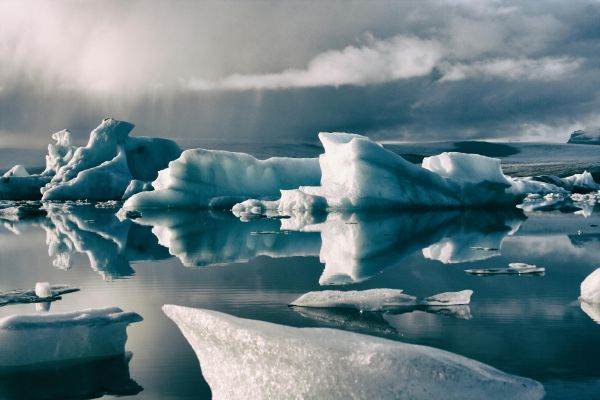
The rate of glacier melt in the Hindu Kush and Himalayan mountain ranges has doubled since the 2000s, amid global warming, according to two studies cited by AFP. The research, conducted by the International Centre for Integrated Mountain Development (ICIMOD), shows that glaciers in the region have lost up to 27 meters in thickness since 1975. According to centralized data, the area of glaciers has decreased by 12% between 1990 and 2020, while total ice reserves have decreased by 9%. ICIMOD director Pema Gyamtsho warns that the phenomenon can no longer be treated as a distant problem. "This is not a distant problem; it is a crisis that is worsening in real time, with its share of disasters every summer and every monsoon season,” he said. According to researcher Mohd Farooq Azam, the rate of ice loss has increased significantly: 35 cm/year between 1974 and 1999, 72 cm/year after 2000. This acceleration is attributed to rising temperatures, which are reducing the time in which glaciers can rebuild their mass. "We need to reduce carbon emissions to allow them to maintain their natural recovery cycle,” the researcher explained.
• Major impact on Asia: water, agriculture and security
The glaciers of the Hindu Kush and the Himalayas represent the largest ice reserve in the world after the polar regions, with more than 63,700 glaciers covering an area of about 55,800 km². They feed at least ten major watersheds, essential for millions of people in Afghanistan, Pakistan, India and Nepal. Every year, these countries are affected by: severe floods, landslides, floods generated by glacial lakes. Experts warn that the frequency and intensity of these phenomena are increasing with climate change.
• The need for urgent monitoring and adaptation
The authors of the studies emphasize the urgent need for investment in glacier monitoring and early warning systems. Strengthening these mechanisms could reduce the impact of disasters and allow authorities to intervene before the effects reach critical levels.




















 Euro
Euro Dolar SUA
 Franc elveţian
 Liră sterlină
 Gram de aur