 English

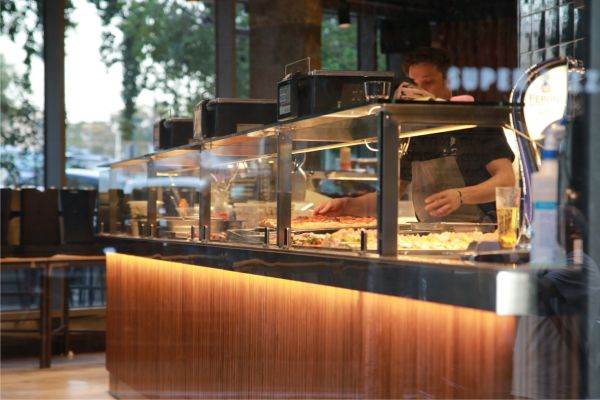
Over 82% of entrepreneurs in the hospitality industry do not anticipate an increase in activity in the coming period, almost eight out of ten are reducing or blocking investments, and almost half are considering layoffs, show the results of the survey "HoReCa Confidence Index 2026", presented yesterday, during a press conference at the headquarters of IMM Romania, by Călin Cozma, executive president of the Federation of Employers in the Hospitality Industry of Romania (FPIOR). The representative of business people in the hospitality industry claims that these results are caused by fiscal pressure and price increases in utilities and raw materials, which are pushing the HoReCa sector from development to survival.
Basically, the hospitality industry enters a state of severe caution in 2026, in which expansion plans are replaced by conservation measures: postponed investments, reduced staff, shortened schedules and, in some cases, the closure of some workplaces or even the business.
According to the survey, only 17.3% of entrepreneurs surveyed expect their business to grow in the next 12 months. In contrast, 26.9% anticipate a decline, another 26.9% expect stagnation, and 28.8% say there is a risk that they will have to close their business. In total, 82.6% of respondents do not see growth.
The lack of confidence in the current economic and fiscal context is already visible in business decisions. Only 11.5% of entrepreneurs participating in the survey say they will increase investments, and 9.6% will maintain them at the current level. The rest are withdrawing: 28.8% will reduce investments, 28.8% will freeze them completely, and 21.2% will give up on expansion projects. Thus, 78.8% of respondents are reducing, blocking or abandoning investments.
"The reality is this: people no longer want to invest in industry. We have over 82% of entrepreneurs who do not see growth, but stagnation or even a decline in the industry. And of these, almost 30% are thinking about closing their businesses. At first glance, you say "three out of ten", but 30% in an industry with 200,000 employees means a lot", said Călin Cozma, executive president of FPIOR.
The survey also shows that the decrease in the number of customers is the main threat, indicated by 69.2% of respondents. Almost at the same level are taxes and taxation, mentioned by 67.3%. Next comes the increase in raw material costs, by 51.9%, rents and utilities, by 40.4%, and the lack of personnel, by 30.8%.
The sector is thus caught between weakening consumption and increasing costs. For restaurants, cafes and hotels, the question is no longer just how much it costs to operate, but whether the remaining demand can cover the tax bill, raw materials, energy and salaries.
Furthermore, 51.9% of entrepreneurs say they will postpone investments if the current economic and fiscal context continues, while 48.1% are considering reducing staff. Other options are increasing prices, indicated by 28.8%, reducing the schedule and closing some workplaces, each by 23.1%.
"The measures that entrepreneurs are thinking of implementing are, in addition to postponing investments, reducing staff. For us, this is an even bigger alarm signal, because 48.1% are considering reducing staff. If we look at INS statistics, in 2024 HoReCa had around 225,000 employees, and at the end of 2025 it had reached 200,000. We already have 25,000 people who are no longer working. If we calculate the amounts that employers would have paid for these people to the Romanian state, we reach 150 million euros per year. It is an enormous figure," said Călin Cozma.
The survey data supports the warning: the pressure on companies' balance sheets can quickly be transferred to employees and consumers, through fewer jobs, reduced hours and higher prices.
Asked if companies in the industry are already selling at a loss and why almost 30% of entrepreneurs are considering new price increases, the executive president of FPIOR showed that businesses cannot absorb price increases in the supply chain and wage pressure indefinitely.
"If flour costs three lei more, do you think the same pizza can be sold at the same price? The employee asks for a raise because he can no longer afford anything. I would like to sell as cheaply as possible, but the profit margin must be maintained. In the last year, services have become more expensive by 13.67%, and the price of diesel has increased by 30% compared to July 2025. The economy and the population can no longer bear these prices," said Călin Cozma.
Only 30.8% of the entrepreneurs surveyed declare themselves very or fairly confident in the future of their business. In contrast, 44.2% are somewhat or not at all confident, and 25% have a neutral position. The difference between the camps confirms the change in perspective: for a large part of the industry, 2026 is no longer seen as a year of development, but as one in which entrepreneurs and decide what they can keep - investments, employees, schedules, work locations or, in the most difficult cases, the business itself.
He also showed that the effects of fiscal measures must be evaluated not only through the targeted budget revenues, but also through lost investments, closed businesses and eliminated jobs. Mr. Cozma mentioned that the federation is preparing a program with ten measures to relaunch the sector, including maintaining the quota and reducing VAT, as well as supporting holiday vouchers.
We would like to point out that the "HoReCa 2026 Confidence Index" survey was conducted between August 3 and 10, on a sample of 570 entrepreneurs in the HoReCa sector. The Federation of Hospitality Industry Employers in Romania brings together over 1,000 companies, 29 employers and over 30,000 employees, representing 24 counties and the municipality of Bucharest.






















 Euro
Euro Dolar SUA
 Franc elveţian
 Liră sterlină
 Gram de aur





























