 English

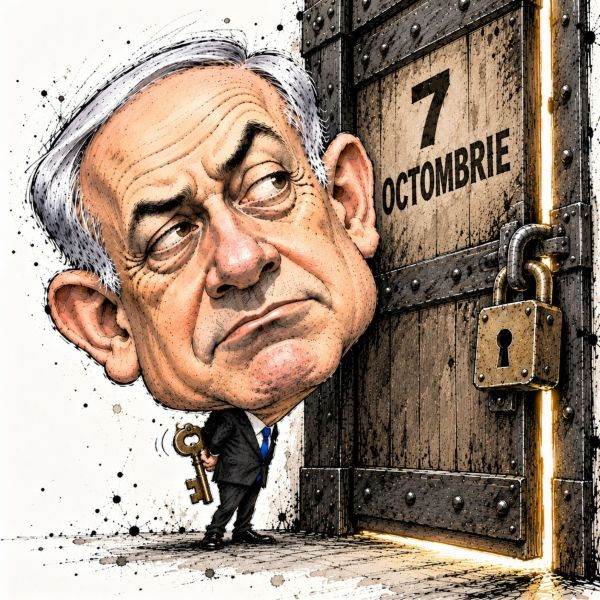
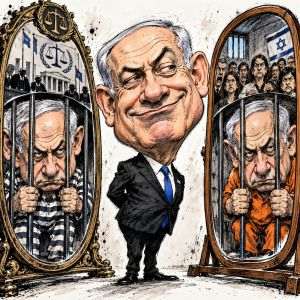
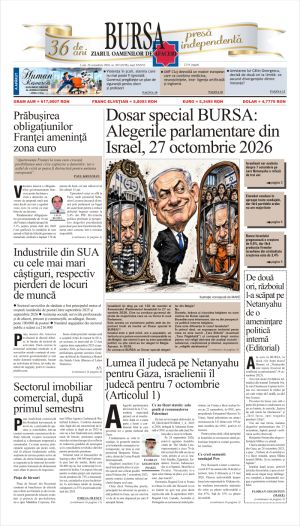
Benjamin Netanyahu is asking voters to judge him by the military results achieved since the Hamas attack: Hamas weakened, Hezbollah hit, Iran attacked. His opponents are calling for a different kind of judgment: how was the 7 October 2023 attack possible, and who is responsible for it? The majority of Israelis want an answer to the second question as well. According to an Israel Democracy Institute poll conducted on 5-8 October 2026 and reported by the Times of Israel, 71% of Jewish respondents and 52% of Arab respondents want the next government to establish a state commission of inquiry. Why would a prime minister refuse an inquiry that could exonerate him?
• Netanyahu's reasons
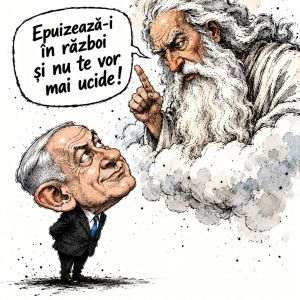
According to Ynet, Netanyahu is the only political or military leader who held a senior position on 7 October and does not support a state commission of inquiry. His reasons have changed over time. In January 2024, he said inquiries should be conducted at the end of the war, not during it. He later said he opposed a politically biased inquiry and that a state commission would not have majority support, although polls show the opposite. A state commission is headed by a Supreme Court judge, an institution that Netanyahu's government has confronted through its judicial overhaul. Netanyahu is instead calling for a balanced national commission, with members appointed by the government and the opposition. He says he has nothing to hide because he has spent hours giving testimony to the State Comptroller, unlike the former heads of Shin Bet, the military and military intelligence.
Netanyahu also wants an inquiry broader in scope than the day of the attack. In December 2025, he called, according to the Times of Israel, for the inquiry to investigate "from Oslo, through the withdrawal from Gaza, to the refusal” of reservists to serve. This refers to the Oslo Accords of 1993, Israel's withdrawal from the Gaza Strip in 2005, and the refusal of some reservists to report for duty during the 2023 protests against the judicial overhaul.
The Likud bill provides for a six-member commission chosen by the Knesset and prohibits any other inquiry into the events of 7 October. Attorney General Gali Baharav-Miara said the bill had serious flaws that would prevent the facts from being established. The most recent state commission, which investigated the 2021 Mount Meron disaster in which 45 people died, found Netanyahu personally responsible.
On 6 July 2026, the bill passed its first reading with 59 coalition votes and no votes against, because the opposition boycotted the vote. According to Ynet, the bill can no longer be passed by the current Knesset, but the new parliament can revive it under the rule of legislative continuity. The 27 October vote will therefore also determine what kind of inquiry Israel gets: the commission selected by the Knesset, proposed by Likud, or the state commission appointed by the president of the Supreme Court.
• What has been uncovered without a commission
Over the past three years, the Israeli and American press have published some of the material a commission would have to investigate. A Shin Bet internal security service document reported by the Times of Israel shows that Netanyahu's policy of buying calm in Gaza with money sent from Qatar was maintained despite repeated warnings from Shin Bet, and that the money strengthened Hamas. The press has reported that, in September 2023, Israel asked Qatar to increase its financial assistance to Gaza.
Avigdor Lieberman, defence minister from 2016 to 2018, says he explicitly warned Netanyahu that Hamas wanted to enter Israel, seize communities and take hostages. According to the New York Times, the military and intelligence services had the attack plan, known as "Jericho Wall”, more than a year in advance, but considered it too difficult for Hamas to carry out; it is not known whether the prime minister had seen it. A Haaretz report about a warning conveyed by the United Arab Emirates was denied by the prime minister's office. Internal investigations by the military and Shin Bet examined operations, intelligence and command, but not the decisions of the political leadership.
On the other hand, minutes of Hamas leadership meetings captured by the Israeli military and published by the New York Times show that Hamas deliberately avoided major confrontations from 2021 onwards in order to convince Israel that it wanted calm. A commission would have to establish whether the prime minister was deceived or ignored what he was being told.
Eisenkot says establishing the commission will be one of his first actions as prime minister, while Yoaz Hendel's Reservists Alliance has made it a condition for joining a government.
• The war with Iran and the June agreement
On 28 February 2026, the United States and Israel attacked Iran, eight months after the 12-day war of June 2025. The war ended with a memorandum signed in June between the United States and Iran, to which Israel was not a party and which does not guarantee the dismantling of Iran's nuclear and missile programmes.
A poll conducted by the Agam Institute together with the Hebrew University of Jerusalem from 17 to 20 June, among 3,644 respondents, immediately after the memorandum was signed, found, according to Middle East Eye, that 92% of Israelis believed Iran had won the war. The press reported that the question concerned who had won or gained more from the war and the agreement that followed. The same poll found that 83% believed the war had weakened Israel's security in the long term, while 72.5% did not believe Netanyahu when he said Israel had achieved significant gains. This was the perception in June; no subsequent poll measuring the same question is known. At the time, Netanyahu's main campaign argument-the military results-was contradicted by what voters believed.
• Recruitment of the ultra-Orthodox
The same October Israel Democracy Institute poll shows that 72% of Jewish respondents want a law requiring young ultra-Orthodox men to be conscripted on an equal basis. According to the Jerusalem Post, support stands at 93.5% on the left, 89% in the centre and 62% on the right, making it a majority position even among Netanyahu's voters.
The dispute has fractured the coalition: the ultra-Orthodox parties left the government during the war over the conscription law. After three years of repeated reserve mobilisations, the campaign question is who fights and who is exempt. Hendel calls for military or national service for everyone and rules out a coalition with the ultra-Orthodox parties, arguing that such a government would never introduce universal conscription.
• Foreign relations as seen from Israel
Israelis feel isolated. According to the Israel Democracy Institute poll, only the United States (87%) and Germany (55%) are considered friends by a majority of respondents, while more Israelis regard the United Kingdom as hostile than Saudi Arabia. The next government will have to answer both questions at the heart of the campaign: who is responsible for 7 October, and who will perform military service from now on.
















 Euro
 Dolar SUA
 Franc elveţian
 Liră sterlină
 Gram de aur






























Reader's Opinion