English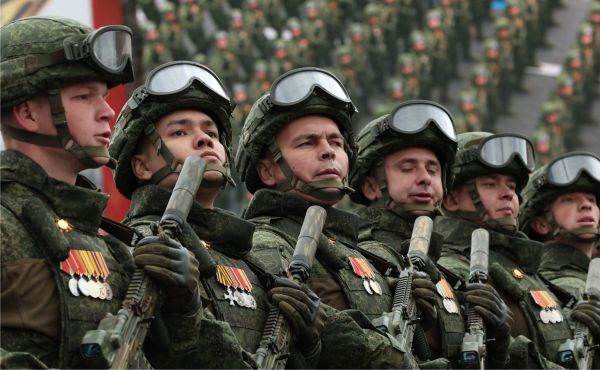
The Vice President of the Security Council of the Russian Federation, Dmitry Medvedev, called for the development of international legal mechanisms leading to the abolition of Western military bases located on the territory of other states, arguing that they represent a threat to the collective security and sovereignty of states. The statement was made at the International Legal Forum in Sankt Petersburg, where the Russian official accused the West of using its foreign military infrastructure to fuel geopolitical tensions and impose its influence in various regions of the world.
"They are causing, frankly speaking, international and regional tensions," Medvedev said, according to TASS agency, referring to Western military bases outside the borders of the states that hold them. The Russian official continued: "That is why it is necessary to develop specific legal mechanisms, aimed at abolishing the current system of foreign military presence that the West imposes on other countries."
Through this initiative, Moscow tries to turn one of the oldest criticisms of the United States and NATO into an issue of international law, namely the existence of a vast network of military bases spread across the globe. According to generally accepted estimates cited by Zerohedge, the United States operates between 750 and 800 military bases and facilities in approximately 80 states and territories, an infrastructure without equivalent worldwide. For this reason, the main state affected by a possible international mechanism to abolish foreign military bases would be the United States itself, whose global military projection capacity is largely based on this network.
Washington has permanent bases in Europe, the Middle East and the Asia-Pacific, which are considered essential both for the defense of allies and for the rapid deployment of military operations, joint exercises and deterrence missions. In Europe, the American military infrastructure is one of the pillars of NATO's presence, and in the Indo-Pacific region it is the main tool through which the United States projects its power in relation to China and North Korea. Consequently, if Medvedev's proposal were ever to become a principle of international law, the most important effects would be on the ability of the United States to maintain its current global military apparatus.
However, the Russian official's initiative is accompanied by an obvious contradiction. While calling for the removal of Western military bases outside the national territory of the states that hold them, the Russian Federation continues to maintain and expand its own external military infrastructure, which Moscow considers an indispensable tool of its security policy and great power status.
The report "The Russian Federation's Military Bases Abroad", published by the Institute of New Europe in 2020, shows that Russia then had a network of bases and military facilities outside its own territory, distributed in Europe, Asia and the Middle East, and the document emphasizes that these are a tool for projecting the political and military influence of the Kremlin. The authors of the report highlight that the external military infrastructure of the Russian Federation includes land bases, air bases, naval installations, radar stations and ranges, and that Moscow is constantly looking to strengthen and modernize these capabilities.
The report lists military bases and permanent facilities in Armenia, Belarus, Kazakhstan, Kyrgyzstan, Tajikistan, Syria, Abkhazia, South Ossetia and the separatist region of Transnistria in the Republic of Moldova. Military agreements regarding the Russian presence in Vietnam and Serbia, as well as projects regarding the expansion of military infrastructure in Africa, are also analyzed. The authors conclude that, for the Kremlin, foreign bases are an essential component of great power competition and a means of consolidating political and economic influence in regions considered of strategic interest.
Meanwhile, the configuration of this network has evolved, but not diminished. The updated data shows that Russia continues to operate the Hmeimim air base and the Tartus naval base in Syria, which gives it permanent access to the Mediterranean Sea, maintains the 102nd military base in Armenia, the 201st base in Tajikistan and the Kant airbase in Kyrgyzstan, has troops stationed in Transnistria and the Georgian breakaway regions of Abkhazia and South Ossetia, and uses the Africa Corps (formerly Wagner military group) structure to project influence in states such as the Central African Republic, Libya and Mali.
The very introduction of the report published in 2020 points out that, after the breakup of the Soviet Union, Russia was forced to give up numerous foreign military bases, but later sought to rebuild an infrastructure that would allow it to maintain its status as a global power. The authors believe that bases outside its borders represent an element of international competition and a manifestation of superpower ambitions, being used not only for military purposes, but also as instruments of political and economic influence.
In this context, Dmitry Medvedev's statements highlight a selective approach to the concept of external military presence. If the legal mechanisms invoked by the Russian official were universal in nature and applied to all states, they would not affect exclusively the United States and its allies, but would inevitably also question the legitimacy of the military bases that the Russian Federation maintains outside its own territory. Thus, while Moscow calls for the limitation of Western military infrastructure, its own external military apparatus continues to be presented by the Russian authorities as an indispensable element of the national security and geopolitical influence of the Russian Federation.


























 Euro
Euro Dolar SUA
 Franc elveţian
 Liră sterlină
 Gram de aur