 English

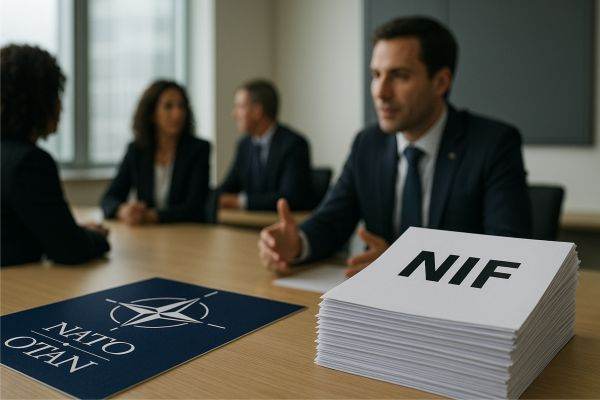
The NATO Innovation Fund (NIF) has already begun to rapidly spend significant amounts of money, while pushing the 24 participating states towards a financial risk that is difficult to justify, disguised under the packaging of five-star comfort and management structures that defy any standard of transparency, according to an article published in the Belgian press (Knack, Le Soir and Follow The Money). Instead of becoming a strategic tool for Euro-Atlantic technological security, the fund seems to have slipped into a toxic combination of opacity, political interference and arbitrary management, reminiscent of failed experiments by American secret agencies, the sources cited claim.
Although it operates in a structurally unclear hybrid and with its center of gravity in the UK, the one billion euro fund has consumed, since the first year, 1.2 million euros just on premium offices in Amsterdam and London, to which are added meetings held in luxury hotels. In parallel, performance remains anemic: only 23 investments since 2023, of which only ten in companies, while the oversized team - 18 board members, four partners and six associates - completely contradicts the practices of venture capital, where agility and discipline are defining criteria.
The problems are not accidental, but faithfully repeat the conclusions of the CIA's In-Q-Tel model, which NIF copies without precautions. Research clearly shows that political interference in venture investments creates external exposures, commercial disputes imported into the public sphere and vulnerabilities that are difficult to control. It is precisely these risks that seem to have been ignored by those who run the fund.
Far from resolving conflicts of interest, the NIF has deepened them. According to the cited sources, documents filed with the Luxembourg Chamber of Commerce show that, following criticism of the "dual roles”, the fund's supervisors were not separated from management, but promoted outright as directors. A structural game that deliberately mixes executive power with that of control, canceling guarantees of integrity and maintaining the appearance of a reform that does not reform anything.
Francesca Grandi, representative of the non-governmental organization Transparency International, stated for the cited sources that these maneuvers are "cosmetic, not corrective”, warning that the fund is normalizing conflicts of interest. Under these conditions, the Transparency International expert asks how NATO can accept a level of opacity that would not be admitted in its own structures? If the Alliance's standards would not tolerate such practices internally, why are they accepted in an entity that bears its name and manages European public money?
Internally, the atmosphere is described as "deeply divided,” dominated by personal preferences that sabotage strategic direction. The entire executive team of the fund has resigned, with the exception of one partner, a sign of chronic instability and a complete loss of trust.
The crisis was amplified by the Hommels scandal, one of the most sensitive episodes in the history of the fund. According to investigations by FTM and Sifted, Klaus Hommels, an influential technology investor and prominent figure in the European ecosystem, was accused of using his official position within the NATO Innovation Fund to attract investors to his private fund, Lakestar. In other words, a representative of a public fund with a strategic stake would have capitalized on the prestige and information accessed through this position to generate gains in the private sector, a potential conflict of interest considered serious. Hommels resigned under pressure from the revelations, but NIF later offered him an informal advisory role that retains his access without subjecting him to any accountability mechanism, a decision that raised even more questions, amplifying the perception that the fund is not just tolerating conflicts of interest, but perpetuating them.
Nevertheless, NIF insists that it is "on the right track” and even suggested last summer that it might seek further public funding. Questions from the sources cited to fund officials went unanswered; instead of clarification, they sent general market reports, taking credit for industry trends and presenting the investment in Isar Aerospace as a unicorn win, although they only entered the stock after the company had already raised euro400 million.
In the end, what is emerging is not a solid platform for defense innovation, but a fragile, overpriced and opaque construction that risks compromising NATO's credibility in the technological field. A fund that was supposed to protect the strategic interests of allies seems to become, through lack of rigor and overlapping interests, a vulnerability in itself.



















 Euro
Euro Dolar SUA
 Franc elveţian
 Liră sterlină
 Gram de aur





























