 English

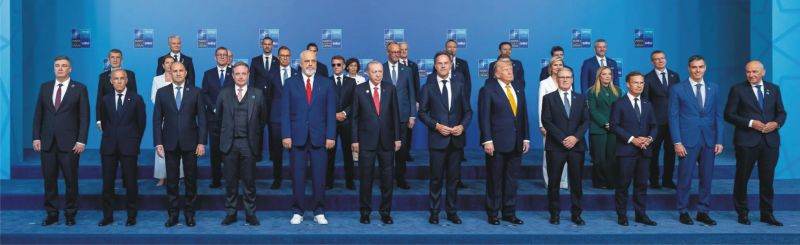
The reality of an important event is sometimes hidden in small details or interpretations. This time it is about the official photo with the heads of state and government at the NATO summit in Ankara. From the analysis of the photo in question, we note that none of the important leaders of Europe appear in the first row. Emmanuel Macron, Friedrich Merz and Giorgia Meloni were seated in the second row, as far as possible from US President Donald Trump, who, together with Recep Erdogan and Mark Rutte, dominates the image, from its center, in the first row. However, also in the center of the image, there is another leader. No, it is not Pedro Sanchez - who is in the first row, but far from Donald Trump, but Edi Rama, the Prime Minister of Albania. None other than the friend of the Trump family, the one who is ready to transfer the island of Sazan and part of the Vjosa River Delta to Jared Kusner, the son-in-law of the US president, for the realization of two real estate projects worth a total of 4 billion euros.
By the way Erdogan and Trump have placed Edi Rama in the official photo, the Turkish and American presidents want to legitimize the head of the government in Tirana, who has been challenged in the streets by tens of thousands of citizens for over 40 days, as one of the world leaders. Basically, the message of the official photo is that the will of the powerful matters and that street protests or what citizens want is not important. A message that could be challenged by those in the second and third rows. But they are not at the center of the image.
This was also visible during the summit held in the Turkish capital, where Recep Tayyip Erdogan was the leader, and Donald Trump complied with the program established by the Turkish president. If three weeks ago, in Evian, France, the American president arrived an hour late to the G7 meeting, stating at the moment of his appearance that he was the boss, without any of the other leaders present contradicting him, yesterday Trump was punctual, fitting in with the schedule imposed by Erdogan.
Perhaps the American president's attitude should also be read by what he declared the night before, at the official dinner offered by the Turkish president in honor of NATO leaders, namely that, if the summit had not been held in Ankara, at his friend Erdogan's, he would not have participated, due to the refusal he received from NATO allies, when he requested their support in the conflict in the Middle East.
"If it weren't for him (ed. - Erdogan), I probably wouldn't have participated, but I felt I had to participate. I know it was very important to come here. We weren't treated well. We saw what happened in Iran. We didn't need anyone's help. The European allies in NATO told us they weren't going to come and we invested enormously to protect European countries and citizens in general, against the USSR in the past, against Russia now. The situation is what it is. They weren't eager to help us. I tested to see if they were with us. If we help them, I'm not convinced they would be with us. I saw what happened with Italy, Germany, France who refused us. That's okay. Why are we spending billions of dollars if they're not with us?!", said Donald Trump.
Trump's statement is not a simple statement, in light of what he said yesterday about Spain, a state that refused to allow American bases on its territory to be a take-off point for US planes to Iran and that refuses to increase its military spending to 5% of GDP.
Annoyed by the attitude of the government in Madrid led by socialist Pedro Sanchez, Donald Trump said yesterday in Ankara that Spain is a "lost cause" and stated: "They are not participating. They are not paying. I want nothing to do with Spain. We will cut off all trade with Spain. They have made so much money with us, but they will see that they will make much less. We should not trade with the Spanish anymore. I do not want to trade with them anymore. I do not even want to talk to them. They are evil and hopeless people".
This can also be seen in the official photo, with Pedro Sanchez sitting somewhere on the edge of the front row, as far away from Donald Trump as possible.
At the same time, the US president has raised the issue of Greenland's administration, claiming that the territory is very important to the United States and much less important to Denmark, provoking a new defensive reaction from Copenhagen and the European institutions. The summit that was supposed to be about implementation, military capabilities and support for Ukraine was thus pushed, from the early hours of the day, towards a political confrontation between Washington's transactional instinct and the Europeans' attempt to maintain the facade of unity.
Donald Trump did not stop at criticizing Spain, but said that he was "very unhappy with NATO", even though he called Mark Rutte "a extraordinary leader”, a relationship that has already made headlines after the Alliance's secretary general informally referred to him as "daddy” in the past. Mark Rutte, NATO's secretary general, played the role of mediator, praising Trump for putting pressure on European allies and insisting that Europe and Canada were "doing more”, with more money, more capabilities and more military production. Sky News described the moment as a demonstration of Rutte's style, sometimes nicknamed the "Trump whisperer”, as the NATO leader tried to quell American anger and bring the discussion back to the Alliance's goals.
The US president's harsh tone was not a surprise, especially since, the evening before the summit, Donald Trump had described the level of Germany's military spending as "ridiculous”, prompting a prompt reply from Chancellor Friedrich Merz, who defended his country's defense budget as "the biggest effort we have ever made to strengthen our defense capabilities”.
Also at the summit, US officials confirmed the gradual withdrawal of US fighter jets, destroyers and submarines from NATO bases in Europe, a move aimed at putting additional pressure on allies to take more responsibility for their own defence, in line with what the Trump administration calls "NATO 3.0”.
• Russia defined as the main long-term threat to Euro-Atlantic security
The 32 leaders of NATO member states approved yesterday the text of the Ankara Declaration, the final statement of the summit. The document begins by reaffirming Article 5 of the NATO Treaty: "We, the Heads of State and Government of the North Atlantic Alliance, have gathered in Ankara to reaffirm our unwavering commitment to collective defense, as enshrined in Article 5 of the Washington Treaty, and to the transatlantic relationship. An attack on one of us is an attack on all. Our unity, solidarity and collective strength remain the foundation of peace, security and prosperity for the one billion citizens of this Alliance of free and democratic nations. We remain committed to our 360-degree approach to deterrence and defense.”
For the Eastern Flank states, including Romania, this formulation is perhaps the most important political guarantee offered by the summit.
The declaration then enshrines Russia as the main long-term threat to Euro-Atlantic security. Although Moscow was already qualified in this way in the documents adopted at previous summits, the Ankara text goes further and justifies through this assessment the acceleration of defense investments, the consolidation of the military presence on the Eastern Flank, the development of faster reaction capabilities and the expansion of the infrastructure necessary for the deployment of allied forces.
At the same time, Ukraine occupies a central place in the final declaration. Allied leaders confirm that during 2026 they will provide military assistance worth approximately 70 billion euros, in the form of weapons, ammunition, air defense systems, training and support for the Ukrainian defense industry. Moreover, the member states assume the political objective of maintaining at least the same level of military support in 2027. Another essential chapter of the document is dedicated to the transformation of the defense industrial base. The lessons of the war in Ukraine have shown that technological superiority is not enough if it is not supported by the ability to quickly produce ammunition, missiles, drones, radar systems, electronic equipment and modern military platforms. For this reason, NATO leaders are committed to accelerating transatlantic industrial cooperation, removing barriers to trade in defense products, developing more resilient supply chains, and expanding joint production between Europe and North America. In essence, the Alliance is trying to move from the traditional model of fragmented procurement to an integrated industrial ecosystem capable of quickly responding to the demands of a major crisis.
The same register also includes the emphasis placed on new technologies. The declaration talks about the use of artificial intelligence, the development of autonomous systems, strengthening cyber defense, the protection of critical infrastructure, expanding space capabilities, and integrating lessons learned from the massive use of drones on the Ukrainian front. For NATO, the conflict in Ukraine has become a laboratory that is fundamentally changing the way the Alliance views modern warfare, and the Ankara document seeks to transform these lessons into permanent policies.
The declaration also pays special attention to air and missile defense. After the experience of drone and missile attacks on Ukraine, but also in the context of escalating tensions in the Middle East, NATO leaders believe that the development of a integrated air defence systems are one of the most urgent strategic priorities. The document supports further investment in early warning systems, sensors, radars, interceptors and common command and control architectures, elements to be developed in cooperation between member states.
Furthermore, the final declaration goes beyond the Euro-Atlantic area and includes explicit references to the situation in the Middle East. In point five of the declaration, NATO leaders state that Iran must not acquire nuclear weapons and call for freedom of navigation in the Strait of Hormuz, one of the most important maritime routes for global energy trade. The introduction of these references reflects the fact that the Alliance sees European security and developments in the Middle East as increasingly interdependent, especially after the recent confrontations between the United States and Iran.
The document also insists on the responsibility of each Ally to invest more in its own defence. While the statement does not change previously agreed military spending targets, it stresses that these investments must be translated into concrete operational capabilities and a significant increase in industrial production.
• F-35s for Turkey, the main topic of the Erdogan-Trump meeting
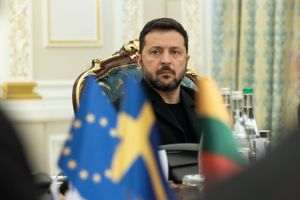
One of the topics discussed on the sidelines of the summit was the Turkish-American relationship. Turkish President Recep Erdogan said he was waiting for a favorable decision on the five F-35s that his country wants from the US, and Donald Trump signaled the lifting of CAATSA sanctions imposed on Turkey after the purchase of Russian S-400 systems. A possible reset of defense cooperation between Washington and Ankara has emerged around this file, and the summit gave Turkey an opportunity to show that it can turn the status of a difficult ally into a strategic advantage. Ankara is no longer just demanding reintegration into US defence programmes, but is also proposing that its own military industry enter the European production architecture, at a time when Europe needs ammunition, drones, anti-aircraft systems, missiles and surveillance capabilities at a pace that NATO's old bureaucratic model can no longer sustain. Ukraine was another topic of discussion during bilateral meetings between NATO leaders. Ukrainian President Volodymyr Zelensky came to Ankara after intense Russian attacks on Kiev and called for strong decisions, air defence systems, tougher sanctions against Moscow and an acceleration of European arms production. The Guardian reported that the Ukrainian leader had meetings with several leaders, including European Council President Antonio Costa, Italian Prime Minister Giorgia Meloni, South Korean President Lee Jae-Myung and a bipartisan delegation from the US Congress. Sky News also reported the signing of a drone agreement between Ukraine and Estonia, with the central administration in Kiev coming to the summit not just as a recipient of aid, but as a NATO military laboratory. Zelensky and the other members of the delegation are essentially representing the country that has demonstrated on the front lines what drone warfare, deep strikes, rapid adaptation and the need for dense air defense mean.
In parallel, the conflict between the US and Iran has tainted the NATO summit. Trump said that the ceasefire signed last month with Iran had ended after US attacks on Iranian targets, following attacks on commercial ships by Iranian forces, followed by Iranian strikes on US military facilities in Bahrain and Kuwait. Sky News reported that Trump spoke of "strong" attacks on southern Iran, following incidents in the Strait of Hormuz, and The Guardian reported that the US leader used extremely harsh language towards the Iranian leadership. This crisis has put NATO in an uncomfortable position: the summit had been called for Ukraine, Russia, military spending and industrial defense, but the American president brought to the summit room his frustration with European allies who have not fully aligned themselves in the conflict with Tehran.
• Protection of underwater infrastructure in the Black Sea, ensured by Romania, Bulgaria and Turkey
Romania, Bulgaria and Turkey signed yesterday, on the sidelines of the NATO summit in Ankara, an amendment to the memorandum governing the Trilateral Working Group for Countering Mines in the Black Sea, adding the protection of critical underwater infrastructure to the group's missions. The signing reflects the three allies' shared commitment to strengthening security in the Black Sea and increasing allied maritime cooperation.
According to a press release issued by the Ministry of National Defense after the signing of the amendment, protecting critical underwater infrastructure requires a "complex, integrated and long-term approach", which will actively contribute to security n the Black Sea basin. The cited source shows that the missions carried out by the Romanian Naval Forces together with regional partners contribute to maintaining a permanent naval presence throughout Romania's area of responsibility, including its exclusive economic zone, serving not only as a deterrent but also as a rapid response capacity.
We recall that the memorandum establishing the Black Sea Mine Action Task Force was signed by the three countries on January 11, 2024, creating the first trilateral initiative of this kind among NATO allies bordering the Black Sea. The main mission of the task force is to ensure freedom of navigation through surveillance, mine countermeasures operations, neutralization of maritime hazards and search and rescue activities.
• Secondary headquarters in Romania for the bank established by NATO
The Defense, Security and Resilience Bank, established by NATO and coordinated by Canada, a project in which our country is a party, will have a secondary headquarters in Romania, announced yesterday, in Ankara, President Nicuşor Dan.
"The defense bank of which we are founders will have a main headquarters in Canada, a European headquarters in Luxembourg and will have two secondary headquarters on the eastern flank, one in the Baltic countries and one in Romania," said President Nicuşor Dan
The new multilateral financial institution will contribute to strengthening the capacity of member states to finance investments in the field of defense and security, by expanding access to capital, reducing financing costs and supporting the development of industrial capacities, with a particular focus on small and medium-sized enterprises.
• Mark Rutte: Putin is in trouble
Mark Rutte, NATO Secretary General, said at the end of the Ankara summit that Russia's economy is doing badly and made an appeal to the youth of the Russian Federation.
Mark Rutte said: "I have long since stopped trying to interpret what is going on in Vladimir Putin's head. What I do know is that Putin is in trouble. The economy is going badly. He is losing around 30,000 of his own people a month, which is terrible news for those families and people. It means he is willing to sacrifice up to 30,000, sometimes even 35,000 people, mainly men, on the battlefield. We see Ukraine hitting deep into Russia when it comes to energy infrastructure and defense infrastructure on the front line. He was making some progress earlier this year, and now it is more or less a deadlock. So it is not doing well. (...) It is clear that Ukraine is very successful in hitting energy infrastructure in Russia. Yesterday they reported hits deep inside Russia at one of the largest refineries; this is a pattern for the last two months. This has an impact on the Russian economy and on the people standing in lines for gas. I can tell you "I assure you of one thing, as a politician: in the 21st century you have to make sure there is enough gasoline, otherwise the voters don't like it. Young Russians listening, if you are thinking of joining the war, think again; you could be one of those 30,000 to 35,000 sacrificed every month because your president doesn't care. He is willing to sacrifice you. And I know that the US and EU sanctions are working."
The senior NATO official also referred to the problems that have arisen regarding the increase in military spending by some NATO member states.
Mark Rutte said: "There is a limit to how much more you can spend in a year or two, because you have to recruit men and women in uniform and make sure that the defence industrial base produces results. We are ramping up defence industrial production, but even there you need a few years to really get it going. Yes, there is always some difference between one country and another; on the other hand, when you look at four big economies - Belgium, Italy, Spain and Canada - they were far from 2% a year ago. They all committed to 2% and I always feel that if you have to make such a jump from 1.3% - 1.4% to 2%, which means in the case of some of these countries 5 to 10 billion dollars extra spent in a year, you have to give yourself some time to actually spend the money - again, the absorption capacity at the national level. But all these countries are committed to moving forward.”
• Donald Trump ready to close Ukraine airspace as part of security guarantees
President Donald Trump said he was ready to provide security guarantees to end the war in Ukraine. Asked by reporters at the end of a meeting he had on the sidelines of the NATO summit with Ukrainian President Volodymyr Zelensky if he would be willing to close the skies over Ukraine as part of security guarantees, Donald Trump said: "If necessary, yes.”
The US president rules out imposing new sanctions on the Russian Federation and stated that, after talking with Zelensky, he would also talk to political decision-makers in Moscow about providing security guarantees so that Ukraine would never be attacked again.
Donald Trump stated: "Russia respects us very much and we will work on a security agreement. If we can make the right deal, we will help Europe and we will work on a security package".
The American president also said that allies in Europe and even Ukraine could obtain licenses for the production of Patriot missiles. Asked if he agreed that these missiles would be produced on the old continent, based on an American license, Donald Trump stated that the US would be prepared to accept licensing agreements for the Patriots.
"Someone on my staff told me about this and that we will give them the right to make Patriot missiles. We will show them how to do it", stated Donald Trump, who was keen to specify that the missiles in question are defensive weapons.













 Euro
Euro Dolar SUA
 Franc elveţian
 Liră sterlină
 Gram de aur





























