English

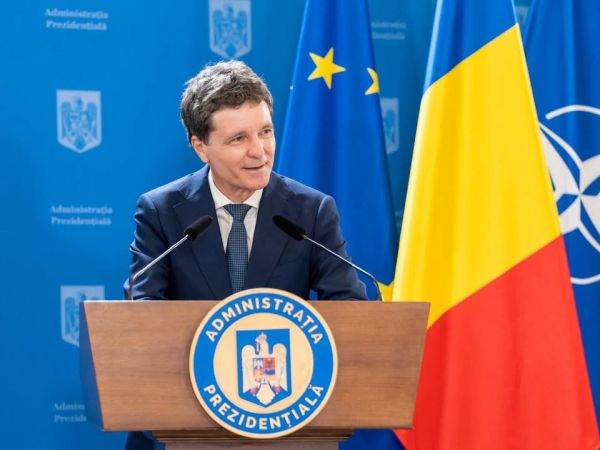
On the first day of September, at Cotroceni, President Nicuşor Dan urged new magistrates to have the "courage of their own convictions." The head of state also stated that, regarding prosecutors, society's primary expectation concerns the fight against corruption-both "high-level and petty corruption." Speaking on appointments to leadership positions within prosecutors' offices, he noted: "I am waiting for the six-month mark since the appointment of the chief prosecutors to pass. The impression so far is that activity has gained momentum." The President also pointed to what he considers to be progress already achieved: "A positive development is that we have separated criminal investigations from television." He explained that the fact that key case documents no longer reach the public sphere via "leaks" represents, in his view, "a step forward." He did not present a tally of corruption cases at the time; he characterized his assessment of the new chiefs' work as merely an "impression," noting that he would wait for the six-month period to elapse.
Two days later, during a meeting of the Superior Council of Magistracy, he stated that the "vast majority" of magistrates are honest individuals, but that suspicions of criminal activity within the system must be investigated. He added that the justice system requires balance, not "investigation for the sake of investigation."
However, while the President holds a positive view of the chief prosecutors and the majority of magistrates, the reality on the ground contradicts him. In December 2025, the Recorder documentary "Captured Justice" brought to public attention allegations regarding the reshuffling of judicial panels, pressure exerted on judges, and major trials allowed to lapse due to the statute of limitations. Protests, testimonies from other magistrates, and meetings at Cotroceni Palace ensued. Nine months later, the mechanisms alleged at the time have not met with public responses commensurate with their gravity. Recorder demonstrated, among other things, how the leadership of the Bucharest Court of Appeal justified panel changes in corruption cases, while magistrates who spoke openly about the court's operations remained exposed.
A recent case illustrates why discussing the justice system solely in terms of perception and public trust is insufficient. On September 22, after DIICOT detained Călin Georgescu for 24 hours in a new fraud case, Judge Vlad Andriescu of the Bucharest Tribunal rejected the request for pre-trial detention and ordered judicial supervision for 60 days. This is the same magistrate who, in the abuse-of-office case involving AUR First Vice-President Dan Dungaciu, issued a preliminary chamber ruling in September 2024, yet the written reasoning was not released until December 2025-a gap of approximately one year and three months. G4Media reported, citing judicial sources, that the statute of limitations for criminal liability had expired during this interval. The Bucharest Tribunal stated that the expiration of the statute of limitations must be determined by the court hearing the case. However, the delay in issuing the written reasoning remains a documented fact with a direct impact on the proceedings. Last week, an investigation by journalists from the Media Investigation Center highlighted another case. At the Craiova Court of Appeal, Judge Sorina Marinaş intended to refer a case to the Court of Justice of the European Union (CJEU); the case had originated from a complainant's challenge against a decision to close the investigation. Before a decision on the referral could be made, Prosecutor General Cristina Chiriac-of whom Mayor Nicuşor Dan, who appointed her, holds a favorable initial opinion, particularly given her status as a distant relative of Mirabela Grădinaru-requested a change of venue for the case.
The High Court granted the request on September 15, and the case was transferred to the Bucharest Court of Appeal. Consequently, the questions prepared by Judge Sorina Marinaş were never submitted to the CJEU by her panel.
The timeline reported by the Media Investigation Center is difficult to ignore. On September 14, the chief prosecutor of the Prosecutor's Office attached to the Craiova Court of Appeal recused himself from considering a potential request for a change of venue or recusal, as the prosecutor who had ordered the case closure was his wife. The deputy prosecutor subsequently appointed noted that she deemed neither recusal nor a change of venue necessary. Nevertheless, Prosecutor General Cristina Chiriac filed the request for a change of venue. The hearing date originally set by the High Court for September 17 was moved to September 15-prior to the scheduled hearing in Craiova where the CJEU referral was to be discussed.
Curiously, according to the cited investigation, a document from the Prosecutor General's Office states that the complainant herself had requested the change of venue. The petitioner denied this. In the statement included in the attached document, Judge Marinaş notes that no such request existed in her panel's case file and that the petitioner had, in fact, expressed opposition to the change of venue. Under these circumstances, the Prosecutor General's Office should have explained the source of that notation and the document supporting it, but failed to do so.
Instead of verifying a potential infringement of independence regarding the prosecutors' actions in filing the request for a change of venue, the Section for Prosecutors of the Superior Council of Magistracy (CSM) decided on September 18 not to refer the matter to the Judicial Inspectorate. The vote was four to three, according to the CSM's public document. The decision does not establish that Prosecutor General Cristina Chiriac's actions were lawful in every respect, but it indicates that no referral for an official review was made. Precisely for this reason, answers remain necessary regarding the request's handling, the urgency of rescheduling the hearing, and the disputed information found in official records.
At the same time, the CSM denied entry to a journalist from CIM at the first hearing of the disciplinary proceedings concerning Judge Laurenţiu Beşu-who appeared in the December 2025 Recorder documentary. The hearing was postponed at the request of the Judicial Inspectorate. The dispute over the public nature of that hearing is separate from the Craiova case, yet it speaks volumes about the climate following the "Captured Justice" report: those who speak out and those attempting to monitor institutional reactions encounter, in turn, barriers that require public explanation.
President Nicuşor is right to call upon young magistrates to show courage. Yet individual courage alone cannot fix a system where a written ruling is delayed by over a year, a potential referral to the CJEU is derailed by a change of venue, and the CSM refuses to review a contested action. If the Romanian justice system wishes to regain public trust, the response cannot simply be rhetoric about balance; instead, a verifiable explanation is required for every decision that alters the course of a case.



















 Euro
Euro Dolar SUA
 Franc elveţian
 Liră sterlină
 Gram de aur