English

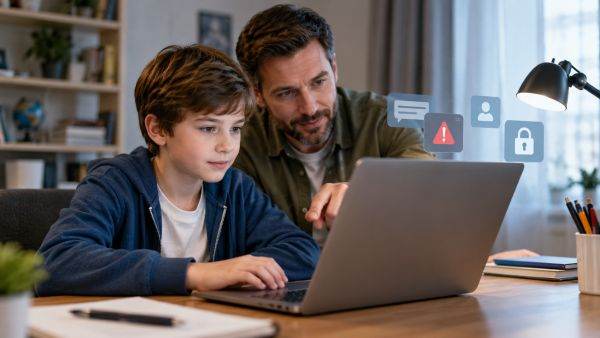
The national project "SiguranţaOnline", initiated by the National Directorate of Cyber Security (DNSC), the Romanian Police and the Romanian Association of Banks (ARB), provides students, parents and teachers with a series of free resources for recognizing and preventing risks in the digital environment. One in four children does not talk to anyone about negative experiences encountered on the internet. Interactive quizzes, educational stories, practical guides and digital vigilance tests can be used both at home and in school activities. The need for online safety education is also supported by the data of the study "Children's Safety in the Online Environment", conducted by the Institute for Research and Prevention of Crime within the Romanian Police. According to the research, although approximately three quarters of students declare that they feel safe on the internet, they have faced various risk situations. These include accidentally accessing inappropriate material, infecting devices with malware, compromising accounts or receiving messages with sexual content.
• Free resources for students, parents and teachers
The national project "SiguranţaOnline" brings together and recommends a series of free resources, developed within the project or by its partners. The materials are designed to help children, parents and teachers recognize fraud attempts, suspicious messages, manipulated content and other threats in the digital environment. Quizzes help children check their knowledge about fraud, suspicious messages and malware. For the youngest, "The Tricky Test" is also available, an interactive experience dedicated to online safety. The "The Websters" series uses easy-to-understand stories and situations to present the risks that children can encounter on the internet and the behaviors through which they can protect themselves. Another tool is the video "Parola de familie", part of a campaign supported by Mastercard. It explains a simple mechanism by which children can check whether a request apparently coming from a close person is real.
The Romanian Police has, in turn, prepared the "Safe Superhero Guide”, with preventive recommendations for students of all ages. The guide helps children recognize risk situations and adopt behaviors that protect them at school, at home and in public spaces.
• Parents, in the first line of protection
Two interactive quizzes developed within the project are available for parents: "Do you know how to say STOP Malware?” and "Are you avoiding online fraud or falling into a trap?”. These allow you to check your knowledge and help you more easily recognize fraud attempts and digital threats. DNSC also provides a parental control guide for the protection of minors in the digital environment. The material provides information on configuring parental control tools and adapting protection measures according to the child's age. Another material is the practical guide to digital protection for users, which includes recommendations on passwords, two-step authentication, updating devices, protecting bank data, identifying suspicious links and using public Wi-Fi networks. The digital vigilance test helps users practice their ability to differentiate legitimate content from manipulated materials or potential digital threats. For the beginning of the school year, the Romanian Police has also prepared preventive recommendations for parents, with practical advice on protecting children and preventing risky situations.
• Teachers can use the materials in classroom activities
The resources provided by the project can also be used in schools. Quizzes, stories and videos can be integrated into guidance classes or digital education activities. Based on the situations presented in these materials, teachers can talk to students about fake accounts, manipulation attempts, cyberbullying, identity protection, fraud and ways to ask for help when they face a problem.
Parental control tools can reduce some of the risks in the online environment, but they cannot replace the dialogue between children and adults. Children need to know that they can talk to a parent or teacher about a situation that scares them, makes them feel uncomfortable or requires them to keep a secret, without fear of being scolded or having their internet access immediately restricted. According to the recommendations, trust and communication are important elements for quickly identifying risk situations.
For the beginning of the new school year, specialists recommend that families establish Let's put together a few simple rules. Children should not share passwords, personal data, photos or banking information in games, on social networks or in conversations with unknown people. Applications and games should only be downloaded from official sources, and privacy settings should be checked regularly. Any message that creates panic, requests money, personal data or urgent action should be checked through a separate channel. A secret password can also be established in the family, known only to parents and children, to verify requests that appear to come from a close person. Children should also not access suspicious links or approve payments or purchases without the consent of an adult. Another important rule is that any unpleasant experience or suspicious request should be discussed immediately with a trusted adult. In a digital environment where children are exposed to both technical risks and those related to manipulation, fraud or interaction with unknown persons, online safety education becomes an important component of their protection, both at home and at school.






















 Euro
Euro Dolar SUA
 Franc elveţian
 Liră sterlină
 Gram de aur