 English


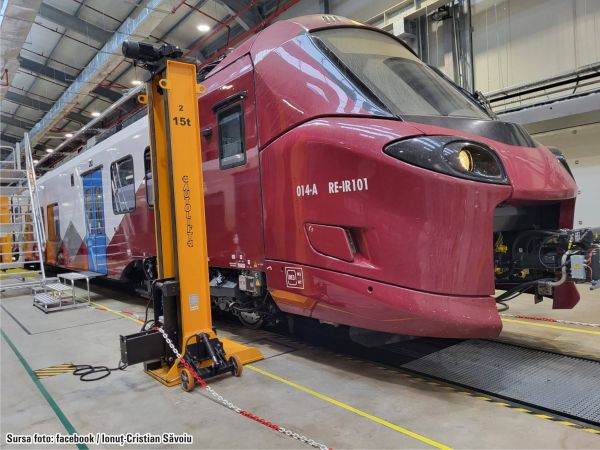
According to the leadership of the Railway Reform Authority, after decades of stagnation, improvisations and trains that have become the symbol of the degradation of public infrastructure, our country is experiencing the largest railway modernization offensive in the last 35 years. According to data provided by the ARF, following a request sent by the BURSA newspaper, we are witnessing an operation of huge proportions: billions of euros pumped into rolling stock purchases, strategic contracts with European industrial giants, explosive delays, contractual tensions and a war of credibility that will decide whether our country will finally have a railway compatible with Europe or just a new generation of failed promises.
Official data from the Railway Reform Authority shows that passenger rail operators in our country will benefit from 42 new electric trains, which were delivered by the companies that won the respective contracts. Of the 42 new electric trains, 21 were delivered by Alstom Coradia Stream RE-IR1, and of these, 16 are already in circulation, while another five are in the reception, testing and endurance stages. Another 21 electric trains are produced by the Polish manufacturer PESA, divided between short- and long-distance trains.
According to the response received from the ARF, the Authority is currently managing seven major rolling stock procurement projects, financed through the Transport Program 2021-2027 and the Modernization Fund. The first major contract concerns the acquisition of 37 interregional RE-IR electric trains produced by Alstom, in a project worth almost 1.71 billion lei. Of this amount, over 1.21 billion lei comes from European funds, the rest being covered by the beneficiary's budget and from ineligible expenses, including VAT. The trains are intended for vital routes for national mobility: Bucharest-Constanţa, Bucharest-Braşov-Cluj, Bucharest-Iaşi, Bucharest-Suceava, Cluj-Timişoara or Cluj-Iaşi.
The real shock, however, comes from the project that can completely redesign regional rail transport: the introduction of hydrogen trains. ARF has already signed, on April 28, 2026, the contract with Siemens Mobility for 12 electric multiple units based on hydrogen fuel cells, in a contract of over 1.13 billion lei excluding VAT, which also includes maintenance for 15 years, with the possibility of extension for another 15 years without a new tender. This is no longer just a purchase of trains, but a paradigm shift. For the first time, our country joins the club of European states that are trying to eliminate dependence on diesel on non-electrified lines. Siemens trains will run on routes such as Bucharest-Piteşti, Bucharest-Târgovişte, Bucharest-Curtea de Argeş or the connection to Henri Coandă Airport. In essence, the Romanian state is betting hundreds of millions of euros on hydrogen technology at a time when many European countries are still testing the economic feasibility of these systems.
In parallel, the Modernization Fund is financing the largest acquisition of electric regional trains in Romania's recent history: 62 RE-R trainsets produced by PESA, in a contract worth almost 2.78 billion lei. Of this amount, over 2.32 billion lei comes directly from the Modernization Fund, and the rest is the beneficiary's contribution. The trains would serve essential routes such as Bucharest-Adjud, Bucharest-Braşov, Iaşi-Suceava, Arad-Timişoara-Caransebeş or Constanţa-Feteşti.
PESA is also supplying the 29 RE-IR2 interregional electric trains, valued at over 802 million lei, including VAT. These trains will run on routes of great strategic importance, from Cluj-Braşov and Cluj-Craiova to the Galaţi-Constanţa and Bucharest-Călăraşi connections. In addition, ARF is already considering the extension of the routes with the electrification of the Cluj-Oradea and Craiova-Calafat lines, which could completely redraw the map of regional railway mobility. The investment offensive also includes the acquisition of 16 new Alstom TRAXX MS3 electric locomotives, capable of reaching speeds of 160 km/h and compatible with the European ERTMS systems. The contract, worth over 441 million lei, is fully financed from the Modernization Fund. The first locomotive is already in testing and is expected to enter commercial service this month. These locomotives will haul trains on the key corridors Dej-Braşov-Constanţa, Timişoara-Arad-Constanţa or Iaşi-Bucharest-Constanţa.
But behind the images of modern trains and spectacular contracts, there is also the dark side of the railway reform: delays, non-compliance with contractual obligations and the risk of repeating the great historical failures of the Romanian infrastructure. The situation of the relationship with PESA is already a major alarm signal. ARF officially confirmed to us that the Polish supplier did not respect its commitment regarding construction of maintenance halls before the delivery of the trains. Seven regional trains and two interregional trains were received with observations precisely because of these irregularities.
Regarding this contract, the interim Minister of Transport, Radu Miruţă, announced yesterday on his Facebook page that in 7 days the ministry he leads will propose to the manufacturer an addendum by which payments related to the unfulfilled maintenance obligations will be suspended, "so that we can start the trains". Subsequently, in another 4 days, the manufacturing company will communicate to what extent it accepts this compromise to unblock the situation.
"We need to move things, penalize contract violations, sanction, but not keep 21 new trains in the sun, while people are riding in old trains, holding their noses. I know you're tired of hearing about new trains only in press releases and promises. It's natural to want a simple thing: to see the trains running, not files being passed around between institutions," said Radu Miruţă, who did not mention when payments for unfulfilled maintenance obligations will be suspended.
This problem is much more serious than it seems at first glance. In the absence of maintenance infrastructure, the 21 PESA trains that will be put into circulation risk entering a vicious circle of defects, unavailability and explosive operating costs. Our country has previously purchased modern rolling stock without creating the technical ecosystem necessary for efficient maintenance, and the effects were quickly seen in the accelerated degradation of the fleets. Now, the authorities are trying to avoid repeating history, but the contractual tensions with PESA show that the railway reform is far from being a linear success story.
In parallel with the purchases of new trains, the Romanian state is also trying to partially save the existing fleet. Although ARF has responsibilities exclusively for new rolling stock, the institution contributed to the substantiation of the project to modernize 55 electric locomotives, the conversion of 20 diesel shunting locomotives into battery-powered electric locomotives and the modernization of 139 passenger cars. The total value of the project reaches 871.57 million lei excluding VAT, according to the Ministry of Transport's analyses.
This dual strategy, which consists of massive purchases and the partial modernization of the old fleet, represents perhaps the last real chance to avoid the collapse of passenger rail transport. For years, Romanian trains have become a symbol of chronic delays, abandoned infrastructure and administrative incompetence. Now, the stakes go beyond simply buying modern trains. It is about rebuilding a national mobility system, at a time when the European Union is aggressively pushing green transport, decarbonisation and shifting traffic from roads to rail.



















 Euro
Euro Dolar SUA
 Franc elveţian
 Liră sterlină
 Gram de aur





























