English
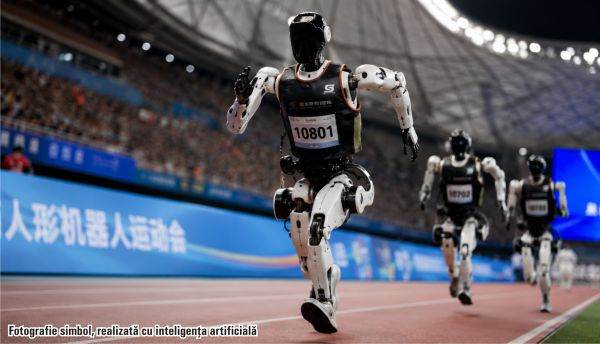
Humanoid robots surpassed athletes in the 100 and 400 meters at the Beijing Humanoid Robot Games, as the industry tries to move from spectacular demonstrations to commercial applications. This year's competition included 21 events built around activities in factories, hotels, homes and logistics centers, Xinhua reported.
• From racing to real-world activities
The athletic performance is one of the most visible advances since last year's inaugural edition, when numerous demonstrations highlighted the robots' technological limitations, including difficulties maintaining balance and moving around the course. This year, however, the focus of the competition has shifted beyond physical performance. Organizers have introduced 21 real-world scenarios where robots must perform tasks that are repetitive, physically demanding, dirty, dangerous or difficult for humans to perform. The challenges include industrial assembly, housekeeping, logistics, rescue operations and even sorting books in a library. The shift reflects one of the industry's main challenges: transforming technological progress into productivity and applications that generate economic value.
• Robots learn to do housework
Housekeeping is one area where developers are trying to demonstrate the versatility of humanoid robots. In one challenge, robots must perform a sequence of tasks, from picking up scattered objects and folding clothes to putting them in closets and hanging them out to dry. Liu Bingbing, an associate professor at the College of Robotics at Peking University, explained to Xinhua that a seemingly simple task for a human poses complex problems for a robot. Objects in different positions require different movement strategies, and the robot must constantly adapt its trajectory to overcome obstacles. Some teams have reduced the weight of robotic structures and used lighter materials to improve mobility. Others have developed "lifelong learning” mechanisms, through which robots constantly adjust their movements according to mechanical changes in their own joints. Progress is visible even in a short period of time. According to one member of the jury, while last year most robots had difficulty even folding clothes, this year they can perform the operation and open cabinets to store objects.
• From demonstrations to production
The industry is already starting to test humanoid robots in real conditions. In eastern China, Hangzhou Electrochemical Group is using robots to inspect equipment and detect toxic gas leaks in industrial environments characterized by high temperatures and corrosive conditions. In agriculture in Shanghai, two-armed harvesting robots have been tested on a tomato farm. The systems identify fruits, assess ripeness, and determine the sequence of harvesting operations. These applications indicate the direction in which the industry is trying to develop: robots are no longer evaluated only by their ability to perform spectacular demonstrations, but also by the efficiency and reliability with which they can perform concrete economic tasks. Xu Xiaolan, president of the China Institute of Electronics, said at the 2026 World Robotics Conference that China's humanoid robot industry is entering a critical stage of commercialization and large-scale implementation.
• Artificial intelligence must control the robot's body
Another essential step is the integration of AI with the hardware. For a robot to be able to perform a wide range of tasks based on natural language instructions, it must be able to interpret the environment, make decisions, and coordinate its movements in real time. Xi Yue, co-founder of Robotera, believes that the first large-scale deployments will occur in controlled environments with well-defined processes, such as logistics, high-performance manufacturing and hazardous operations. As the technology matures, robots will be introduced into more complex environments. For industry, the challenge is to build an "embodied intelligence” system that combines high-quality real-world data, algorithms and advanced manipulation capabilities. In this vision, a robot's performance will not depend solely on its physical components, but on the combination of hardware, AI models and applications developed for the environment in which it operates. An example of this transition is the Galbot S1 humanoid robot, presented at the World Robotics Conference in Beijing. The robot can manipulate a, transport and stack industrial containers, constantly adapting its movements according to the position of objects, changes in the environment and the state of the load. Galbot S1 has already been deployed in industrial facilities, including CATL's battery production. Galbot has also entered into partnerships with SAIC Motor and Bosch to explore the use of embedded intelligence in industrial production. Wang He, founder and CTO of Galbot, said that the company develops specialized AI models for different industries and uses data collected during operation to continuously improve the performance of robots.
• China seeks to accelerate commercialization
To bring technological development closer to economic applications, the "Global Robotics Application Exploration Program" was launched at the World Robotics Conference.
The initiative, launched by the World Organization for Robotics Cooperation and the China Institute of Electronics, together with industrial organizations, research institutions and international companies, aims to select 1,000 scenarios annually in which robots can be tested for free and subsequently developed for specific applications.
The objective is to reduce the gap between technological research and commercial use and form an international ecosystem for the development of robotics. Interest goes beyond the Chinese market. Jack Perry, chairman of The 48 Group in the UK, said that the robotics sector in China is advancing rapidly, especially in the field of physical intelligence, and European companies are analyzing the use of robots to increase efficiency.

























 Euro
Euro Dolar SUA
 Franc elveţian
 Liră sterlină
 Gram de aur