English

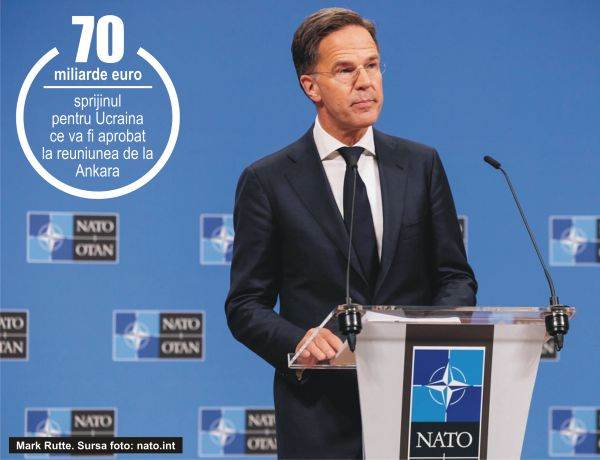
Security in the Black Sea region is not on the agenda of the NATO summit taking place today and tomorrow in Ankara, although Turkey, the organizing country, is one of the important riparian states in the hot zone since Russia started the war against Ukraine. According to information posted on the NATO website, the three official priorities for this summit are defense spending, investments in the defense industry and support for Ukraine. The strengthening of NATO's Eastern Flank, given that the Trump Administration has announced that it will withdraw a significant part of the troops it has stationed in Europe, and the security of naval traffic in the Black Sea do not appear as main, separate topics on the agenda of the high-level meeting.
The explanation lies, to a large extent, with who is hosting and what the host wants to highlight. Turkey frames its own role through the Bosphorus and Dardanelles straits, through the Montreux Convention, and through its position at the crossroads of the Black Sea, the Eastern Mediterranean, the Middle East, and the Caucasus. According to analysts at the Modern War Institute, Ankara tends to treat the Black Sea more as part of its own sphere of influence and negotiation, including through its role as a mediator between Moscow and Kiev, than as a front requiring collective military consolidation. Then, Turkey has consistently insisted, according to the United States Studies Centre, that the threats on its southern border are as important as those in Eastern Europe, which pushes the summit discourse towards a "360-degree approach” - south, east, west, and north alike - rather than a specific focus on the eastern flank.
There is a second, perhaps more important factor: the Trump administration. Washington's central priority in Ankara is, as the American press puts it, "burden-shifting,” i.e. shifting financial and operational responsibility to the Europeans, and not expanding new commitments to the American military posture on the eastern flank. In fact, precisely because there is talk of withdrawing American troops from Europe and a six-month review of the US military presence on the continent, a declarative consolidation of the eastern flank would sound contradictory to the American message.
The European Leadership Network and the Atlantic Council have signaled exactly this gap: the former organization explicitly calls on NATO to develop a "practical roadmap” for a 360-degree approach, dealing with the Black Sea, Eastern Europe, the Mediterranean, and hybrid threats together, precisely because there is no such concrete plan on the table; The Atlantic Council proposes that the Ankara summit be the "perfect opportunity” to extend measures similar to those already taken for the eastern flank, such as Operation Eastern Sentry, launched in response to Russian drone incursions, but to the southern flank, not necessarily to strengthen the eastern ones.
We note that this is the second time that Turkey has hosted such an event, after the Istanbul summit in 2004, and the choice of location, 22 years apart, is not at all accidental: according to analysts cited by the Modern War Institute and the United States Studies Centre, Ankara plays an increasingly important role on the southern flank and in the Black Sea area, and the recent rapprochement between US President Donald Trump and Turkish President Recep Tayyip Erdogan, along with the growing need for weapons production capabilities, have changed the way other member states view Turkey, as noted by the Washington Post.
The summit will be held at the Beştepe Presidential Complex and will bring together heads of state and government, senior NATO officials, diplomatic delegations, military advisers and extensive security and press teams, in an unprecedented security deployment for the Turkish capital, estimated by Anadolu Ajansi at around 70,000 police and gendarmes, along with additional airport capacity, dedicated medical and emergency response systems, increased cyber coordination and temporary traffic restrictions in several areas of the city.
• 70 billion euros in support for Ukraine
The central issue at the summit is defense spending. NATO Secretary General Mark Rutte set three clear priorities for Ankara: continuing to increase allied defense investment, strengthening transatlantic defense industrial production and continuing to support Ukraine. According to NATO estimates published in March, all member states have already reached the threshold of 2% of GDP allocated to defense in 2025, compared to only three states in 2014, and all have also met the target of directing at least 20% of the defense budget to acquisitions and modernization, compared to eight states a decade ago.
Mark Rutte recently pointed out that European allies and Canada spent an additional $1.2 trillion on defense between 2016 and 2026, including a 20% increase, or $139 billion, between 2024 and 2025 alone. The discussion, however, does not stop at political promises: at last year's summit in The Hague, allies committed to reaching a level of 5% of GDP allocated to defense over the next decade, of which 3.5% for basic military spending and the rest for infrastructure and related spending, and in Ankara, President Trump comes with the declared mission of enforcing compliance with this commitment, after last year he managed to obtain the agreement of allies to increase budgets. Some states, such as Spain, have openly said that they cannot reach this level, and other governments have expressed reservations, so the tension on this subject remains one of the fault lines of the meeting.
Regarding support for defense investments, according to Mircea Geoana, former NATO Deputy Secretary General, the establishment of the Multilateral Defense, Security and Resilience Bank (DSRB) is to be approved at the Ankara summit.
In a recent Facebook post, Mircea Geoană stated: "I initiated the project during my time at the NATO summit, as an additional financing and innovation tool, alongside DIANA and the NATO Innovation Fund. I continued to support it in my current capacity as a member of the board of the DSRB Development Group, alongside former NATO colleagues and professionals from the financial, legal and consulting worlds. Years of hard work, in which we managed to convince governments and political and financial circles in democratic states of the need for an additional financing tool dedicated to the defense industry, especially for small and medium-sized companies, and from countries with budgetary constraints and considerable financing costs. (...) Proud to see Romania as a founding member of the DSRB and I thank our authorities for supporting this important project. We look forward to the official launching ceremony of the Bank at the NATO Summit in Ankara.”
Support for Ukraine remains another key pillar of the agenda, in the fifth year of the war unleashed by Russia. According to a draft final statement seen by Reuters and already approved by NATO ambassadors, the allies are set to pledge 70 billion euros, or about $80 billion, in military assistance to Ukraine for 2026, with a commitment to maintain "at least equivalent levels” of support in 2027. Some of the funds will come from existing bilateral commitments and a 60 billion euro European Union loan facility for defense investment and procurement in Ukraine.
The Ankara declaration is expected to reaffirm an "unwavering commitment" to collective defense under Article 5 of the North Atlantic Treaty, describing Russia as a "long-term threat" to Euro-Atlantic security and stability, while the leaders will emphasize that Europe and Canada, along with the United States, assume increasing responsibility for the defense of the Alliance, in a formula that Rutte calls "NATO 3.0": a stronger Europe, in a stronger NATO Alliance, less dependent on the United States, but in which the United States remains firmly involved.
• Trump-Zelensky meeting, one of the important moments of the NATO summit
Donald Trump's presence in Ankara is being watched with particular attention, at a time when the White House has announced troop withdrawals from Europe and a six-month review of the American military presence on the continent, fueling uncertainty within the Alliance. According to National Public Radio (USA), the US president is set to meet with Ukrainian President Volodymyr Zelensky on Wednesday, after speaking by phone with both the leader in Kiev and Russian President Vladimir Putin on July 4, a discussion in which, according to a Russian official, Trump offered support for accelerating negotiations to end the conflict. The US president is also scheduled to meet with Syrian President Ahmad al-Sharaa on the sidelines of the summit, in a context in which Trump has publicly floated the idea of a broader role for Syria in the fight against Hezbollah in Lebanon.
Amid these tensions, a bipartisan group of US senators, led by Democratic Senator Jeanne Shaheen, is traveling again to the summit to convey a message of firm support for the Alliance from Congress, as a counterbalance to the Trump administration's often harsh attitude towards NATO. Shaheen said European allies "are our best partners, our best trading partners, and they are essential to our national security and our economic success," adding that this is exactly what the administration seems to fail to understand.
Transatlantic tensions do not stop at military spending, however. European officials fear that the recent war between the United States and Iran, as well as Trump's irritation with the reaction of European governments to this conflict, could overshadow the talks in Ankara. The draft final declaration, however, contains strong language on the subject, with the allies set to reiterate that Iran must never possess nuclear weapons and demand that Tehran fully respect freedom of navigation in the Strait of Hormuz.
• Industrial cooperation within NATO, discussed on the first day of the summit
In parallel, Turkey intends to use the summit to showcase the growing capabilities of its defense industry and to repeat its long-standing demand for the lifting of all restrictions on trade in military equipment within the Alliance. President Erdogan hopes to make progress with countries like France and Italy on the acquisition of SAMP/T missile defense systems and other forms of defense industrial cooperation, and on the very first day of the summit, Tuesday, a NATO Defense Industry Forum will be held in Ankara, where contract announcements worth tens of billions of dollars are expected.
Beyond the numbers, statements and diplomatic procedures, the real stakes of the Ankara summit, according to experts, lie in NATO's ability to transform political consensus into real military force. David M. Cattler, former NATO deputy secretary general for intelligence and security, now a fellow at the Center for European Policy Analysis, told National Public Radio (USA) that history will judge this summit not by the length of the final communique or the size of the spending commitments, but by the Alliance's real ability to quickly transform political consensus, increased investment and growing public support into a concrete military capability capable of maintaining a credible deterrent. Basically, after five or six summits in which the Alliance established its strategic direction, Cattler says, the time has come for NATO to demonstrate that it can deliver, not just promise. European analysts also draw attention to another sensitive dimension of the summit: Turkey's special position within the Alliance. Although Ankara condemned the Russian invasion of Ukraine in February 2022 and supported Ukrainian territorial integrity, and Turkish drones played an important role in defending Ukraine in the early stages of the war, Turkey did not join Western sanctions against Russia and has repeatedly acted as a mediator between Moscow and Kiev, including in negotiations on the Black Sea Grain Initiative. This ambivalent attitude has sometimes been viewed by other member states as a form of equivocation, and the Ankara summit could bring the broader debate on the Alliance's future strategic direction back to the fore, at a time when NATO sees itself not only as a defense alliance but also as a community of democratic values.
Turkey is also expected to support a deepening of the Istanbul Cooperation Initiative, the framework through which the Alliance collaborates in the field of security and the defense industry with Gulf partners, such as Bahrain, Kuwait, Qatar and the United Arab Emirates, with the participation, in certain activities, of Oman and Saudi Arabia, in a move aimed at strengthening NATO's southern flank amid growing instability in the Middle East.
• Strengthening the Eastern Flank and Security in the Black Sea, Romania's Priorities at the NATO Summit
President Nicuşor Dan is participating in the NATO summit in Ankara, where he will emphasize the importance of continuing allied support for security in the Black Sea region and strengthening the deterrence and defense posture in a unified manner on the Eastern Flank, according to the press release issued by the Presidential Administration regarding this event.
The head of state "will draw attention to the consequences that Russia's actions have at a regional level, including on Romania, with emphasis, in this context, on the need to strengthen air and maritime defense," according to the cited source.
The Presidential Administration indicates that NATO leaders are meeting in Ankara in a security climate that continues to deteriorate as a result of Russia's war against Ukraine and developments in the Middle East. "In this context, the Allies will emphasize maintaining transatlantic unity and reconfirming the priority given to collective defense. The main topics that will be on the Alliance's agenda at the summit are: fulfilling commitments regarding the increase in the defense budget and the assumption of increased responsibilities by the European Allies, continuing support for Ukraine and the effort to consolidate the operational and industrial strength of the Alliance, as a cumulative effect of the development of the companies, production and technological innovation”, the quoted source mentions.
• Increasing capacities on NATO's eastern flank, the priority of Defense Minister Radu Miruţă
Radu Miruţă, acting Minister of National Defense and acting Minister of Transport, stated yesterday that our country will support "increasing capacities on the eastern flank” and developing the national defense industry at the NATO summit.
He specified: "There is an agenda sent forward by NATO for all countries, which mainly refers to maintaining the goal of reaching 5% of GDP, money for defense in each country, where we are on schedule for now. There is also a discussion that is starting to be increasingly consistent regarding the concern of each country to have the capacity to produce on national territory, capabilities necessary for arming Europe. What we have done through SAFE puts us in an acceptable position”.
Minister Radu Miruţă added that a good part of what the Romanian Army will acquire through SAFE will be produced on national territory, which means new production capacities, which will help develop the economy.
• Mark Rutte: European allies and Canada are investing 4% of GDP in defense and security
NATO Secretary General Mark Rutte arrived in Ankara yesterday and said that NATO's European allies and Canada have already increased their defense spending to around 4% of their gross domestic product.
"Just one year into a 10-year project, we see that European allies and Canada are already investing around 4% of their GDP in defense and security. Last year, European allies and Canada spent almost 20% more on core defense than the previous year. Looking at the years 2025 and 2026 combined, this represents an additional investment of $258 billion, and the current trend continues," said Mark Rutte, who added that he expects member states to arrive in Ankara with firm plans to reach the 5% of GDP allocation target.
NATO Secretary General has issued a direct appeal to them to invest money in missiles and interceptors, stressing that financial commitments must now deliver real equipment. And this should be seen today at the Defense Industry Forum, when allies are expected to announce "new contracts worth tens of billions of dollars,” according to Mark Rutte.
The senior NATO official stressed that Ukraine must continue to receive sustained support from allies, especially in the critical area of air defense, urging allies and partners to maintain and strengthen their assistance as the conflict continues.













 Euro
Euro Dolar SUA
 Franc elveţian
 Liră sterlină
 Gram de aur