English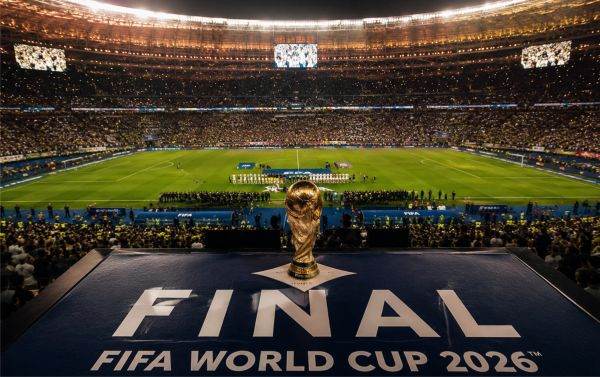
Argentina and Spain will meet on Sunday in New York in the 2026 World Cup final, in a duel that pits the reigning world champion and the European champion against each other. The stakes are enormous: for Lionel Messi, it is the chance to end his international career with another world title, while Spain is aiming for its second success in history and the confirmation of a new exceptional generation.
• Scaloni: "This team never ceases to surprise me"
Argentina reached the final act after one of the most spectacular semi-finals of the tournament. Led 1-0 by England, Lionel Scaloni's team turned the result around in just a few minutes, winning 2-1, after two decisive assists provided by Lionel Messi. "This team never ceases to amaze me,” said coach Lionel Scaloni after qualifying. The coach admitted that the final against Spain would be the toughest test of the competition, but he highlighted the team spirit and the role of the Argentine fans in the team's journey. "We will try to win and we will give our best,” said Scaloni.
• Argentine press speaks of a new chapter in the legend
The victory over England was enthusiastically received by the press in Buenos Aires. The daily Ole headlined "Heroes: historic comeback, goodbye to England and we go to the World Cup final”, while journalist Diego Macias described the qualification as one of those moments when "history is written live”. Clarín, for its part, noted that Argentina "are writing history again against England”, and La Nacion characterised the success as "the team's best match at this World Cup”, highlighting the world champions' ability to bounce back under pressure. The message from the Argentine press is almost unanimous: Scaloni's team does not rely solely on Messi's talent, but on a collective strength that has allowed them to overcome the difficult moments of the tournament.
• Spain dreams of a second star
On the other hand, Spain eliminated France 2-0, in a semi-final dominated tactically and technically by Luis de la Fuente's team. The Iberian press praised "La Roja""s performance. AS said that Spain "won the admiration of the entire football world", while Marca described the qualification as "an unforgettable spectacle", comparing the Spanish game to a work of art. According to Mundo Deportivo, one of the keys to the success was the decision of coach Luis de la Fuente to start Fabian Ruiz instead of Pedri, a choice that consolidated control of the midfield alongside Rodri. Sixteen years after their triumph in South Africa, Spain are once again on the verge of winning the World Cup, benefiting from the contribution of a generation in which the experience of Rodri is combined with the explosion of talent of Lamine Yamal. "It's hard to describe what we feel, but it's pure joy. This group of players is exceptional. We still have a step to take. There's a lot of tension; it's a huge responsibility to be in the final, it's a privilege. We have to process all of this," said Luis de la Fuente.
• A final between continuity and generational change
The final in New York is more than just a clash between two teams in form. It's a meeting between two models of football construction. Argentina are looking to extend a dynasty built around Lionel Messi and become the first team to successfully defend their World Cup title since Brazil in 1962. Ahead of them is a Spain that has regained its identity through possession, tactical discipline and offensive courage, considered by many analysts to have played the most spectacular football of the tournament. Regardless of the outcome, the final promises to mark the end of one chapter and, perhaps, the beginning of another. If Argentina wins, Messi will definitively cement his place in the history of the competition. If the trophy goes to Spain, Lamine Yamal and his generation will inaugurate a new era in world football.
Records, legends and events that have entered the history of football
Over time, the World Cup finals have offered not only memorable moments on the pitch, but also records that are hard to match, spectacular stories and events that have become part of the legend of the competition. From the dominance of some national teams to trophies hidden in shoe boxes or discovered by a dog, the history of the last act of the World Championship is full of unique episodes.
• Germany and Brazil, the landmarks of the great finals
Germany is the team that has played the most World Cup finals, eight in number. Germany and Brazil share the record for the most consecutive appearances in the last act, three each. At the opposite end is the Netherlands, which holds one of the saddest records of the competition. The "Clockwork Orange" national team reached the three finals - 1974, 1978 and 2010 - but lost them all, being the team with the most finals without a trophy. Another record that remains intact to this day concerns the technical bench. No team has won the World Cup with a foreign coach. All champion coaches have had the same nationality as the team they led to the title.
• Maracană, penalties and a two-goal final
The largest attendance recorded at a World Cup final remains that of 1950, when Brazil and Uruguay met at the Maracană stadium. Officially, almost 174,000 spectators were registered, but unofficial estimates speak of over 199,000 people, an unrivaled record in modern football. The match, won by Uruguay, went down in history as the "Maracanazo”. Only three finals have been decided on penalty kicks: Brazil - Italy (1994), Italy - France (2006) and Argentina - France (2022). The 1994 final remains the only one in which no goals were scored in the 120 minutes of play. The first World Cup final, played in 1930 between Uruguay and Argentina, had an unusual situation. The two teams were unable to agree on the match ball, so FIFA decided that the first half would be played with the ball chosen by the Argentines, and the second half with the ball preferred by the Uruguayans. Argentina led 2-1 at half-time, but Uruguay turned the result around and won 4-2.
• The trophy hidden by war and the dog who became a hero
The history of the World Cup trophy also includes episodes worthy of a novel. During World War II, FIFA vice-president Ottorino Barassi of Italy hid the original trophy in a shoebox under his bed to prevent it from being confiscated by Nazi troops. Another famous episode occurred before the 1966 World Cup, hosted by England. After the trophy was stolen from London, it was found a week later in a bush by Pickles the dog. The four-legged friend became an overnight national hero and one of the most famous characters in World Cup history.

























 Euro
Euro Dolar SUA
 Franc elveţian
 Liră sterlină
 Gram de aur