English
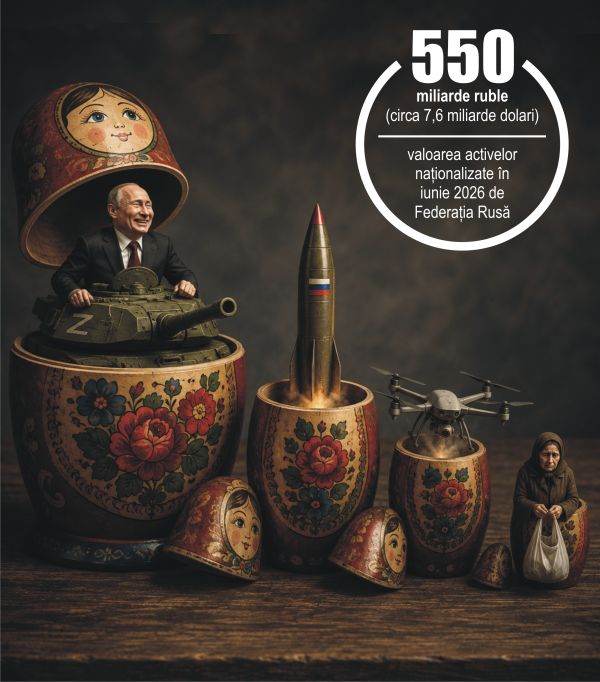
Russia can produce more tanks, missiles, drones and shells, it can pay hundreds of thousands of people to fight on the front in Ukraine, it can rebuild equipment destroyed on the front and it can pass these expenses into the gross domestic product, then proclaim that the economy is growing. What the Kremlin authorities cannot do, no matter how carefully they embellish their statistics, is to turn a tank into an apartment, a missile into a hospital, a shell into a school or the death of a soldier into a real increase in the standard of living. The Russian war economy generates activity, wages, contracts and production, but at the same time it consumes workers, capital, technology and raw materials that no longer find their way into the civilian economy. And when this contradiction becomes too visible, the state intervenes twice: it confiscates property to redistribute resources to loyal groups, and it confiscates truth to redistribute reality through statistics convenient to power.
This is the great economic illusion of Vladimir Putin's Russia: a country can appear stronger in the tables at the very moment it becomes poorer in everyday life. GDP does not distinguish between an agricultural machine that will produce food and an armored vehicle that will be destroyed on the front, between building a university and manufacturing a missile, between investment that generates future well-being and ammunition that disappears after use. Both are recorded as production. If the state orders a million projectiles, the factories work, the suppliers deliver, the workers receive salaries, and the added value enters the national accounts. But after the explosion, there is no productive asset left, no civil infrastructure, no capacity to sustainably raise the productivity of the population. All that remains is the need to manufacture the next million projectiles.
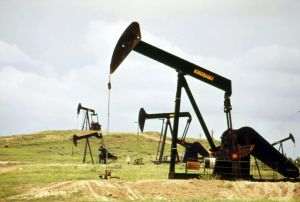
This mechanism explains why Russia reported economic growth of 4.3% in 2024, despite sanctions and war, but slowed to around 1% in 2025. For 2026, the International Monetary Fund has lowered its forecast to just 0.8%, while the Bank of Russia indicates a range of between 0.5% and 1.5%. The high cost of credit, labor shortages, higher taxes and reduced oil and gas revenues are increasingly weighing on the economy. Also relevant is the fact that the IMF has not carried out a direct assessment mission to Russia since November 2019, so even the forecasts of international institutions depend to a significant extent on information produced or filtered by the Russian system, according to Reuters.
• Military spending of 6.7% of GDP
A recently published analysis by the International Institute for Strategic Studies (IISS) on the political and economic crisis that Russia is heading towards shows that Moscow is approaching an increasingly difficult choice: either reduce the intensity of the military effort or resort to a more coercive economic and social mobilization. Industrial and human constraints can no longer be solved with subsidies alone. Money can multiply orders, but it cannot instantly multiply the capacity of factories, the number of skilled workers or access to advanced Western components. The harder the state presses the military acceleration, the more fuel the civilian economy loses.
Russian military spending increased in real terms by almost 42% between 2023 and 2024 alone, reaching, according to the analysis prepared by the IISS, about 13,100 billion rubles, the equivalent of about 6.7% of GDP. The proportion was already more than twice the average of 2.8% in the years before the full-scale invasion. The problem is not just the size of the bill, but its cumulative effect: lost equipment must be replaced, soldiers must be recruited and paid, the wounded and the families of the dead must be compensated, and occupied territories must be administered and subsidized. The war economy does not finance a single investment, but an obligation that reproduces and increases through its own destruction.
At the same time, the demographic deficit is becoming an economic limit that cannot be eliminated by a decree signed by President Vladimir Putin. According to the French daily Le Monde, Russian Labor Minister Anton Kotiakov estimated that by 2030 the economy will need to find about 10.9 million workers to cover new jobs and retirements. About 700,000 people would have been drawn to the front or military production, exacerbating the shortage of personnel in civilian sectors. Russia can import workers, extend factory hours, and automate some operations, but none of these solutions quickly fixes the combination of an aging population, specialists emigration and war losses.
• The Kremlin nationalized assets worth nearly 5,000 billion rubles
Here begins the deep connection between the militarized economy and the new capitalism of confiscation. When resources become insufficient, property ceases to be a right and becomes a revocable concession granted by power. The Russian state does not limit itself to taxing, regulating, or commanding; it re-examines privatizations that are almost three decades old, seizes enterprises, arrests owners, transfers assets to the state, and may later return them to the private circuit, but to more loyal beneficiaries. Nationalization is not necessarily the final destination. It is often the intermediate station through which wealth passes from a vulnerable owner to a state corporation, to a Kremlin confidant, or to a new elite formed around the war economy.
The case of businessman Vadim Moshkovich illustrates the extent of the mechanism. Russian authorities announced in June 2026 the seizure of assets valued at 550 billion rubles, approximately $7.6 billion, and their transfer to state ownership. The founder of the agricultural group Rusagro has been in pre-trial detention since March 2025. According to The Moscow Times, the operation would be the largest seizure in the current wave of nationalizations, and the total value of companies transferred under government control since the invasion of Ukraine would have reached approximately 6,500 billion rubles, the equivalent of almost $90 billion.
The estimates of IISS, Le Monde, Reuters and The Moscow Times differ precisely because the process is opaque. The Warsaw-based Center for Eastern Studies (OSW) estimated that assets worth about 3.9 trillion rubles, representing almost 2% of Russia's GDP, had been confiscated between February 2022 and June 2025. In 2024 alone, the state would have taken over 157 companies valued at 1.1 trillion rubles, and in the first quarter of 2025, another 50 entities, with a cumulative value of over 800 billion rubles. There is no central registry of nationalized assets, trials are dispersed across regional courts, and some are conducted behind closed doors. By 2025, the average duration of such cases would have dropped to one to two months, with judgments sometimes being delivered right from the first hearing.
The justifications are flexible enough to cover almost any owner chosen as a target: allegedly illegal privatization in the 1990s, corruption, foreign citizenship, residence abroad, ownership of a declared strategic asset, or threat to national security. Russia's Constitutional Court ruled in May 2025 that, in cases challenging old privatizations, the statute of limitations can be calculated from the moment prosecutors claim to have discovered the violation, not from the date of the transaction. In effect, an acquisition considered legal for 25 or 30 years can become retrospectively vulnerable when the state needs the company or when a political protector loses the battle within the system. The Kremlin's message to Russian investors is devastating: it's not just about respecting the law, but also about being useful, protected, and loyal. Even loyalty offers no definitive guarantee, as confiscation does not exclusively hit opponents or entrepreneurs who have left Russia. Businessmen who have not publicly criticized the Kremlin and who have operated for years within the informal rules of the regime have also been targeted. Their wealth is secure only as long as the network that protects them remains stronger than the network that wants the assets.
• Budget deficit of 8.3 trillion rubles, end of 2025
Confiscation of property and manipulation of statistics are two sides of the same policy. The first allows the state to control resources; the second allows it to control the perception of the result. In an economy where an increasing part of the budget is secret, military production is difficult to verify, sensitive demographic indicators disappear from the public space, and access to independent observers is limited, the percentage of GDP growth takes on a deceptive precision. The figure may be correct within the methodology used and yet incompletely describe the essential reality: who produces, what produces, at what cost, for whom, and what is left after the state has spent the money.
The German foreign intelligence service (BND) has claimed, according to Reuters, that Russia's federal budget deficit in 2025 would have been 8,010 billion rubles, 2,360 billion rubles more than the official figure of 5,650 billion rubles. The BND has not published the full calculation, and the Russian Finance Ministry has not provided a detailed answer, which prevents a full independent verification. However, the consolidated budget, which includes regional components, would have recorded a deficit of 8,300 billion rubles, equivalent to 3.9% of GDP and 2.6 times higher than the previous year, according to a recent analysis published by Reuters.
As can be seen from the above, in Vladimir Putin's Russia statistics are no longer just a measuring instrument, but part of the architecture of power. The official figure must prove that international sanctions have failed, military production must demonstrate that the state is strong, and the confiscation of assets must demonstrate that no one is stronger than the state. Together, the three mechanisms build a ghost economy: impressive in press releases, threatening in armaments, profitable for the beneficiaries of redistribution, and increasingly expensive for the average citizen. The Kremlin can order a factory to manufacture more missiles, a court to transfer a company, and an institution to publish a convenient percentage. But it cannot order the appearance of missing workers, technology it can no longer buy, private capital driven away by confiscations, or welfare destroyed by war. This is the limit that neither propaganda, nor the prosecutor's office, nor state accounting can nationalize.










 Euro
Euro Dolar SUA
 Franc elveţian
 Liră sterlină
 Gram de aur