English

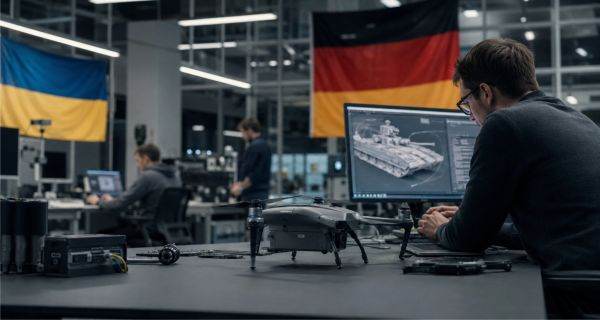
The German government will create an investment fund that will allow the state to take direct stakes in defense technology startups, as part of a broader strategy to support new businesses, Reuters reports, citing the Berlin government's announcement.
Startups and scaleups in the security and defense sector are playing an increasingly important role in strengthening Germany's security and defense capabilities, according to a Berlin government document seen by Reuters, Agerpres notes.
German companies Helsing and ARX Robotics have supplied Ukraine with battlefield combat systems.
To improve access to capital, the government will set up "a new vehicle for direct federal investment in startups and scaleups" that develop products and services with clear military applications, the government said.
The value of the fund was not announced.
This fund is part of a broader strategy, led by the Economy Ministry, aimed at improving access to finance, attracting qualified employees and reducing bureaucracy for start-ups.
According to the cited document, venture capital investments reached 7.2 billion euros in 2025, well below the level of those in the US and the UK.
The strategy is also intended to mobilize more private capital for the technology and biotechnology sector.
The Future Fund, a program launched by the German Government in 2021, will be extended beyond 2030.
• Record number of startups in Germany
Germany recorded a record number of startups in the first half of the year, with artificial intelligence helping entrepreneurs launch businesses faster and with less capital, according to a study recently published by the German Startup Association. According to it, 3,053 startups were founded in Germany in the first half of 2026, a 52% increase compared to the second half of 2025. Companies had 26% more employees in 2024 than in 2020.
"Germany has never seen such a level of entrepreneurial momentum,” Verena Pausder, president of the German Startup Association, said this month. According to her, Artificial Intelligence has become the main driver of new business creation by significantly reducing the barriers to starting a company.
More than a third of the new startups, or 1,038 companies, had a clear focus on AI, say the authors of the study, which was based on trade register data analyzed by research firm Startupdetector.
The software sector remained the most important sector, with 844 new companies founded in the first half of this year.
The German Startup Association stressed that a recovery trend that began in mid-2025 is starting to gather momentum, adding that the country's economic slowdown has also encouraged entrepreneurship, as established companies have become more cautious about hiring.
Startup creation increased in all German states. Berlin remained the main startup hub in Germany, with 429 new companies, although growth was higher in other regions, and Hamburg overtook Munich for the first time in recent years.
In parallel, since the beginning of the year, Germany has acquired six new unicorns, startups valued at more than a billion dollars, bringing the total number to 36, the association said, stressing that Europe is still far behind the United States, where more than 900 startups have achieved unicorn status, largely due to stronger capital markets.
Yesterday, Berlin's Economy Minister, Katherina Reiche, told ntv television: "When we look at the United States, we see that too little private capital is flowing into startups in Germany."
















 Euro
Euro Dolar SUA
 Franc elveţian
 Liră sterlină
 Gram de aur