English

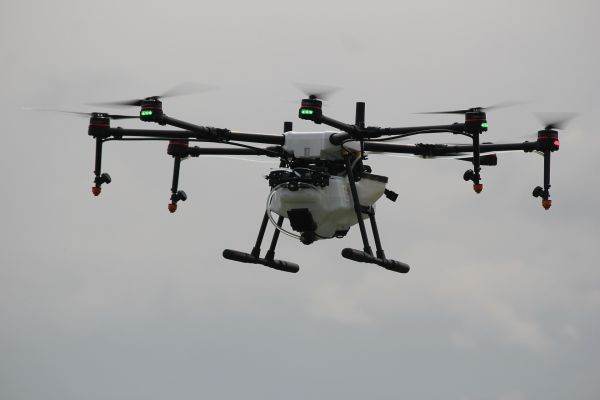
In contemporary warfare, one of the most brutal strategic realities is not just the effectiveness of weapons, but the ratio between the cost of defense and the cost of attack. Data released by policymakers in Washington show that the interceptor that destroys a drone or missile costs tens or even hundreds of times more than the target. This economic imbalance becomes a weapon in itself, and military analysts describe it with the concept of the "cost-exchange ratio.”
According to analyses published by the Center for Strategic and International Studies (CSIS), air defense interceptors are generally more expensive than the offensive weapons they destroy because they require extreme precision, sophisticated sensors, and much more advanced maneuvering capabilities than those of attacking missiles or drones.
The most frequently cited example is the comparison between the US Patriot system and the Shahed drones widely used by Russia and Iranian proxies. A Patriot interceptor costs over $3 million, with some estimates putting it as high as $3 million to $4 million, while a Shahed drone can cost as little as $20,000-$50,000, or around $35,000, according to estimates cited by the Center for Strategic and International Studies and the Defense News website. This creates a hugely unfavorable cost-to-value ratio for the defender, sometimes estimated at around 85 to 1 when a Patriot is used to shoot down a single drone of this type, according to Defense News.
Similarly, according to a study published last week by the American Jewish Committee, Israel's Iron Dome system uses Tamir interceptors that cost tens of thousands of dollars-many estimates put them at $40,000 to $50,000, others at around $80,000-to destroy crudely manufactured missiles that may cost only a few hundred dollars.
The same paradox occurs in naval operations. During the Houthi attacks on shipping in the Red Sea, U.S. Navy ships used Standard Missile-2 missiles, which cost about $2 million each, to destroy drones estimated to cost only a few thousand dollars, according to CSIS. Such dramatic comparisons are often used for headlines, but the CSIS analysis warns that they oversimplify strategic reality. The value of an interceptor cannot be judged solely by the price of the target destroyed, as it protects much more expensive assets: billion-dollar warships, energy infrastructure, cities, or global trade routes. In the case of the Houthi attacks, for example, US ships defended a sea corridor through which about 10% of global maritime trade passed in 2023, according to CSIS.
• Ukraine's solution to interception
However, the economic problem remains fundamental. Ukraine provides perhaps the clearest demonstration of this imbalance. The Ukrainian Air Force has begun to widely use cheap interceptor drones to counter Shahed drones, precisely to avoid the rapid consumption of expensive interceptors. According to the statements of the head of the Ukrainian military forces, Oleksandr Syrskyi, quoted by Defense News, interceptor drones are responsible for the destruction of about a third of Russian air targets and for over 70% of the Shahed drones shot down over Kiev in February 2026. The cost of these interceptors is estimated at between $3,000 and $5,000, and the success rate exceeds 60%, which radically changes the economic calculation of air defense, the cited source shows.
This transformation is also supported by rapid industrial expansion. The National Security and Defense Council of Ukraine announced that the country produced about 100,000 interceptor drones in 2025, and production capacity has increased eightfold compared to the previous period, according to Defense News. Front-line units received an average of more than 1,500 interceptor drones per day in December and January, and in one month alone they flew about 6,300 missions and destroyed more than 1,500 Russian drones, the source added. For Kiev, this strategy is not just a technological innovation, but an economic necessity: the Russian economy is almost ten times larger than Ukraine's, and Ukraine needs to "think smarter, not spend more," as stated in an analysis cited by Military Times and Defense News.
• Multilayered air defense architecture in Israel
In Israel, the cost dilemma is just as acute, but the answer has been to build a multilayered air defense architecture. Iron Dome intercepts short-range missiles, David's Sling and Patriot cover medium-range threats, and the Arrow system is designed to intercept high-altitude ballistic missiles. During the 2025 direct conflict between Israel and Iran, Israeli defense systems-Iron Dome, Arrow, David's Sling, and others-intercepted about 86-90 percent of air threats, according to data provided by the American Jewish Committee. Iran launched more than 150 ballistic missiles and about 100 drones at Israel during that period, and the intensity of the attacks put major pressure on interceptor stocks, the source also said.
This pressure on stocks is amplified by the fact that military doctrines often call for launching two or even three interceptors for each target, to increase the probability of destruction. In such conditions, each wave of missiles or drones can quickly consume an army's defensive stocks. Analyses published by Defense Security Asia and Bloomberg show that intense missile attacks can deplete interceptor stocks in just a few days of high-intensity conflict, turning the logistical problem into a major strategic factor.
The concept of "magazine capacity,” which describes the total number of interceptors available for launch, has thus become a critical variable in the regional military balance, Defense Security Asia and Bloomberg show.
• US accelerates production of interceptors
The United States is also feeling this pressure directly. According to data cited by the Military Times and the Center for Strategic and International Studies, at the end of 2025 the US arsenal included approximately 414 SM-3 interceptors and 534 THAAD interceptors. During the 12-day war between Israel and Iran in June 2025, the US military would have used between 100 and 150 THAAD interceptors and approximately 80 SM-3 interceptors to support Israel's defense, which means almost 30% of the total stock of THAAD interceptors in a single short campaign.
This vulnerability has led the United States to dramatically accelerate production of interceptors. Lockheed Martin has signed an agreement with the US government to increase annual production of THAAD interceptors from about 96 to about 400 per year, according to the company's announcement reported by the Jerusalem Post. In parallel, the company is investing billions of dollars in expanding industrial capacity and building a new munitions production center in Camden, Arkansas, to accelerate the production of THAAD and PAC-3 MSE interceptors, according to information published by the Jerusalem Post. Lockheed Martin has already invested more than $7 billion in expanding industrial capacity for priority systems and plans additional investments over the next three years to modernize more than 20 manufacturing facilities in the United States. Israel has adopted a similar strategy of industrial acceleration. Israel Aerospace Industries has increased production of Arrow interceptors to compensate for high consumption during recent conflicts, including after defending against more than 800 ballistic missiles in the regional war from 2023 to 2025, according to the Jerusalem Post. At the same time, the Iron Dome system is financially and industrially supported by the United States, with about 55% of its components being manufactured in America, and the US Congress has repeatedly approved additional funds to replenish Israel's stockpile of interceptors.
The technological answer to this economic problem is the emergence of directed energy systems. Iron Beam, the new laser system developed by Israel to intercept short-range missiles and drones, promises to dramatically reduce the cost of an interception. Unlike traditional interceptors, which cost tens of thousands or millions of dollars, a laser strike can cost only a few dollars in electricity, according to data presented by the American Jewish Committee and military analyses cited by the Military Times and CSIS. Iron Beam became operational in 2025 and was reportedly used for the first time in the fight against missiles launched by Hezbollah from Lebanon, according to the American Jewish Committee.
However, the laser is not a universal solution. Its effectiveness can be reduced by weather conditions - clouds, dust or rain - and the system is designed to complement Iron Dome, not replace it. In Israel's defensive architecture, traditional interceptors will continue to play a central role, while the laser will be used to counter swarms of cheap drones and missiles, reducing pressure on interceptor stocks, the source said. In conclusion, the above data shows that modern air warfare is increasingly an industrial and economic competition, not just a technological one. Interceptors remain indispensable for defending infrastructure and the population, but their high cost and relatively slow pace of production create a structural vulnerability. Attackers can exploit this vulnerability by launching massive salvos of drones and cheap missiles, trying to exhaust defensive stocks before producing decisive military effects.
Therefore, both the United States and Israel are simultaneously trying three strategies: massively increasing the production of interceptors, integrating air defense into a multilayered system, and developing radically cheaper technologies, such as autonomous interceptors or directed energy weapons. The outcome of this industrial race will determine not only the efficiency of defensive systems, but also the ability of states to sustain high-intensity conflicts in an era in which the economic arithmetic of war is becoming as important as the technological performance of weapons.
























 Euro
Euro Dolar SUA
 Franc elveţian
 Liră sterlină
 Gram de aur