English
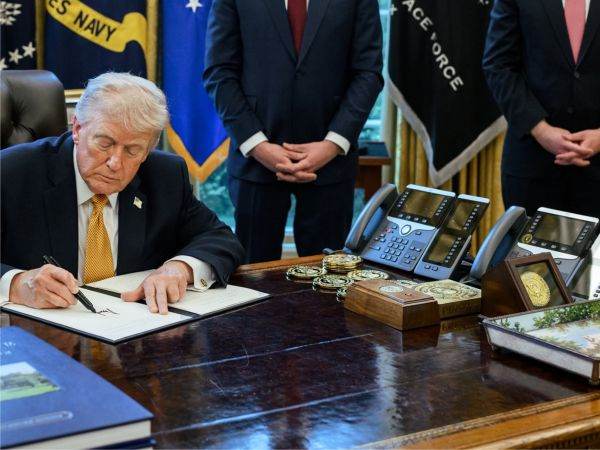
Donald Trump has built his entire foreign policy doctrine on a simple, brutal and dangerously seductive belief: the United States is so powerful, rich and indispensable that any adversary can be brought to its knees and any ally can be forced to submit. An analysis published by CNN shows that this theory of absolute dominance is now coming up against two radically different obstacles, but united by the same resistance: Iran, one of Washington's fiercest adversaries, and Canada, one of America's oldest and most loyal allies. The fact that Tehran and Ottawa have almost simultaneously entered into economic wars with the Trump administration says everything about the transformation of American politics: for the White House, the line between enemy and friend is no longer drawn by history, values or alliances, but by the willingness of the other to "align".
The Trumpian philosophy of power was expressed bluntly by Stephen Miller, one of the most influential advisers to the American president, who stated, according to CNN, that the real world is governed by force and might. It is a vision in which diplomacy is not a negotiation between legitimate interests, but a prelude to the capitulation of the weakest, and economic integration is no longer an instrument of shared prosperity, but a weapon directed against those who refuse Washington's orders. Iran and Canada are now testing the limits of this doctrine, and the outcome could demonstrate whether Trump has discovered a new formula for global domination or is simply transforming the enormous power of the United States into a mechanism for producing increasingly determined adversaries.
In Iran, the Trump administration is trying to achieve through economic strangulation what it has failed to achieve through military force. After six months of war, the regime in Tehran continues to resist, and the promise of a quick victory has turned into a confrontation with no clear outcome.
• The D-Day concept, ridiculed by the Trump administration
Treasury Secretary Scott Bessent announced a new "economic assault” on Iran's global financial ties and invoked, with unparalleled drama, the analogy of the Normandy landings. But the comparison is disproportionate: D-Day involved a huge military operation, terrible human sacrifices, and an offensive that changed the course of World War II, while Washington's announced offensive began with new threats, sanctions, and warnings, without a clear timetable and without proof that the world's major economic powers are willing to participate.
The sanctions could still hit the Iranian economy devastatingly. The United States controls extraordinary leverage through the role of the dollar, access to the international financial system, and the ability to impose secondary sanctions on companies and institutions that continue to do business with Tehran. A financial blockade backed by America's allies could isolate Iranian banks, severely restrict trade, and dry up the regime's sources of revenue. Bank Melli, the state-controlled Iranian commercial bank with a presence in several European countries, is one of the pieces of the mechanism through which Iran is trying to circumvent sanctions. But the effectiveness of the entire operation depends on a condition that Trump himself has weakened: international cooperation. Sanctions really work when most of the world applies them. The American president is demanding solidarity from allies he has threatened, humiliated, or treated as vassals. War with Iran is considered by many governments to be reckless and even illegal, and the administration in Washington risks discovering that America's financial power cannot be separated from the political trust that America inspires. Trump wants to mobilize a global coalition after spending years dismantling the alliances that were supposed to form it.
• The Trump Administration's double standard on relations with China
The most obvious flaw is in relations with China, the main buyer of Iranian oil. Washington has not immediately hit the multitude of Chinese banks that facilitate Beijing's trade in Iranian oil sold at a discount. The reason is simple: China is not a target without means of response. Beijing has already shown that it can threaten the United States' access to rare minerals indispensable to the American defense and technology industries.
In addition, according to the American press, Donald Trump is preparing to receive President Xi Jinping on a state visit this fall, and the start of a financial confrontation before the meeting could destroy the atmosphere that the White House is trying to build.
Scott Bessent involuntarily acknowledged the fundamental limit of the American offensive when asked why it does not immediately impose secondary sanctions on entities those doing business with Iran. CNN reports that the Treasury Secretary responded by saying that he was giving everyone a chance to correct their behavior and asked why the US would want to blow up the global financial system.
This is precisely the central contradiction of the Trump doctrine: The United States wants to use its dominance of the global financial system to the point of its destruction, but it cannot cross the threshold without suffering huge consequences. The weapon is terrifying precisely because it cannot be used without limits.
At the same time, the Trump administration seems to believe again that economic pressure will cause the collapse of the Iranian regime. The divergences between pragmatists and radicals in Tehran may be real, and the deterioration of the economy can amplify internal tensions. But Washington has interpreted every crack in the Iranian leadership for decades as the beginning of the end. Authoritarian regimes do not automatically fall when the population becomes impoverished. Sometimes, external isolation provides them with just the justification they need to suppress opposition, militarize society, and turn economic suffering into a propaganda weapon against a foreign enemy.
• Canada, a tough nut to crack for Donald Trump's expansionist policy
If Iran is the military and geopolitical test of the Trump doctrine, Canada is its moral, economic, and strategic test. Ottawa is not a traditional adversary of Washington, but a historic ally, a democratic neighbor, and one of the United States' most deeply integrated trading partners. Yet Canadian Prime Minister Mark Carney has shut down trade talks and accused the U.S. administration of weaponizing economic integration. It is perhaps the most serious rift between the two countries in modern times, and proof that the White House's policy of intimidation no longer distinguishes between friends and foes.
Donald Trump said the United States will always be bigger, richer and more powerful than Canada and demanded, according to CNN, that Ottawa leaders "get in line.” Vice President JD Vance called Canada a "state,” then claimed it was a Freudian slip, according to Reuters. From Ontario, Canadian politician Doug Ford responded to the American president in equally undiplomatic language, inviting him to kiss his ass, according to the sources cited. Beyond the show of insults, however, the conflict runs much deeper than a trade dispute and can no longer be extinguished by just a protocol photo and a few tariff concessions. Canadians saw Trump's repeated statements about turning their country into the 51st state not as a joke, but as a threat to national sovereignty. A provocative statement can be ignored once, but its repetition changes the nature of the relationship. The Ottawa government claims that Washington has even tried to weaken constitutional guarantees regarding Canadian bilingualism. For American companies, the obligation to print information on packages in both English and French may seem like a cost or an inconvenience. For Canada, bilingualism is one of the structures that hold the country together and protect its cultural identity. The Trump administration would also have sought to limit Canada's freedom to conclude trade agreements with third countries, thus moving from negotiating tariffs to claiming a veto right over Canadian economic policy. Mark Carney said, according to CNN, that no nation will dictate Canada's future. It is the reply of a smaller state that knows it will suffer more in a trade war, but that no longer considers capitulation an option. The Canadian economy is much more vulnerable than the American one, but the interdependence between the two countries means that Washington cannot hit Ottawa without hitting its own companies, employees and consumers. The auto industry on both sides of the border operates as a single organism, with supply chains that cross the border multiple times before a vehicle is completed. A prolonged tariff war could produce not the unilateral victory Trump dreams of, but the mutual destruction of North American auto manufacturing.
Canadian retaliation could also spill over directly into U.S. domestic politics. Boycotts of American products, reduced travel, and damaged trade could hurt border states like Michigan and Maine. These states could be crucial in the fight for control of the Senate after the midterm elections in November. Thus, Trump's attempt to force Canada to comply risks electorally hurting the Republican Party at a time when the president is inevitably approaching "lame duck” status.
• Trump's retorts show the US president's policy incoherence
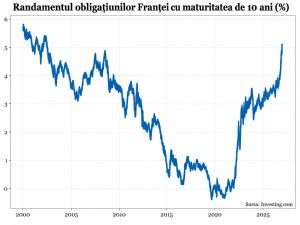
The danger is amplified by Trump's well-known reflex to escalate spectacularly and retreat when the economic costs become impossible to hide. A simultaneous confrontation with Iran, Canada and states sanctioned for their relations with Tehran could raise energy and food prices, roil markets and deepen investor fears of a bond crisis. CNN points out that if the threats are followed by another episode summarized by the acronym TACO - "Trump Always Chickens Out” - the president will not demonstrate his power, but reveal its limits. A repeated and withdrawn threat no longer inspires fear, but teaches opponents to wait.
However, Trump could obtain concessions. The size of the American economy, the role of the dollar and the dependence of partners on the United States market give him weapons that no other world leader possesses. But raw power is not the same as sustainable power. The former can impose costs, cause recessions and force temporary compromises. The second requires allies, trust, predictability, and the belief that being close to the United States brings protection, not exposure to blackmail.
In his attempt to demonstrate that America can force anyone to "fall in line,” Donald Trump risks confirming a law of power that his people have not taken into account: when a nation feels its sovereignty, identity, and independence are threatened, its willingness to make sacrifices increases with the pressure exerted on it. Iran has resisted American military force for six months. Canada, humiliated and threatened by its closest neighbor, seems prepared to pay a huge economic price to avoid being treated as an annex. And if enemies and allies end up responding in kind to Washington, the problem is no longer that the world refuses to recognize the power of the United States, but that Donald Trump is using it in a way that unites others against it.












 Euro
Euro Dolar SUA
 Franc elveţian
 Liră sterlină
 Gram de aur