English
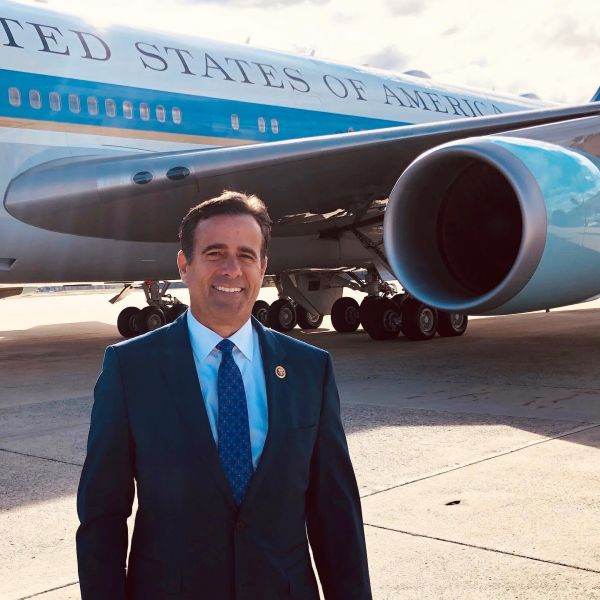
CIA director John Ratcliffe made a secret visit to Moscow two days ago. In fact, the visit would have remained secret if the American military Boeing C-17A Globemaster III plane that the CIA director flew from Lithuania to Moscow had not been detected by Internet users on Global Flight Radar and tracked throughout the entire flight, until it landed at Vnukovo airport.
The revelation of the landing of an American military plane in Moscow has intensified the activity of obtaining information by the American, Ukrainian and European media, which announced that the CIA director was on the plane. Although the Trump Administration and the institution led by John Ratcliffe, and even the Pentagon, have not confirmed the visit, a Kremlin spokesman said yesterday that the CIA director was in the Russian capital, but met only with his counterpart.
Ratcliffe left Washington on Sunday, August 23, aboard a US government plane, first arriving in Riga, Latvia, and from there he flew to Moscow. According to Axios, this was his first known trip to Russia since taking over as CIA director and the most significant visit to Moscow by a Trump administration official since January 2026. The secrecy of the operation was betrayed by the size of the aircraft used. A US Air Force Boeing C-17A Globemaster III, which departed from Joint Base Andrews and passed through Riga, landed at Moscow's Vnukovo airport. ZeroHedge tracked public flight data and reports that Ratcliffe was aboard the huge military aircraft. Der Standard noted that it was the first known landing of a US military aircraft in the Russian capital since the start of the full-scale invasion of Ukraine. The C-17 can carry over 77 tons of cargo, about 120 soldiers with equipment, helicopters or armored vehicles, but there is no indication that the aircraft was carrying weapons. Its choice primarily suggests the need for a secure government flight, fully controlled by the United States, not a military mission as such.
The visit was secret only in terms of the agenda and interlocutors, not in terms of the American presence. A C-17 cannot land discreetly at Vnukovo, and the American diplomatic column later observed in Moscow turned the mystery into visual confirmation. Tagesschau reported that Ukraine had been informed in advance, but that neither the names of the Russian officials who received Ratcliffe nor the content of the discussions were known. The Kremlin later confirmed that the CIA director had come for contacts "between the intelligence services” and denied that he had met with Vladimir Putin.
The Kremlin's version is contradicted by the Ukrainian press. The New Voice of Ukraine, citing a journalist who follows the activities of the Russian presidency, reported that Putin had canceled a scheduled event, on which hundreds of people were working, precisely to receive the CIA chief. The publication also noted that the Russian leader signed three classified decrees, numbered 605, 606 and 607, during the same period, which were not published in the official register. The simultaneity fuels speculation, but does not prove any connection between the secret documents and Ratcliffe's visit. Nor can the meeting with Putin be presented as a certainty as long as the Kremlin denies it and American sources do not confirm it.
A much more solid fact, however, indicates the importance of the mission. The Trump administration had reportedly asked Ukraine not to attack Moscow, St. Petersburg and the northern regions of Russia with drones or long-range missiles on the days when the American delegation was to be in the area. Kiev had reportedly accepted the requested break. The information, also published by The New Voice of Ukraine, shows that the trip had been prepared in advance, that Washington feared an incident that could have endangered the plane or the delegation, and that Ratcliffe had not come to Moscow for a routine meeting. The true political charge of the visit, however, emerges from the envoy's past.
• Who is John Ratcliffe?
John Ratcliffe was one of Trump's most combative defenders in the Russiagate scandal. As a Republican member of the House of Representatives, he attacked the investigation into contacts between members of the Trump campaign and Russian officials, challenged the investigation by special counsel Robert Mueller, and described the judicially authorized surveillance of members of the Trump team as "espionage.” The aggressive hearing he subjected Mueller to in July 2019 solidified his reputation as the president's fighter against the institutions that had investigated Kremlin interference.
Trump rewarded him in his first term in the White House by nominating him for the position of Director of National Intelligence. The first candidacy collapsed within days after reports emerged of his professional experience exaggeration and lack of the necessary qualifications. Trump nominated him again, however, and Ratcliffe took over the leadership of the entire American intelligence community in May 2020. As early as 2019, Foreign Policy warned that the choice of a politician known primarily for his loyalty to Trump could turn the position of intelligence coordinator into a political tool. The big question was whether Ratcliffe would tell the president what he needed to know or what he wanted to hear.
The answer came before the 2020 election. On September 29, just hours before the first debate between Trump and Joe Biden, Ratcliffe declassified Russian information according to which Hillary Clinton had approved a plan in 2016 to cause a scandal by associating Trump with Putin and hacking the Democratic Party's servers. The Director of National Intelligence even admitted in the document that American agencies did not know the authenticity of the information and could not determine whether it was real, exaggerated or fabricated by the Russian services. He nevertheless published it at a crucial electoral moment, giving Trump the ammunition he needed to claim that Russiagate was a fabrication by his opponents.
It was not proof that Hillary Clinton had invented Russian interference. It was information about what Russian analysts assumed or claimed that the Democratic campaign had intended.
The Washington Post reported that current and former US intelligence officials considered Ratcliffe's action one of the most serious forms of politicization of information. He had selected material that benefited the president, published it without the necessary context to assess its credibility, and risked exposing sources and collection methods. Moreover, Ratcliffe admitted that the declassification had been done at Trump's order. The head of the secret service was no longer limited to informing the president, but also provided his election campaign with political material extracted from the classified state archive.
Ratcliffe continued the operation by making available to Attorney General John Durham nearly 1,000 pages of classified materials. Durham had been assigned to investigate the origins of the FBI investigation into Russia and the Trump campaign. The Washington Post recorded the opposition of officials who feared that the unverified or out-of-context documents would lend credibility to a possible Kremlin disinformation operation. The Durham investigation criticized the errors, different standards and haste shown by the FBI, but did not prove the huge conspiracy announced by Trump.
In contrast, the Mueller investigation, the assessments of the American intelligence community and the bipartisan report of the Senate Intelligence Committee confirmed that Russia interfered in the 2016 election, attacked the American political infrastructure, stole and published documents and sought to damage Hillary Clinton. Mueller did not establish a criminal conspiracy between the Trump campaign and the Russian government, but the absence of a criminal conspiracy charge does not automatically turn Kremlin interference into a Democratic invention. It is precisely this confusion that has been systematically exploited by the Trump camp and Ratcliffe: if a criminal conspiracy between Trump and Putin had not been proven, then the entire Russian operation was, in their version, a farce.
Returning to the top of the system as CIA director in 2025, Ratcliffe reopened the file. He ordered a new review of the January 2017 assessment and sent the FBI materials on former directors John Brennan and James Comey. Axios reported that his referral helped open investigations into possible false statements made by the two to Congress. Once again, the intelligence community was being used to resume Trump's political battle with the people who had run the institutions during the Russia investigation.
But Ratcliffe's own analysis, commissioned by him, did not confirm the propaganda about a fabricated Russiagate. According to Politico, the document identified procedural problems, a hasty drafting process, unusual involvement of agency heads, and a limited basis for the conclusion formulated with a high level of confidence that Putin specifically wanted Trump to win.
• Background of the secret visit to Moscow
This is the man Trump sent to the Russian capital: not just any official, but the one who used Russian intelligence in American domestic politics to discredit the investigation into Russian operations. It shows that Moscow is talking to an interlocutor it knows has direct access to Trump, shares his political reflexes, and has repeatedly attacked the credibility of American officials who have documented Russian interference.
But the visit came at a time when the Ukrainian front is just one of the crises linking Washington and Moscow. Politico argued that the CIA chief's visit was caused by information about a new military mobilization in Russia and information about a possible attack by the Russian army on NATO territory.
Political sources quoted by the American media do not exclude that the American official and his Russian counterpart or Vladimir Putin also discussed threats coming from Iran. Iranian state television recently broadcast a material in which it is said that Barron Trump, the youngest son of the American president, is constantly monitored by Iranian services and that there would be a reward of $ 10 million for his murder. It is a threat serious enough for the Secret Service to confirm that it is analyzing it. Reuters reported that the service in charge of protecting the presidential family is aware of the video, but refuses to provide operational details.
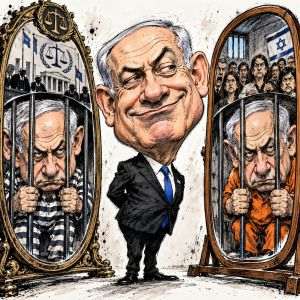
In parallel, Benjamin Netanyahu stated that Iran had tried to kill one of his sons. The Israeli prime minister did not say whether the target of the alleged plot was Yair or Avner Netanyahu, and did not provide information about the place, time or manner of the operation, but Israeli media outlets - Calcalist and N12 - stated that it was Yair Netanyahu and that the Iranian terrorists had a command center in New York. The Times of Israel reported that the Israeli press had known about the allegation for several months, but could not publish it due to security censorship.
In this context, Ratcliffe's mission to Moscow may have a major Iranian component. Russia is one of Tehran's main strategic partners, received Iranian drones for the war in Ukraine, has direct channels to the Iranian leadership and services, and can provide or withhold information important to Iran's foreign operations. The CIA director could have sent a warning to Moscow not to support actions against the Trump and Netanyahu families, could have asked for information about Iranian networks, or could have tested Russia's willingness to mediate a de-escalation. None of these options are confirmed, but all are consistent with the timing and nature of the intelligence contacts.
• South Korea incident
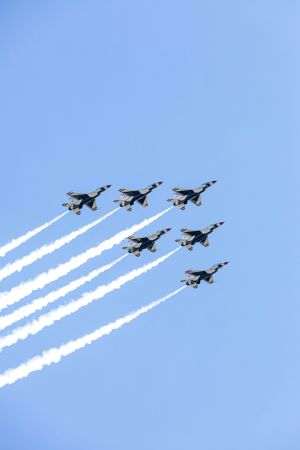
At the same time, another Russian move appeared on the Korean Peninsula. Several Russian military aircraft entered South Korea's air defense identification zone without notice, prompting Seoul to scramble fighter jets. Some reports say three aircraft - two Tu-95 strategic bombers and an A-50 early warning aircraft - did not violate South Korea's sovereign airspace, but rather the KADIZ, an air identification zone that does not have the same legal status as national airspace. The South Korean military said the aircraft were detected near the Dokdo and Ulleung islands and later left the area, according to The Korea Times.
The Russian move came shortly after Trump ordered the Pentagon to "substantially” scale back joint military exercises with South Korea. The Ulchi Freedom Shield exercise, originally scheduled for 11 days, was reduced to five days, and some of the field activities were limited. Trump cited the cost of the exercises, his "good” relationship with Kim Jong Un and Seoul's refusal to support American policy against Iran, according to Reuters.
The entry of Russian aircraft into the South Korean identification zone can be read as a test carried out immediately after the visible reduction of the US-South Korean military posture. Russia and North Korea have strengthened their cooperation, Pyongyang has supplied Moscow with weapons and soldiers, and the Kremlin has every reason to check whether Trump's conciliatory gestures towards Kim Jong Un are producing weaknesses in the alliance's response capacity.
Ratcliffe's move may link all these crises precisely because Moscow is at the center of them. Russia is waging war against Ukraine, cooperating militarily with Iran, developing an ever-deepening alliance with North Korea, and trying to exploit the cracks between the United States and its allies. Washington needs a channel through which it can simultaneously convey limits, warnings, and possible offers.
What is certain is that Donald Trump did not send to Moscow a career diplomat, a negotiator without a partisan past, or a secret service technocrat, but precisely the man who built his political rise by defending him in the Russiagate scandal and using classified, unverified, or out-of-context information to turn the investigation into Russian interference in the 2016 election against the American president's opponents.
Moscow knows that it is talking to more than just the CIA director. It is talking to one of the few officials who can claim to directly convey Donald Trump's thinking. And when such a character secretly lands in Moscow, after Ukraine is asked to temporarily stop its attacks, Iran threatens the families of Western leaders, and Russia tested South Korea's defense is up immediately after the reduction of US exercises, the question is no longer whether the visit had a major stake. The question is how big the deal was discussed behind closed doors and who will find out its price first.
















 Euro
Euro Dolar SUA
 Franc elveţian
 Liră sterlină
 Gram de aur