 English

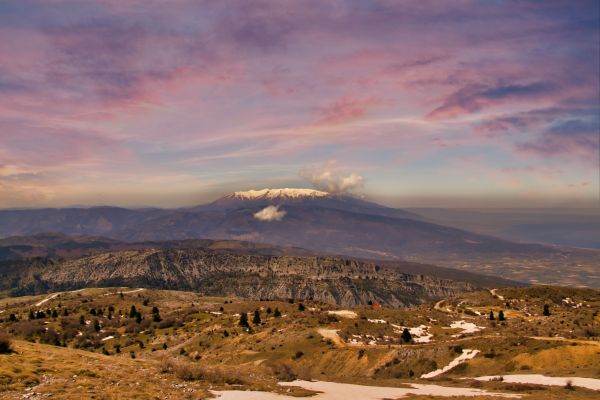
Mount Olympus in Greece has been inscribed on the UNESCO World Heritage List after the World Heritage Committee unanimously recognized its outstanding natural and cultural value. The decision, adopted at the 48th session held in Busan, South Korea, makes Olympus one of the few mixed sites in the world, according to Ekathimerini. UNESCO granted Mount Olympus mixed World Heritage status, recognizing both its cultural importance and remarkable biodiversity. Considered in Greek mythology as the home of the 12 Olympian gods, Olympus is also the highest mountain in Greece, home to nearly 2,000 plant species, dozens of which are endemic, as well as numerous rare species of wildlife.
With this inscription, Greece reaches 21 sites included in the UNESCO World Heritage List, of which three have the status of mixed sites. The Greek authorities welcomed the decision, appreciating that it will contribute to strengthening conservation measures and increasing the international visibility of one of the country's most representative natural landscapes.
• Place of the gods in Greek mythology
Mount Olympus occupies a central place in the mythology of ancient Greece. According to tradition, Zeus established his residence here after his victory over the Titans led by Cronus, following a war that would have lasted ten years. On one of the lower peaks of the massif, archaeological research has identified an open-air sanctuary, the oldest remains of which date back to the Hellenistic period (323 BC - 30 BC). According to the nomination file submitted by Greece to UNESCO, this is considered the sanctuary mentioned by the historian and philosopher Plutarch, who described processions to the peaks of Olympus for sacrifices dedicated to Zeus.
• Religious importance also in the Christian era
The spiritual significance of the mountain was preserved in the Christian period. On the peak of Prophet Elijah, located at an altitude of 2,803 meters, there is what is considered the highest chapel in the Orthodox world. In the Enipeas Gorges are the ruins of a monastery founded in 1542, and nearby is the Cave of Saint Dionysius, where a chapel was arranged from which a spring flows, considered by believers to have holy water.
• Process started over a decade ago
Greece initiated the process of including Mount Olympus as a UNESCO World Heritage Site in 2014, when it inscribed it on the Tentative List, a mandatory step in the nomination process. After more than a decade of evaluation, the World Heritage Committee unanimously approved the inclusion of the massif on the World Heritage List, recognizing the outstanding universal value of one of the most famous symbols of Greek civilization.


























 Euro
Euro Dolar SUA
 Franc elveţian
 Liră sterlină
 Gram de aur





























