English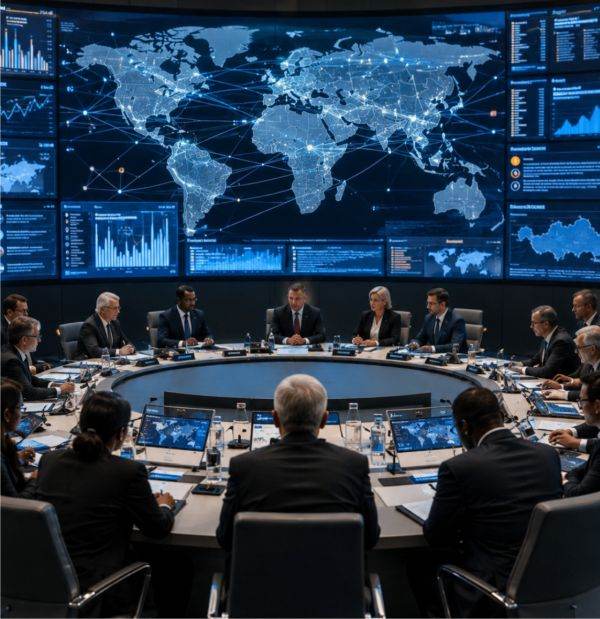
Combating "far-left transnational terrorism” is set to become a priority for global security cooperation at a summit scheduled today in Washington by US Secretary of State Marco Rubio, to which representatives of 70 countries from around the world have been invited, ABC News, Zerohedge, PBS News and Fox News report. The meeting, expanded after the State Department cited "overwhelming interest” from foreign governments, aims to transform a controversial issue of US domestic policy into a new international front to combat terrorism and lay the foundation for "coordinated action” against organizations and networks accused of trying to impose their radical political goals through intimidation, organized violence and campaigns of terror.
The sources cited claim that the focus of the discussions will be on the Antifa movement, a decentralized structure that is difficult to institutionally delimit, but considered by the administration of President Donald Trump as one of the main expressions of the new extremist threat, along with other violent secular, anarchist or revolutionary political groups. The summit thus marks Washington's attempt to convince the international community that far-left violence, described by American officials as an "underestimated and insufficiently funded" threat, must be removed from the marginal area of anti-terrorist strategies and placed at the center of cooperation between governments, intelligence services and law enforcement structures.
The preparatory documents for the summit show, according to American journalists, that the Trump administration believes that the violent far-left has long taken advantage of the international community's focus on jihadist terrorism and, more recently, on right-wing extremism, without radical left-wing networks being subjected to the same level of surveillance, analysis and cross-border cooperation.
"For too long, this threat has remained a blind spot in the international community's counterterrorism efforts, being underestimated and insufficiently funded, despite the danger it represents," reads a note sent by the State Department to foreign governments and consulted by the American press.
The wording used by Washington reveals the scope of Marco Rubio's objective. The United States is not proposing just a diplomatic discussion about violent incidents committed by radical activists, but a change in the way contemporary terrorism is defined and treated. The American administration wants left-wing extremist groups that resort to violence to be analyzed using the same tools used against jihadist organizations and right-wing extremist networks: information sharing between services, financial investigations, identification of international connections, tracking of supporters and combating cross-border propaganda, recruitment and financing.
The preparatory note for the summit states that experts from law enforcement and counterterrorism institutions have identified "a clear trend” in which "globally networked and politically motivated terrorists - particularly left-wing extremists” are increasingly resorting to "organized and lethal violence to advance their political goals.” According to the document, the purpose of the meeting is to prepare for "coordinated action” against international organizations that "attempt to implement an extremist political vision through intimidation and coordinated campaigns of terror.” Ministers and other high-ranking representatives from European, Latin American, and Asian states, including India and Israel, are expected to attend the summit. The meeting was originally planned for about 60 countries, but the State Department announced that the list of invitees has been expanded by more than a dozen countries, as a result of the interest shown in combating "the growing international threat posed by left-wing extremist violence.” The large number of participants gives the Trump administration the opportunity to present the phenomenon not as an exclusively American political obsession, but as a security problem that crosses borders and affects states with different political systems, historical experiences and levels of exposure to extremism.
The agenda of the discussions will include the exchange of information, cooperation between security services and law enforcement structures, the identification of funding flows, the analysis of international networks and the establishment of common response mechanisms. Washington starts from the idea that contemporary radical groups no longer need a centralized leadership or classic hierarchical structures to act in a coordinated manner. Ideology, propaganda, attack methods, operational instructions and mobilization campaigns can be rapidly transmitted spread through digital networks, and formally independent organizations can adopt the same targets and tactics without receiving orders from a single command.
State Department spokesman Tommy Pigott said, according to the sources cited, that the Trump administration is seriously addressing the gaps accumulated over decades in counterterrorism strategies. Washington's position is that the political motivation of the perpetrators does not diminish the seriousness of the violence and that organizations that kidnap people, attack police officers, target civilians or use terror to achieve political change must bear similar consequences, regardless of whether they justify their actions through jihadist, nationalist, racist, anarchist, communist or anti-fascist ideologies.
The State Department specified that the terrorist designations promoted by the US administration target groups "engaged in violent terrorist activities, such as kidnapping people, attacking US law enforcement and attacking the civilian population". The clarification seeks to draw a line between political activism, including radical activism, and organizations that resort to violence. This line will be one of the major issues at the summit, however, as applying anti-terrorist tools to decentralized movements raises the risk that legal definitions will be extended beyond violent acts and reach ideologues, donors, protesters, or political opponents. Marco Rubio's position is in line with the policy line established directly by Donald Trump. In October 2025, the US president organized a roundtable discussion at the White House dedicated to the Antifa movement, which he presented as one of the most serious domestic threats to the United States. "It should be clear to all Americans that we have a very serious left-wing terrorist threat in our country: radicals associated with the domestic terrorist group Antifa," said Donald Trump. The president also claimed that "other left-wing extremists are waging a campaign of violence against ICE agents and other federal law enforcement officials.” Moreover, the new United States National Counterterrorism Strategy, signed in May 2026, transformed this policy position into an official security orientation. The document pays special attention to "violent secular political groups” and stipulates that the administration will identify and counter "violent secular political groups whose ideology is anti-American, radical-transgender, or anarchist, such as Antifa.” With this formulation, the White House expands the range of threats considered priority and announces that American counterterrorism tools will no longer be predominantly focused on religiously or racially motivated organizations. The American Civil Liberties Union has already criticized the Trump administration's approach, accusing it of targeting peaceful activists and donors who are in political opposition "under the guise of combating political violence and domestic terrorism.” The organization warns that the lack of precise definitions can blur the distinction between terrorism, crimes committed during demonstrations, radical activism, civil disobedience, and the legitimate exercise of freedom of expression and association.
There are also reservations within the American security apparatus. Three current and former United States officials have expressed their fear that the designations now being promoted against Antifa could set a dangerous precedent. The tools used by a Republican administration against radical left-wing groups could later be taken over by a Democratic administration and directed against conservative movements. The risk does not only concern American politics, since the model of cooperation built at the Washington summit could also be taken over by governments tempted to present their domestic adversaries as terrorist threats.
The controversy is also fueled by data on the scale of the phenomenon. According to the cited sources, a 2025 analysis by the Center for Strategic and International Studies found that left-wing violence has increased in the United States over the past decade, but that it "started from very low levels and remains well below historical levels of violence committed by right-wing attackers and jihadists.” The report does not recommend ignoring left-wing extremism, but it warns against disproportionately focusing resources on a single category of threat.






















 Euro
Euro Dolar SUA
 Franc elveţian
 Liră sterlină
 Gram de aur