English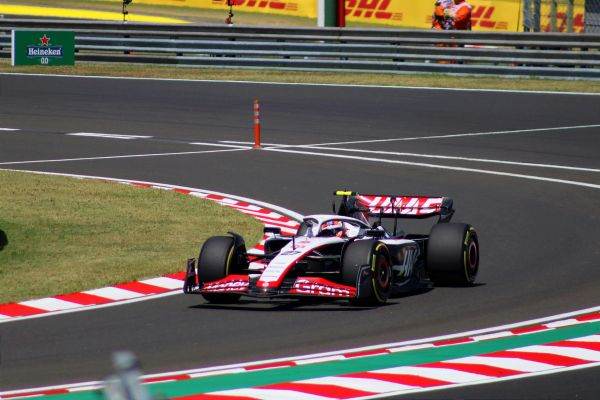
Formula 1 has decided to cancel the races scheduled for April 2026 in Bahrain and Saudi Arabia, after the escalation of the conflict in the Middle East and missile attacks that have affected the regional infrastructure. The decision, taken together with the International Automobile Federation and local promoters, reduces the season calendar from 24 to 22 races and creates a break of almost a month between the Japanese Grand Prix and the one in Miami, Reuters reports. The main reason is security. In recent weeks, attacks have also taken place near the Bahraini capital, Manama, and airports and logistics routes used to transport Formula 1 equipment have been affected. Beyond the sporting aspect, the cancellation of the races has a significant financial impact: Formula 1 could lose over $100 million in organizing fees paid by the two states alone, according to pitpass.com.
• How the Gulf became a global sports center
Two decades ago, the Middle East was almost nonexistent on the map of major sports competitions. The change began in 2004, when Bahrain organized the first Formula 1 Grand Prix in the region. Since then, the Gulf states have invested heavily in sports, transforming competitions into an instrument of global influence and economic diversification, at a time when their economies are trying to reduce their dependence on oil. The strategy includes: organizing major sports competitions, buying or sponsoring European clubs, investing in sports infrastructure and tourism. This policy has been visible not only in Formula 1, but also in football, golf, tennis and boxing.
• The huge fees that have moved Formula 1 to the Middle East
In the Formula 1 economy, one of the most important sources of income is the fees paid by the cities or states that host races. Currently, these fees can reach tens of millions of dollars a year. Estimated fees for canceled races - Bahrain: about $ 60 million per year, Saudi Arabia: about $ 55 million per year. In some estimates, the total fees could even reach more than $ 150 million for the two rounds, depending on contracts and additional costs, according to The Guardian. These amounts are significant for Formula 1. In recent years, revenue from hosting fees has exceeded $ 1 billion annually, representing a major component of the competition's business model, according to Arab News.
• Losses for F1 and teams
Cancellation of rounds has a direct impact on the sport's revenues. Industry estimates indicate: over $100 million in lost organizing fees, reduced commercial revenue related to sponsors and hospitality, reduced prize money distributed to teams. Although the calendar remains long, 22 races, the lack of stages in the Gulf affects one of the most profitable regions for Formula 1. For the host states, the loss is primarily image and tourism. A Formula 1 weekend attracts tens of thousands of tourists and produces important economic effects for: hotels, restaurants, transport, regional tourism. In addition, the race is broadcast in over 200 countries and represents a form of global marketing for the Gulf states, which use the sport to build their international reputation.
• Global sport and geopolitical risk
However, the cancellation of the races in Bahrain and Saudi Arabia also shows a vulnerability of global sport. In the last decade, many competitions have moved to regions where states can pay very high organization fees. But these regions are sometimes exposed to geopolitical tensions. Formula 1 has already experienced similar situations: the cancellation of the Bahrain Grand Prix in 2011, the elimination of the Russian Grand Prix after the invasion of Ukraine, the suspension of competitions in Asia or the Middle East during periods of conflict.
Investments from the Gulf states have transformed the region into one of the most important centers of world sport. The huge fees paid to organize competitions have attracted Formula 1 and other major sports. However, the cancellation of races in Bahrain and Saudi Arabia shows that this model has a major vulnerability: its dependence on geopolitical stability. In a sport that generates billions of dollars annually, a few weeks of war can quickly remove two of the most profitable stages of the season from the calendar.
Qatar misses a final
UEFA has announced that, due to the current political situation in the region, the Finalissima between Spain, the winner of EURO 2024, and Argentina, the champion of the CONMEBOL Copa America 2024, cannot take place as hoped, in Qatar, on March 27. The decision was made after numerous discussions between its officials and the organizing authorities in Qatar. It is a big d It is disappointing for UEFA and the organisers that the circumstances and timing have deprived the teams of the chance to compete for this prestigious trophy in Qatar - a country that has repeatedly demonstrated its ability to host world-class international events in state-of-the-art facilities, UEFA said on its official website.
The Finalissima was introduced as part of the close partnership between UEFA and CONMEBOL and brings together the champions of Europe and South America in a celebration of international football at the highest level. Argentina, the reigning world champions, won the inaugural edition in 2022 with a 3-0 victory over Italy at Wembley Stadium in London. With a strong determination to save this important match and despite the understandable difficulties of relocating a match of such importance at extremely short notice, UEFA explored other feasible alternatives, but each ultimately proved unacceptable to the Argentine Football Association. The first option was to hold the match at the Santiago Bernabeu stadium in Madrid on the original date, with a 50:50 split of fans in the stadium. This would have provided a world-class setting, befitting such a prestigious event, but Argentina refused. The second option was to hold the Finalissima in two legs - one at the Santiago Bernabeu stadium on 27 March and the other in Buenos Aires, during an international break before UEFA EURO and the 2028 Copa America, again proposing a 50:50 split of fans for the Madrid match. This option was also rejected. Finally, UEFA requested a commitment from Argentina that, should a neutral venue be found in Europe, the match could be held on 27 March, as planned and announced on 18 December 2025, or on the alternative date of 30 March. This proposal was also rejected. Argentina made a counter-proposal to play the match after the World Cup, but as Spain did not have the dates available, this option had to be ruled out. Ultimately, and contrary to the initial plan agreed, which was for the match to take place on 27 March, Argentina declared their willingness to play exclusively on 31 March, a date that proved impossible to implement. "As a result, to UEFA's regret, this edition of the Finalissima has been cancelled,” UEFA said.

















 Euro
Euro Dolar SUA
 Franc elveţian
 Liră sterlină
 Gram de aur