English


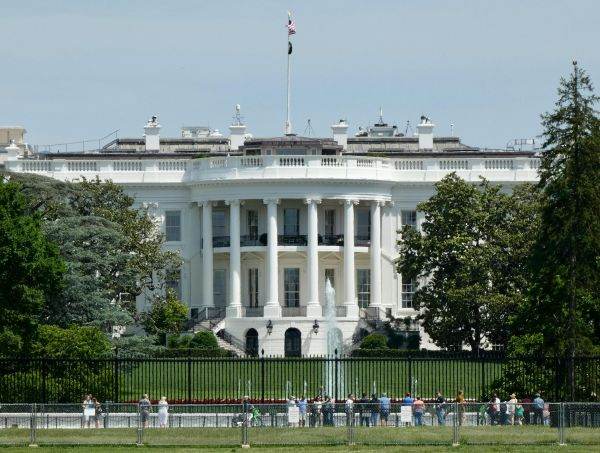
Donald Trump claimed in his address to the American nation yesterday morning that the United States had almost completely destroyed Iran's military capability, building the image of a total victory, but immediately raised the threat level against Tehran's leaders, suggesting what has happened so far could be the beginning of a major escalation.
"In the next two to three weeks, we are going to love them extremely tough. We are going to take them back to the Stone Age, where they belong," the leader said from the White House, in a message that contrasts sharply with his statements regarding the near end of the conflict.
The US president described the first months of Operation Epic Fury in unprecedented terms: "In these four weeks, our armed forces have delivered swift, decisive, overwhelming victories. Tonight, Iran's navy is gone. Their air force is in ruins. Their factories and launchers are destroyed; very little remains.”
He went further, stating that "never in the history of warfare has an enemy suffered such clear and devastating losses in a matter of weeks,” claiming that the command structure of the Iranian Revolutionary Guard Corps (IRGC) "is at this point, decimated.”
At the same time, however, the US president insisted that the operation in Iran was not yet over, even though "the basic strategic objectives are almost accomplished.” "We are on the verge of completing all of America's military objectives; very soon we will achieve that objective, but we must finish the mission for which these men died," said President Donald Trump, referring to the 13 American soldiers killed in the conflict.
The central justification for the war remains, in his view, the permanent blocking of Iran's nuclear program. "I will never allow Iran to have a nuclear weapon. The most violent and brutal regime on earth would be free to carry out campaigns of terror and mass murder under a nuclear shield," said the head of the White House Administration.
• Reopening the Strait of Hormuz to naval traffic, an unimportant topic for Donald Trump
On the economic front, the American leader rejected any responsibility for the increase in fuel prices, stating that this is "entirely the result of the Iranian regime's insane terrorist attacks on commercial oil tankers." He tried to convey confidence, declaring that "the United States has never been better prepared economically” and that oil production "will increase substantially very soon.”
In the same vein, Trump sent a direct message to the oil-dependent Gulf states, especially to European NATO allies: "Buy oil from the United States; we have plenty. Or go to the Strait of Hormuz and take it, protect it, use it for yourself. Iran has been virtually decimated. The hard part is done.”
However, this optimistic view is contradicted by developments on the ground and international reactions. The blockade of the Strait of Hormuz, through which a significant part of the world's oil passes, continued yesterday and continues to affect global markets, and the economic effects are already visible.
The head of the International Energy Agency, Fatih Birol, warned in a podcast, according to Calcalist, that the world is facing the "worst energy crisis in history”, stating that "April will be worse than March” and that "the volume of oil that will be missing will be double”. He stressed that the impact will include high inflation and a slowdown in economic growth, especially in emerging economies, and that problems with aviation and transport fuels are already being felt in Asia and will spread to Europe.
In parallel, economic pressure on Iran is increasing rapidly. According to information presented by CNN and Al Jazeera, the United Arab Emirates has hit the regime's financial networks, arresting dozens of intermediaries linked to the Revolutionary Guard and closing key companies. "Dubai has been an economic lung for the Iranian regime”, said analyst Jason Brodsky, while expert Miad Maleki described the Emirates as "the most critical jurisdiction in Iran's sanctions avoidance architecture”. On the military front, according to CNN and PBS, the United States is preparing to end operations. The Pentagon is considering increasing the fleet of A-10 "Warthog" aircraft in the region, possibly up to about 30 units, or about 18.5% of the total US fleet, capable of carrying out intense attacks on maritime and land targets, including in the Strait of Hormuz area or Kharg island, Iran's main oil hub.
• Iranian leaders reject Donald Trump's claims
International reactions were not long in coming after Donald Trump's speech. Authorities in Tehran have completely rejected the American narrative. Iranian President Masoud Pezeshkian rhetorically asks, in a letter to American citizens: "Exactly, which interests of the American people are served by this war? Was there any real threat from Iran that would justify such behavior?" He argued that Iran's image as an aggressor is "the product of the political and economic whims of the powerful" and insisted that Tehran's actions are "legitimate self-defense."
In turn, the spokesman for the Foreign Ministry in Tehran, Esmail Baghaei, declared, according to Al Jazeera: "We will not tolerate this vicious circle of war, negotiations, truce and then repeating the same pattern", qualifying the conflict as "catastrophic not only for Iran, but for the entire region and beyond". The Iranian official warned: "This is an unjust war imposed on the Iranian people. We have no choice but to retaliate firmly".
According to the French station BFM TV, which quotes AFP, Iran's ambassador to the International Atomic Energy Agency, Reza Najafi, denied, in turn, one of the key premises invoked by Donald Trump: "We have not resumed uranium enrichment. President Trump's statement is a lie, a very big lie, like the other lies he tells".
On the military front, the tone is even harsher. Al Jazeera reports that an Iranian military spokesman warned that the war would continue until the US and Israel suffer "humiliation, shame, lasting regret and final surrender", promising "even more devastating actions".
• Emmanuel Macron: Operation in Iran, decided alone by leaders of Israel and the US
The French press notes that, on an official visit to South Korea, President Emmanuel Macron stated that the war in Iran triggered by the United States and Israel does not allow for a "long-term solution" to the Iranian nuclear issue.
"No targeted military action, not even for a few weeks, will solve the nuclear issue in the long term. (...) If there is no framework for diplomatic and technical negotiations, the situation may deteriorate again in a few months or a few years. Only through in-depth negotiations, an agreement (...) can we ensure a long-term follow-up and preserve peace and stability for all", the French president was quoted as saying by BFM TV.
Moreover, the French president declared that a military operation to "liberate” the Strait of Hormuz would be "unrealistic”.
Emmanuel Macron reiterated, according to the cited source, that the war in Iran is an operation that the Americans and the Israelis "decided on their own” and added: "Then they cannot complain that they are not being helped in this operation because it is not our operation”.
The latest statement by the French president is related to the statement made by Donald Trump in his speech to the American citizens and in which he said that Macron told him that he would send warships to the Gulf area only after the US wins the war.
• Kaja Kallas: Trump's accusations against allies are unfair and insulting
Kaja Kallas, the European Union's High Representative for Foreign Affairs and Security Policy and Vice-President of the European Commission, told Estonian news website ERR that her information shows that President Donald Trump has not sent any request to NATO to support the US in the war against Iran, so the US leader's claims about the lack of support from allies are unjustified. Furthermore, the senior EU official said that Donald Trump's accusations against European allies are unfair and insulting.
Kaja Kallas stated: "It was not clear from the beginning what the objectives of the intervention in Iran were and there was no consultation with anyone before the outbreak (ed. - by Israel and the US) of this conflict. On the one hand, at the beginning of the conflict Trump said that he did not need support, and on the other hand he is now criticizing the fact that he was not helped, without having officially sent such a request to NATO. Requests of this type are not made through the media.”
Asked by the journalists of the cited source how much the institution she heads communicates with the authorities in Tehran, Kaja Kallas replied: "They maintain contact. I myself have communicated with the Iranian Foreign Minister. It is clear that we have a wide range of criticisms of Iran. Even when the nuclear deal was still in force, there were concerns that they were developing nuclear weapons; in addition to that, there is their missile program. There is also the fact that they have carried out cyber and hybrid attacks targeting Europe, have supported Russia in the war in Ukraine and detained European citizens. We have no shortage of topics to discuss with them (...) all of which contribute to creating tensions in different countries. Iran has been very open about its opinion of the surrounding countries. It has certainly played a role in destabilizing the order there. (...) What can Europe actually do at this point? We already have naval operations in that region. If we look at the wider geographical area, we have Operation Aspides and Operation Atalanta, which escorted ships past the area controlled by the Houthi rebels. The operational boundary was the Muscat Line, which means that the mandate applied below it. Now we can reinforce that area and deploy more ships there. EU member states do not currently want Europe to be present in the Strait of Hormuz, but since the Houthis have also entered this conflict, the Red Sea trade route must remain open. These are the kinds of measures that we can take and we have proposed them ourselves. To be fair, when we talk to the Americans face to face, they say the same thing: even if this war ends, the concerns about keeping trade routes open will not go away and they will need our help in this regard.”
Moreover, in a message posted yesterday on her official X network page, after a telephone conversation she had with the Chinese Foreign Minister, the European Union's foreign policy chief said that restoring safe and duty-free freedom of navigation in the Strait of Hormuz, in accordance with the law of the sea, is an urgent priority.
"The EU supports all diplomatic efforts to achieve this and calls for de-escalation and moderation. Attacks on civilians and civilian infrastructure must stop,” Kaja Kallas noted.
• China accuses US and Israel of closing the Strait of Hormuz
The French channel TF 1 states that the spokesperson of the Chinese Ministry of Foreign Affairs, Mao Ning, called, after Donald Trump's speech, "for an immediate cessation of military operations,” warning that "military means cannot fundamentally solve the problem, and escalation is not in the interest of either party.” China directly accuses the US and Israel of being the "main cause” of the disruption of maritime traffic in Hormuz.
Russian Foreign Minister Sergei Lavrov has called on the international community to intervene to establish an immediate ceasefire in the conflict in Iran, suggesting that otherwise we could witness the outbreak of World War III. In an intervention quoted by Times Now World, Sergei Lavrov warned that humanity is on the brink of a precipice, suggesting that the window for a peaceful resolution is rapidly closing. According to the Balkans Web website, Lavrov also said that the Russian Federation is ready to mediate in resolving the conflict in the Middle East "if everyone wants it”.
According to CNN, Australian Prime Minister Anthony Albanese, while acknowledging the degradation of Iranian military capabilities, stressed strategic uncertainty: "It is not clear what remains to be achieved or what the end looks like”. His statement reflects, according to the quoted source, a growing unease among Western allies, directly affected by the energy crisis triggered by the blockade of the Strait of Hormuz.
According to a recent survey, cited by the Zerohedge website, even within the United States public support for war is fragile. Only 34% of Americans approve of Donald Trump's military intervention, and 68% oppose sending ground troops, while the approval rating of the US president's decisions has dropped to 35%.
Amidst these developments, the contrast between Trump's message and the reality on the ground is becoming increasingly evident. While the US president claims that the US is "on the verge of ending the sinister threat of Iran", the data shows a conflict with no clear end, with major risks of escalation and with a global economic impact already felt.



















 Euro
Euro Dolar SUA
 Franc elveţian
 Liră sterlină
 Gram de aur