English
The European Union is facing a problem that goes beyond the usual political alternation: in more and more states, parties are no longer able to build stable majorities, and governments are forced to constantly negotiate parliamentary survival. Our country is in this deadlock after the fall of the Bologna Government by a motion of censure and the successive failure of attempts to install a new executive. France, Germany, the Netherlands, Belgium and Spain offer different forms of the same fragility. Behind the political crisis lies the same problem: European societies demand quick results, while political systems are increasingly fragmented and less capable of producing compromises.
• The crisis no longer means just the fall of a government
Political Europe is not going through a single crisis, but a succession of national crises that have begun to overlap. In some states, governments are falling. In others, they survive through improvised majorities. There are also countries where elections produce fragmented parliaments, where the formation of an executive can take months. And where governments hold out, pressure from populist parties and the far right forces traditional parties to modify their policies. What is changing is therefore more important than the simple succession of cabinets: the capacity of European states to make difficult decisions is increasingly dependent on fragile parliamentary majorities. The problem also has an economic dimension. Europe must finance defense, reduce deficits, invest in infrastructure and technology, respond to energy crises, and strengthen its competitiveness at a time when the United States and China are exerting increasing pressure on the European economy. All of this requires governments capable of making unpopular decisions. It is precisely this capacity that is being put under pressure.
• Romania: from the motion of censure to the impossibility of forming a majority
Romania entered this category of instability at a particularly sensitive moment for the economy. The government led by Ilie Bolojan was dismissed on May 5, after Parliament adopted the motion of censure with a result of 281 votes in favor. The fall of the executive was not followed by the rapid formation of a new majority, however. President Nicuşor Dan appointed Eugen Tomac as prime minister, in an attempt to end the political deadlock. Reuters noted at the time that Romania risked entering a period in which economic policy would be blocked, access to European funds would be put under pressure, and the national currency would be affected. Tomac failed to form a government supported by a parliamentary majority and withdrew his mandate. Later, the president appointed Adrian Veştea. This attempt also failed. On June 22, Parliament rejected the government proposed by Veştea. The cabinet received 189 votes, while 233 were needed for the investiture. Reuters described the result as an extension of the political crisis and warned of the risks for European funds and Romania's credit rating. Under these conditions, Romania has reached a situation in which the problem is no longer just that a government has fallen. The problem is that the parliamentary parties are failing to build an alternative formula solid enough to install a new government. This is an important difference. A government can fall and be replaced quickly. A state begins to have a structural problem when parties can form a negative majority, capable of overthrowing one executive, but cannot form a positive majority, capable of supporting another. This is precisely one of the lessons of the Romanian crisis.
• Bucharest repeats, in its own form, the European problem
Romania's situation also has an economic peculiarity. The Bologna government was installed in a context in which Romania had to reduce one of the largest budget deficits in the European Union. In March, Reuters reported that the executive was already forced to operate tax increases and spending cuts to avoid a further deterioration of the fiscal situation and a possible downgrade of the sovereign rating. The fall of the government does not eliminate these problems. On the contrary, it moves them into a more complicated political space. Any new executive must simultaneously negotiate with parliamentary parties, Brussels, the financial markets and its own electorate. Adjusting the deficit involves measures that are not popular, while opposition parties are determined to distance themselves from the political cost of these decisions. This results in a paradox: precisely at a time when the state needs a strong government, the political system produces ... weakness.
• France: government without a majority and debt pressure
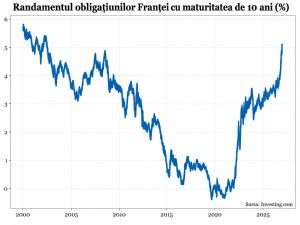
France remains the most visible example of political gridlock European tic. After the early legislative elections called by Emmanuel Macron in 2024, the National Assembly remained divided between three major political areas, with none able to build a majority on its own. The result was a succession of governments dependent on parliamentary compromises and periodically threatened with censure motions. The French government went through several turning points in 2026, including using the controversial Article 49.3 of the Constitution to adopt the budget. Reuters reported in February that the 2026 budget was finally adopted after months of negotiations, while censure motions failed. The problem did not end with the adoption of the budget, however. On August 24, Reuters reported that the French government was preparing for tough new negotiations in parliament as French 10-year bond yields rose above 4.13%, their highest level since 2008. The European Commission estimates France will run a budget deficit of 5.1% of GDP in 2026, well above the European limit of 3%. The political and fiscal crises are thus feeding into each other. The government needs to reduce the deficit, but any significant spending cuts risk provoking a social backlash and losing parliamentary support. At the same time, the approaching presidential elections in 2027 favor parties that promise popular measures, not budget adjustments. Reuters recently estimated that interest payments on French public debt reached 34.5 billion euros in the first half of the year alone, 19% more than in the same period in 2025. France therefore has two simultaneous problems: a fragmented Parliament and a tax bill that is becoming increasingly difficult to manage.
• Germany: institutional stability, political fragility
Germany is not in a government crisis comparable to the French or Romanian ones, but it is no longer the model of political stability of past decades. The government led by Friedrich Merz is facing economic pressures, low popularity and tensions within the coalition. The Atlantic Council warned in May that the German executive is affected by economic stagnation, low public support and coalition difficulties, questioning the government's ability to last the entire mandate. At the same time, pressure is also coming from the "Alternative fur Deutschland". Ahead of the regional elections in Saxony-Anhalt, the AfD has reached levels that could allow it to aspire to the leadership of a state without the need for a traditional alliance, according to polls cited in the German press. The situation calls into question the so-called "firewall” through which traditional parties have tried to prevent the far right from entering government. The Merz government is trying to respond by accelerating economic reforms. In August, the chancellor asked the cabinet to implement measures on taxation, pensions, deregulation and digitalization more quickly. The problem, however, is that Germany must do two difficult things at the same time: revitalize its economy and respond to the rise of the far right. For Berlin, the stakes are not just domestic. Germany is the EU's main economic engine, and the weakening of its political capacity inevitably spills over to Brussels.
• The Netherlands: the far right can break up a coalition
The Netherlands is another example of fragmentation. Dick Schoof's government collapsed in June 2025 after the withdrawal of Geert Wilders' Party for Freedom (PVV) from the coalition government. The crisis demonstrated how difficult it can be to govern in a system where the far right has enough power to influence the formation of majorities, but alliances with it remain fragile. Political fragmentation continued to be a problem in 2026. Reuters reported in January that seven members of parliament had left the PVV parliamentary group, forming a separate group and causing the most serious internal rift in Wilders' party since its inception. The Dutch case shows that the problem is not just the rise of the far right. The problem is that traditional political systems are no longer able to produce simple, stable majorities without negotiating with parties that radically change the political agenda.
• Belgium and the problem of governance becoming permanent
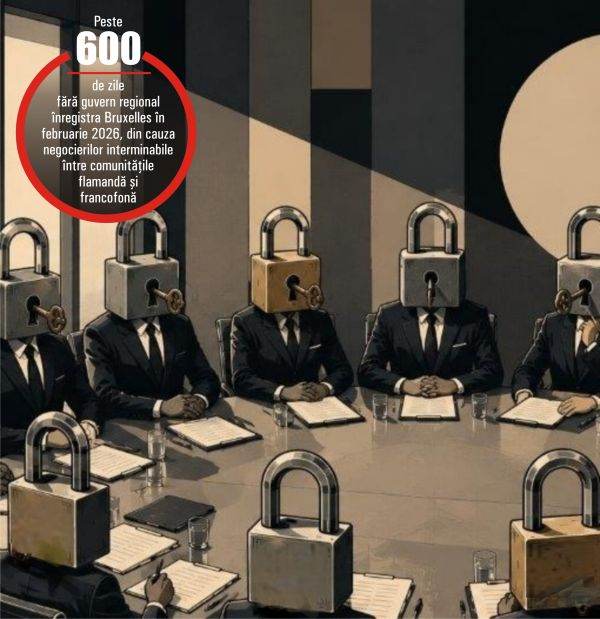
Belgium has a long history of governments formed after interminable negotiations. The federal nature and the political division between the Flemish and French-speaking communities make it much more complicated to form a majority than in a classic system or one with two large blocs. In 2026, the problem became visible again in Brussels. Euronews reported in February that the Brussels Capital Region had reached over 600 days without a regional government, and federal Prime Minister Bart De Wever warned that the deadlock was affecting the capital's image and finances. It is not a crisis that threatens The Belgian state is not immediately clear, but it is relevant to what is happening in Europe: institutions continue to function even when politicians fail to reach an agreement. This can create the illusion of stability. The administration works, payments are made, public services continue. But structural decisions are postponed. And the postponement has an economic cost.
• Spain: the government exists, the majority is the problem
Spain offers another version of the same crisis. Pedro Sanchez's socialist government has survived thanks to a complex mix of regional and nationalist parties, which allows it to remain in power but makes every legislative negotiation difficult. In January 2026, Reuters reported that the reform of the financing of Spanish regions was facing strong opposition from regional leaders, at a time when the government was trying to maintain its fragile coalition. In March, Reuters also noted the postponement of the presentation of the annual budget, amid political and economic difficulties. Spain thus demonstrates that a government does not have to fall for a governance crisis to exist. Sometimes it is enough for the executive to be unable to adopt the measures it needs.
• Poland: political majority, but pressure from the right
Poland is in a different situation. Donald Tusk's government is not on the verge of collapse, but political and fiscal pressures are increasing. The government is trying to reduce the pressure on taxpayers and, at the same time, keep the budget deficit, which exceeds 7% of GDP, under control. Reuters recently reported that the executive intends to reduce certain taxes for the population, compensating for part of the losses by increasing the corporate tax for the largest companies. At the same time, the political dispute over Ukraine, the relationship with the president and the rise of conservative forces complicate the government's room for maneuver. Poland is important for the EU because it shows that even governments with a parliamentary majority can be forced to operate in an increasingly polarized political space.
• Italy is the exception that proves the rule
Italy offers an interesting contrast. The government of Giorgia Meloni has demonstrated greater stability than many observers anticipated at the beginning of its mandate. The Atlantic Council noted in March that, beyond the formal stability of institutions, there is a growing gap between institutional performance and citizens' perception of how democracy works. In Italy's case, the European crisis does not take the form of the successive fall of governments, but of the tension between the stability of the executive and the change of the electorate. Meloni has managed to transform Italy into one of the examples of governmental stability in today's Europe, but his success shows, in turn, how far the center of gravity of European politics has shifted to the right.
• Common problem: the political center is narrowing
If France, Germany, Romania, the Netherlands, Belgium and Spain are viewed separately, the crises appear different. However, viewed together, they point to the same trend. Traditional centre-left and centre-right parties are losing votes. The electorate is fragmenting. Populist and nationalist parties are growing. Parliaments are becoming more unmanageable. And the coalitions needed to govern are becoming broader and more fragile. In this context, European politics is shifting from the question of "who wins the elections?” to the question of "who can build a majority to govern?” This is a fundamental difference. A party can win the elections and still not be able to govern. A coalition can have enough votes to topple one cabinet but not to support another. And a government can exist formally, without having the capacity to adopt the necessary reforms.
• The political crisis is becoming an economic problem
For the European Union, this situation comes at a bad time. Member states need to increase defense spending, reduce deficits, invest in energy and industry, and protect their economies in an unstable geopolitical environment. At the same time, the pressure on public finances is increasing. France is facing a high debt and deficit. Romania must reduce its deficit to protect its finances and its relationship with European institutions. Poland is trying to reconcile high defense spending with fiscal discipline. Germany must revitalize its economy after years of stagnation.
All these decisions entail political costs. And fragile governments tend to postpone precisely the decisions that produce short-term electoral costs but long-term economic benefits. Therefore, the political crisis should not be viewed only by the number of governments that have fallen. The more important indicator is the number of reforms that can no longer be adopted.
National fragmentation is inevitably reflected at the European level. The European Union functions through compromises between member state governments. If national governments have fragile majorities, their leaders have less room for compromise in Brussels. Any concession made at the European level can become an internal political issue. And this mechanism can block decisions in areas where the EU needs to move quickly: defense, energy, migration, industry, aid for Ukraine or trade policy.
The rise of the radical right adds a second layer of complexity. An analysis published by The Guardian in August noted that European center-right parties have come to cooperate more frequently with parties located on the far right of the political spectrum to secure parliamentary majorities. This does not mean that the EU is automatically heading towards a radical change of political regime. But it does mean that the old centrist politics are becoming harder to maintain.

















 Euro
Euro Dolar SUA
 Franc elveţian
 Liră sterlină
 Gram de aur