English
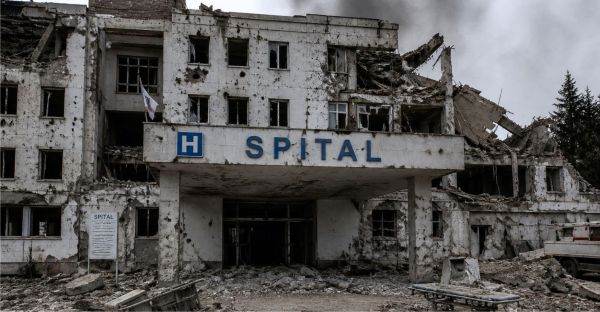
The World Health Organization (WHO), the International Committee of the Red Cross (ICRC) and Doctors Without Borders have issued a stark warning about the degradation of the protection of medical services in conflict zones, denouncing the "failure" of the international community to enforce existing norms.
In a joint statement, the leaders of the three organizations stressed that the current situation is worse than a decade ago, despite the existence of clear international commitments, according to AFP.
• 2016 UN Resolution Ignored in Practice
The officials recalled that, ten years ago, the UN Security Council unanimously adopted Resolution 2286, which explicitly condemns: attacks on hospitals and medical facilities; attacks on health personnel;
obstruction of access to care for the wounded and sick. However, the balance sheet is negative. "We are not celebrating a success, but a failure,” the representatives of the organizations said. It is not a failure of international law, but of political will.” The signatories of the declaration insist that the problem is not the lack of a legal framework, but its failure to implement it. According to them, violence against medical infrastructure - including hospitals, ambulances and personnel - continues "unceasingly” in many conflict zones around the world.
• 85% of attacks attributed to state actors
A particularly worrying element is the majority responsibility of states in these incidents. According to Michael Keeffe, an ICRC advisor: approximately 85% of attacks on health services are attributed to state actors. This statistic amplifies the gravity of the situation, indicating not only the chaos of conflicts, but also the direct involvement of governments or regular armed forces.
Representatives of the WHO, ICRC and MSF warn that attacks on health systems have consequences that go beyond the medical sphere: "When hospitals and health workers are targeted, we are facing not just a humanitarian crisis, but a humanitarian crisis.”
Destruction of health infrastructure: limits access to treatment for civilians;
increases avoidable mortality; destabilizes health systems in the long term; worsens humanitarian crises.
• Urgent call for action and accountability
The three organizations call on world leaders to: strengthen the protection of health services in conflict; respect and enforce international humanitarian law; ensure prompt, transparent and independent investigations into attacks; and punish those responsible. The joint statement comes in a global context marked by protracted conflicts and increasing violence against civilians.
Ten years after the adoption of Resolution 2286, the conclusion of medical leaders is clear: the rules exist, but without political will they remain ineffective. The message from WHO, ICRC and MSF represents an alarm signal regarding the degradation of a fundamental principle of international law: the protection of life and medical care in war. Without concrete action and real accountability, the organizations warn, attacks on hospitals risk becoming not the exception, but the rule of modern conflicts.

















 Euro
Euro Dolar SUA
 Franc elveţian
 Liră sterlină
 Gram de aur