English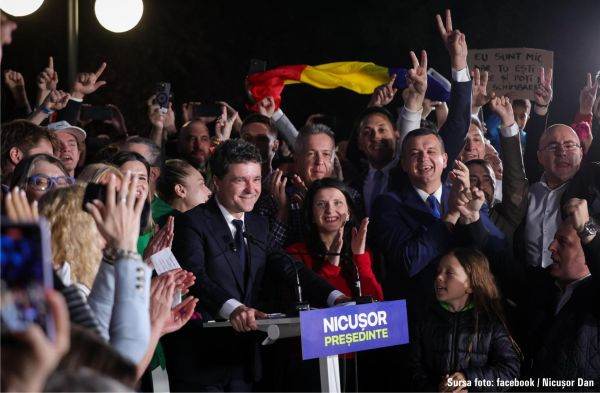
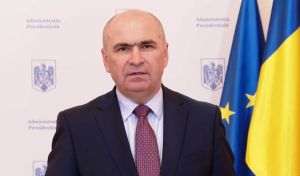
The Law on Financing Political Parties and Electoral Campaigns should be changed so that the Permanent Electoral Authority can respond to the requests it has received regarding the identity of donors in Nicuşor Dan's presidential election campaign, said Adrian Ţuţuianu, president of the AEP, on Friday.
Adrian Ţuţuianu explained that the institution he heads has been subjected in recent weeks to a massive wave of requests regarding the identity of donors who contributed to Nicuşor Dan's electoral campaign. According to him, the AEP has made public everything that the current legal framework allows, but the limits of transparency are set by the law in force. "We have had many requests to reveal the identities of donors to Mr. Nicuşor Dan's campaign and we have made all the data public as much as the law allows us. The law should provide for total transparency, but that means we have to amend it, Law 334 with financing," said the AEP president, implicitly suggesting that the current legislation on the financing of parties and electoral campaigns could become, in itself, a public policy issue.
The statements made by the AEP president show the extent of the public pressure surrounding the case and once again raise questions about how state institutions manage the financing of electoral campaigns in an extremely polarized political context.
His explanations come after the reappearance in public space of information according to which the Permanent Electoral Authority notified the General Prosecutor's Office in April 2025 regarding the financing of Nicuşor Dan's campaign in the presidential elections.
• The Prosecutor General's Office notified in the middle of the electoral campaign, in April 2025
According to Adrian Ţuţuianu, the documents were sent by the institution's Control Department after irregularities were found in the documentation submitted for the reimbursement of electoral expenses. "In 2025, in April, the Permanent Electoral Authority found several irregularities in the documentation brought for reimbursement by the mayoral candidate, Nicuşor Dan. And then it applied the sanction, decided not to reimburse certain amounts, and the Control Department considered that certain facts could have a criminal connotation, which is why the file from the Control Department was sent to the Prosecutor General's Office", stated the president of the AEP.
The AEP control report indicates that certain electoral expenses, totaling 870,384.10 lei, were invalidated because they could not be properly proven or did not comply with the legal provisions regarding the electoral campaign. Among the examples cited by the institution are sociological research conducted outside the campaign period or propaganda materials distributed by companies that did not have officially registered contracts with the independent candidate, according to the documents submitted to the AEP. Following these findings, the Permanent Electoral Authority decided not to settle the respective amount and notified the Prosecutor's Office attached to the High Court of Cassation and Justice for possible criminal acts.
Although the information recently resurfaced in the public debate, the notification was not made by the current management of the institution, but by the interim management of the AEP from the spring of last year. At that time, the institution was led by Zsombor Vajda, who had become interim president after the dismissal of Toni Greblă by Parliament. The political context at that time was extremely tense, as the notification was sent in the midst of the electoral campaign for the presidential elections in May 2025.
This temporal coincidence fueled political speculation regarding the possible electoral impact of the institutional approach. At the time, UDMR - the party that had proposed Vajda for the position of vice-president of the AEP - supported Crin Antonescu in the first round of the presidential elections, along with PSD and PNL. After Antonescu did not enter the second round, the leaders of the Hungarian Democratic Union sided with Nicuşor Dan, later claiming the decisive role of the Hungarian vote in his victory.
• Nicuşor Dan claims that this is an error in interpreting the law
In parallel, the legal dispute between Nicuşor Dan and the Permanent Electoral Authority continued. The President of Romania contested the institution's refusal to fully reimburse the campaign expenses and filed, in December 2025, a preliminary complaint against the control report and the AEP decision.
Adrian Ţuţuianu confirmed that the complaint was analyzed and rejected by the institution. "Mr. Nicuşor Dan registered, in December 2025, a preliminary complaint regarding the control report and the AEP decision. We analyzed that complaint. It was rejected. You know from the public space that Mr. Nicuşor Dan said that he did not share the AEP's point of view and that will go to court. The competent court is the Bucharest Court of Appeal. We do not have any subpoena today”, the AEP president specified.
In the public space, specific questions also appeared regarding certain campaign donations, including an amount of approximately 100,000 lei attributed to Nicuşor Dan's sister. Adrian Ţuţuianu, however, refused to provide additional details, citing the existence of a criminal complaint. "As long as there is a criminal complaint, I do not want to come to the public space regarding any candidate with information related to the complaint made by the AEP. You know what is public, what is not public is related to the investigation”, he emphasized.
At the same time, the president of the Permanent Electoral Authority stated that, from the moment of the complaint until now, the institution has not received any requests for documents from prosecutors in this case. "We receive requests for documents from prosecutors' offices that have been notified on several topics and regarding several parties and candidates. We respond to absolutely everything. (...) In this case, since I have been here, I have not been asked for any information," said Adrian Ţuţuianu, who noted that, during the presidential mandate, such criminal investigations are suspended.
• Splitting amounts donated in the campaign, a way to bypass donations made in front of a notary
One of the explanations offered by AEP for the irregularities found refers to the way in which online donations are made. According to the president of the institution, the digital system allows the fragmentation of amounts in order to avoid the legal obligation of notarial authentication of large donations. "AEP understands very well how this donation system works on various digital platforms. The substantive issue is different. The law obliges you when you make a donation to make an authentic act when it exceeds the value provided by law. (...) Someone who wants to make a donation and not go to the notary gives 200 lei today, gives 500 tomorrow, that is, splits the amount. AEP considered that such a way of working alters the provisions of the Civil Code. It is a disguised form of circumventing legal provisions and sanctioned them as such", explained Adrian Ţuţuianu.
For his part, Nicuşor Dan rejected the accusations and claimed that the situation is not new, but represents the resumption of an older dispute with the Permanent Electoral Authority regarding online donations. The president said that in the 2016 and 2020 campaigns, the AEP applied similar sanctions to him, which were later annulled by the court, and the criminal complaints filed then had no legal consequences. In his opinion, the real problem is how state institutions apply the law. "Regarding the information regarding the AEP's criminal complaint in connection with my electoral campaign, this is not new news, but a rehash of a news item from April 2025. The important issue is not my person, but the functioning of the institutions, which are looking for missing commas in documents and pretend not to see facts visible from the Moon,” Nicuşor Dan wrote in a public message. The controversy was quickly exploited politically. AUR Vice President Adrian Axinia argued last month that the existence of a criminal complaint would question the legitimacy of the current president and create major political vulnerabilities. In her statements, Axinia stated that "the criminal case that arises following the AEP's notification makes him instantly blackmailable, constantly facing the prospect of prison after the end of his mandate”, requesting the suspension of Nicuşor Dan and the organization of a dismissal referendum.
Currently, the situation remains suspended between administrative procedures, civil litigation and a criminal complaint filed with the General Prosecutor's Office, while the political debate intensifies. The question that persists is whether the AEP's institutional approach was only the result of a technical control over campaign financing or whether its timing and context had, intentionally or not, the potential to influence one of the most important electoral competitions in post-December Romania.






















 Euro
Euro Dolar SUA
 Franc elveţian
 Liră sterlină
 Gram de aur