English

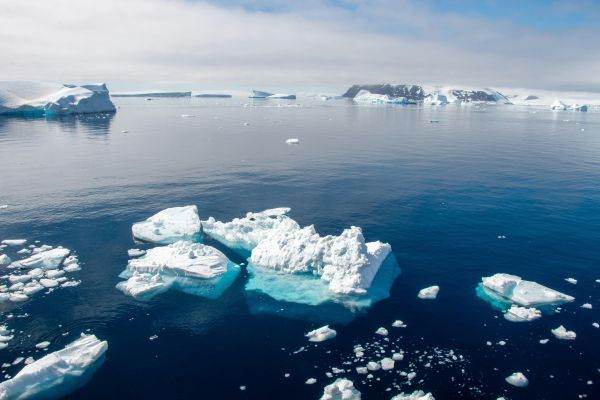
Antarctica's sea ice has reached record lows after a series of oceanic and atmospheric processes amplified by climate change, according to a study by researchers at the University of Southampton and cited by DPA and PA Media. The findings suggest that the Antarctic Ocean could shift from being a global climate regulator to a factor accelerating global warming if current trends continue in the coming years.
• From apparent stability to rapid collapse
For decades, Antarctica appeared to buck the general trend of global warming. Sea ice continued to grow until 2015, despite rising global temperatures. But that trend has suddenly reversed. According to British researchers, the cause was a combination of three events that disrupted the balance between the ocean and the ice. Around 2013, winds driven by climate change began to bring warmer, saltier water to the surface from deep in the Antarctic Ocean. Two years later, in 2015, these winds mixed the heat stored deep in the ocean with the upper layer of the ocean, causing accelerated melting of sea ice, especially in East Antarctica.
• A vicious cycle that prevents ice from rebuilding
Since 2018, the ocean-ice system has entered a self-sustaining cycle. As the ice cover has shrunk, the ocean surface has remained warmer and saltier, conditions that prevent sea ice from rebuilding. This vicious cycle has led to the loss of huge areas of ice, comparable in size to Greenland, and culminated in record lows in 2023. The study's lead author, oceanographer Aditya Narayanan, described the results as "worrying,” warning that the disappearance of sea ice could destabilize ocean circulation and accelerate global warming faster than climate models predicted.
• Global effects: from ocean currents to rising sea levels
Study co-author Alessandro Silvano points out that the phenomenon is not limited to Antarctica. "Antarctic sea ice acts as a mirror of the Earth, reflecting solar radiation back into space,” he explains. Reducing this reflective surface means more heat is absorbed by the oceans. In addition, the loss of sea ice can affect ocean currents that store heat and carbon dioxide, and weaken the ice shelves that hold continental glaciers in place. Such an evolution would contribute to the rise in sea and ocean levels globally.
• A possible climate tipping point
Professor Alberto Naveira Garabato warns that if the transport of heat from the depths to the ocean surface continues, Antarctica could enter a prolonged period of reduced sea ice. According to him, if this situation persists until 2030 and beyond, the Antarctic Ocean risks losing its role as a climate buffer and becoming a new engine of global warming.
The study highlights how quickly natural systems can change when certain critical thresholds are exceeded. Antarctica, long considered one of the most stable pillars of the climate system, could become one of the most important inflection points of climate change. For the scientific community, the conclusion is clear: what happens at the South Pole does not stay at the South Pole, but directly influences the climate, sea levels and the ecological balance of the entire planet.

























 Euro
Euro Dolar SUA
 Franc elveţian
 Liră sterlină
 Gram de aur