 English

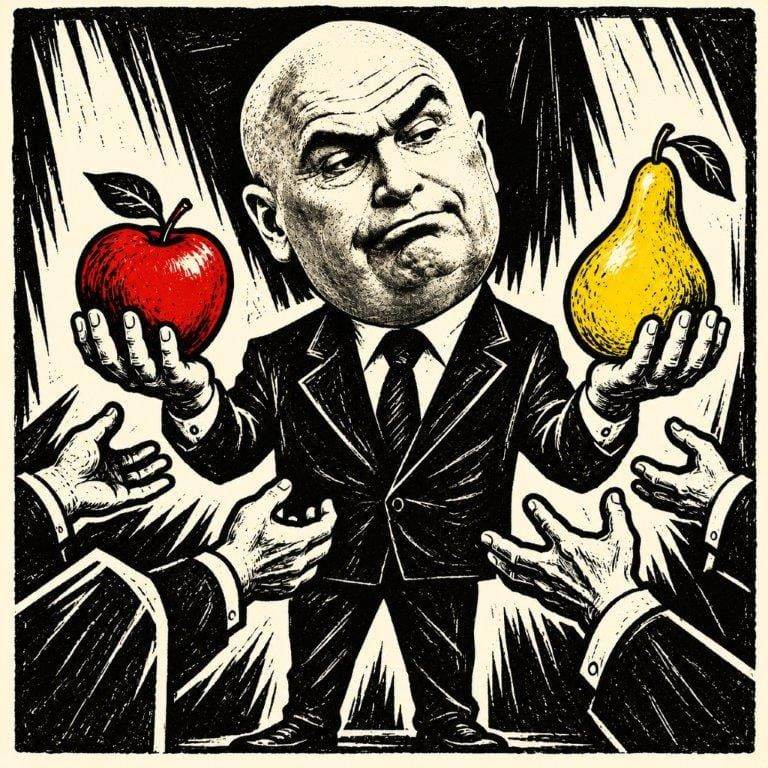
The government led by Ilie Bolojan raised taxes in 2025 because Romania had the largest budget deficit in the European Union and risked falling below the lowest investment-grade rating. Higher taxes reduced the deficit, but they also reduced companies' profits, consumption and foreign investment.
And some of the additional money collected by the state goes toward interest payments.
Why the state raised taxes
Romania had a budget deficit of 9.3% of GDP in 2024, calculated according to the European methodology, the largest in the European Union, while in 2025 the deficit fell to 7.9% of GDP, still the largest in the European Union, according to Eurostat data reported by the press. Romania is subject to the European Union's excessive deficit procedure, which requires it to bring the deficit below 3% of GDP by 2030, according to the government program of designated prime minister Luca Niculescu.
In June 2025, the European Commission found that Romania had not taken effective action, opening up the possibility of suspending part of its European funds, as reported by the press.
All three major rating agencies, S&P, Moody's and Fitch, keep Romania at the lowest investment-grade rating, with a negative outlook.
S&P affirmed the rating on October 2 and stated that the negative outlook reflects risks concerning the reduction of the budget deficit and the external deficit, according to Agerpres.
What would have happened if Romania had been downgraded?
Many investment funds are allowed to hold only government securities with investment-grade ratings and take into account the ratings of several agencies.
If Romania lost this grade at several agencies, these funds would be required to sell Romanian government securities, and the state would have to borrow at higher costs. The loss would also affect private pensions: every 0.1 percentage-point increase in the yields on Romanian government securities results in a loss of around 600 million lei for Pillar II pension funds, or around 70 lei per participant, BURSA calculated.
Which taxes were increased
The government led by Ilie Bolojan adopted the draft of Law No. 141/2025 on July 4, 2025, a few weeks after taking office.
Law No. 141/2025 was published in Official Gazette No. 699 on July 25, 2025.
The standard VAT rate increased from 19% to 21% on August 1, 2025.
The dividend tax increased from 10% to 16% for dividends distributed from January 1, 2026. The additional turnover tax on large banks doubled, from 2% to 4%, on July 1, 2025.
Public-sector salaries were frozen in 2026 at their December 2025 levels, according to the press.
The government estimated that the revenue-increasing measures would bring 9.5 billion lei into the budget in 2025 and 35 billion lei in 2026, as reported by the press.
The minimum turnover tax is not a measure introduced by the Bolojan government.
It was introduced in 2023 through Law No. 296/2023, at a rate of 1%, and has applied since 2024 to companies with turnover exceeding 50 million euros whose corporate income tax is less than 1% of their turnover.
In 2026, the rate was reduced to 0.5%, according to the media.
What higher taxes have brought in
Budget revenues increased by 11.8% in the first nine months of the year, reaching 522.07 billion lei, and the Ministry of Finance attributes the increase to Law No. 141/2025, according to data presented by the Ministry of Finance at a government meeting.
The budget deficit fell to 3.82% of GDP after nine months, from 5.35% of GDP in the same period of 2025. The deficit did not fall solely because of taxes: lower personnel expenses, down by 4.54 billion lei, also contributed. Public investment increased by more than 25 billion lei, reaching 107.77 billion lei, and around 70% of these payments went to projects financed by European funds and the National Recovery and Resilience Plan.
The European Union transferred 48.79 billion lei to Romania in the first nine months, 39.3% more than in the same period of 2025, according to the Ministry of Finance.
What higher taxes have cost
Higher taxes reduced companies' profits and, through lower profits, foreign direct investment, as shown by banks' results and NBR data presented by BURSA in the article „Why foreign investment in Romania has fallen: taxes and expensive energy”.
The fact that the decline in foreign investment does not stem from larger dividends sent to parent companies is shown by BURSA's analysis in the article „Are foreign companies withdrawing their profits from Romania? No, their profits are lower”.
Higher prices following the VAT increase reduced consumption.
The International Monetary Fund forecasts an economic contraction of 0.5% in 2026.
Industrial production fell by 3.7% in the first seven months of the year, and around 70,000 jobs were lost between May 2025 and June 2026, 76% of them in industry, according to the government program submitted to Parliament.
The cost that remains: interest payments
Budget revenues increased by around 55 billion lei in the first nine months, according to BURSA's calculation based on Ministry of Finance data.
During the same period, interest expenses increased by 10.69 billion lei, reaching 50.63 billion lei, or 2.5% of GDP. Almost one-fifth of the state's additional revenue went solely toward covering the increase in interest payments. The increase in interest expenses was 2.35 times greater than the reduction in personnel expenses.
Why are interest rates rising?
The state is gradually replacing debt contracted during the years of low interest rates with new debt at current rates. The average cost of government public debt rose from 4.5% at the end of 2025 to 5.3% at the end of March 2026, according to the General Directorate for Public Debt Management within the Ministry of Finance, as cited by the press.
The government program estimates interest expenses at around 3% of GDP in both 2026 and 2027, higher than the 2.5% of GDP recorded after the first nine months.
Who receives the higher interest payments?
At the end of May, banks held 42.2% of domestic-market government securities denominated in lei, private pension funds held 29.7%, and foreign investors held 17.4%, according to the General Directorate for Public Debt Management, as reported by the press.
Banks pay the state a higher additional turnover tax, while the state pays banks higher interest on the government securities they hold.
What comes next
The government program provides for a deficit of around 6% of GDP in 2026 and 5.2% of GDP in 2027, calculated according to the European methodology, with the deficit falling below 3% of GDP in 2030.
The same program provides for the elimination of the minimum turnover tax from January 1, 2027, and pension indexation from 2027, without specifying which revenues will cover the costs.
Where will the deficit reduction come from if one tax disappears and interest payments rise?
The answer will be provided by the 2027 budget, which the Niculescu government has pledged to submit to Parliament for a vote by December 31.


















 Euro
Euro Dolar SUA
 Franc elveţian
 Liră sterlină
 Gram de aur






























Reader's Opinion