English

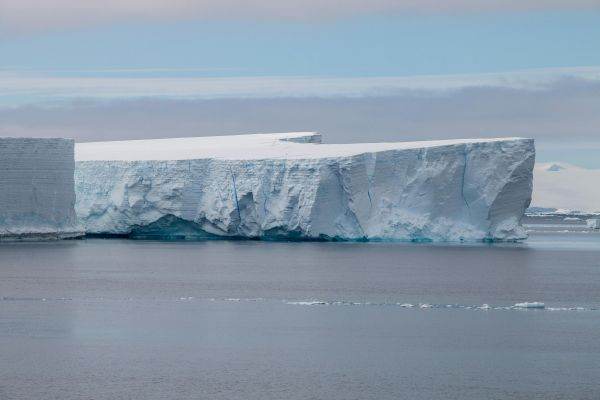
China marks a major breakthrough in polar research, after managing to drill more than 3,400 meters deep into the Antarctic ice sheet, opening the way to studying ecosystems isolated for millions of years. The operation, carried out as part of the 42nd Chinese scientific expedition, allowed reaching a depth of 3,413 meters in the ice, near the Kunlun Station.
The announcement was made by the Chinese Ministry of Natural Resources, quoted by the EFE agency. It is the first deep drilling operation of this type carried out by China in Antarctica, an important step in consolidating its scientific presence on the frozen continent.
• Hot water technology: fast and less invasive
The method used - hot water drilling - involves: injecting water at high temperatures and high pressure, controlled melting of ice, creating an access channel without the use of chemicals. This technique significantly reduces the risk of contamination of subglacial lakes, fragile and isolated ecosystems for millions of years.
• Why are subglacial lakes important
Access to these lakes offers researchers the opportunity to: study the evolution of the Earth's climate, analyze ancient climate "archives", investigate possible forms of extreme life. Drilling also allows the collection of water and sediment samples under controlled conditions, essential for global climate research.
• Breaking an international record
According to Xinhua, the depth reached exceeds the previous record of about 2,540 meters, set by the IceCube project between 2004 and 2011. However, specialists warn that this method is becoming increasingly difficult to control at great depths, due to extreme conditions and increased technical risks.
The expedition, launched in November 2025, is part of China's efforts to expand its polar research infrastructure, contribute to the study of climate change, and better understand Antarctic ecosystems. China's technical performance confirms the intensification of scientific competition in the polar regions. Beyond the technological dimension, access to subglacial lakes could provide essential answers about the planet's climatic past and the limits of life in extreme conditions.


























 Euro
Euro Dolar SUA
 Franc elveţian
 Liră sterlină
 Gram de aur