English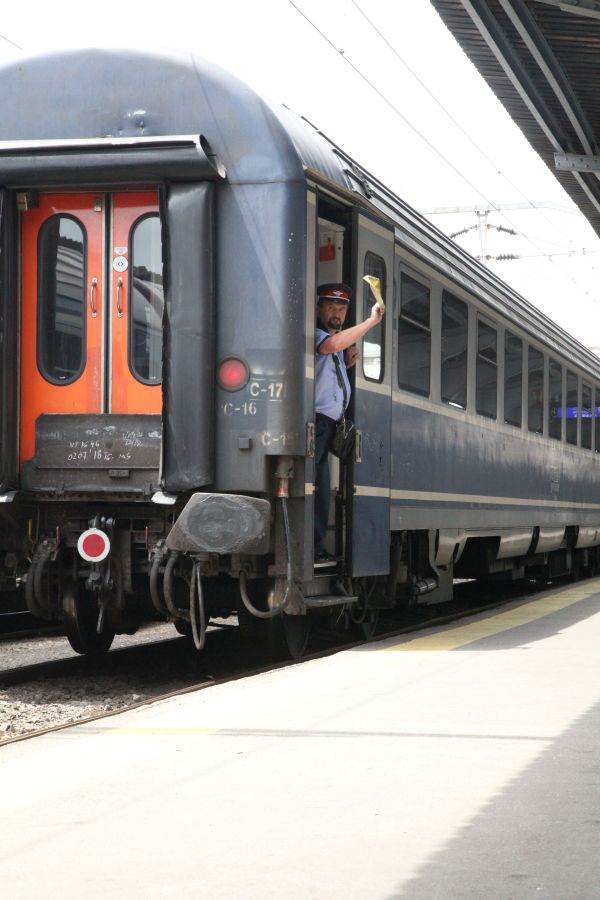
The National Railway Company CFR SA will have a crisis budget this year, built on austerity, massive losses and restructuring, in a complicated economic context both domestically and internationally, according to information published by the Club Feroviar website.
The cited source specifies that, instead of the modest profit of 11.5 million lei anticipated in the mandate contracts, the railway infrastructure administrator will enter the year with a deficit of 900 million lei.
The alarm signal was sounded in a meeting held in the middle of last week, where the company's management and representatives of the railway unions directly discussed the financial situation of CFR SA and analyzed the company's operational indicators, the cited source claims.
According to her, the mandate documents estimated a 12.5% increase in turnover, but the actual evolution indicates a decrease of approximately 10%. Also, train journeys, an essential indicator for the infrastructure manager's income, should have increased by 4%, but estimates for 2026 show a decrease of approximately 5%. In concrete terms, this means fewer trains on the network and, implicitly, fewer fees collected by CFR SA.
The management's explanations were related to structural bottlenecks in the railway market. Transport operators, both passenger and freight, no longer have space to expand their contract portfolio, and their activity is affected by economic stagnation and the decrease in logistics flows. In addition, not all operators are good payers, which increases the pressure on the company's finances. The cited source states that CFR SA has repeatedly had to restrict access to some infrastructure operators due to arrears in the payment of the Infrastructure Use Tariff (TUI), one of the operators with problems being CFR Călători.
Faced with this gloomy financial picture, the management of CFR SA is preparing a comprehensive plan for reorganization and economic efficiency. The proposed strategy has two major directions, according to the cited source. The first concerns measures that depend on the decisions of the Ministry of Transport and the Government, including legislative amendments regarding the functioning of the railway infrastructure administrator and adaptations of labor legislation to the specifics of railway activity. In practice, the company's management believes that the current regulatory framework limits the system's capacity for reorganization and efficiency.
The second direction includes measures that can be implemented directly by CFR SA and that will have an immediate effect on the company's financial structure. These include increasing the value of the Infrastructure Usage Tariff, the main source of income for the railway network administrator, but also expanding related income generated by secondary activities. In parallel, the company is analyzing the closure of railway lines that are considered economically inefficient, a sensitive decision, as it could affect mobility in certain areas of the country.
The plan also includes scrapping non-functional rolling stock, valorizing waste resulting from operating activities and initiating steps to sell minority stakes that CFR SA holds in various companies. All these measures aim to generate rapid liquidity and reduce financial pressure on the company.
An essential chapter of the reorganization program is that of human resources. The company's management proposes to reduce the staff by approximately 500 people, but not through direct layoffs, but through retirements and voluntary departures. The strategy seeks to avoid major social conflicts in an already sensitive sector, but at the same time aims to reduce wage costs, which represent an important component of operating expenses.
In parallel, CFR SA must reduce total expenses by approximately 10%, in line with the general austerity policy applied at the state level. Among the organizational changes envisaged are the application of the principle according to which there must be one boss for a maximum of ten employees, as well as the alignment of management structures between the central level and regional branches.
In addition to immediate measures, CFR SA management is also preparing financial instruments aimed at stabilizing the company in the medium term. These include a program to cover accumulated accounting losses, a plan to reduce outstanding payments and a program to streamline the use of human resources. All these initiatives are intended to avoid further deterioration of the company's financial situation and to prevent the accumulation of difficult-to-manage debts.
























 Euro
Euro Dolar SUA
 Franc elveţian
 Liră sterlină
 Gram de aur