English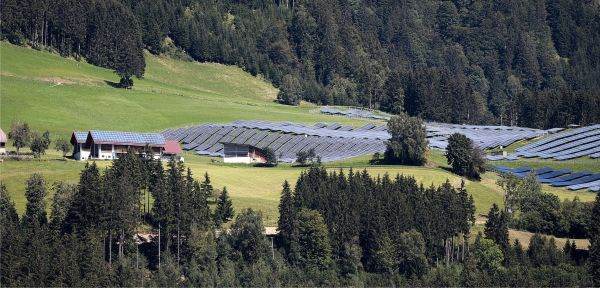
We have a single energy community in our country, and it does not produce electricity, which means that its participation in the national production capacity from renewable sources is zero, according to the audit report published yesterday by the European Court of Auditors (ECA), before the European Commission presents the Citizens' Energy Package today.
The comparative analysis carried out by ECA specialists for 2024 and early 2025 shows that Romania had 0 megawatts (MW) of solar or wind production capacity owned by energy communities, while in the other Member States analyzed there was already, even if on a limited scale, a real contribution: 664 MW in the Netherlands, 16 MW in Poland and 23 MW in Italy. In percentage terms, energy communities represented approximately 1.52% of solar capacity and 3.17% of wind capacity in the Netherlands, approximately 0.06% of solar capacity and 0.01% of wind capacity in Italy and approximately 0.09% of solar capacity and 0.01% of wind capacity in Poland, while in Romania the share is 0% for both technologies.
The only energy community in our country recorded in the report is the Energy Cooperative, which had 949 members. In April 2025, it had no renewable energy infrastructure, zero production capacity and, logically, at the end of 2024 it had zero kilowatts of electricity produced.
In addition, the European auditors emphasize that Romania's progress towards the objective set by the European Union for the development of energy communities is extremely low. The EU solar energy strategy requires every municipality with over 10,000 inhabitants to have at least one renewable energy community by 2025. However, the European Court of Auditors shows that, at the beginning of 2025, less than 10% of municipalities with over 10,000 inhabitants in Poland and Italy had an energy community, Romania had only one, while other European countries, such as Denmark, the Netherlands and Ireland, were making much more consistent progress. At the level of the entire European Union, the auditors estimate that around 27% of the objective set for 2025 had been achieved, which makes it highly unlikely that the target will be met within the set deadline. The report shows that the modest situation in Romania is not only the result of a slow development of projects, but also of structural gaps in the public policy framework. The European Court of Auditors also found that the central authorities in Bucharest have not published the mandatory national assessment of the obstacles and potential of energy communities, an assessment required by the Renewable Energy Directive. In this context, the auditors explicitly recommend that the Romanian Ministry of Energy assess and report on the obstacles to renewable energy communities and their development potential, setting the target date for the implementation of the recommendation as July 2027.
At the same time, the report highlights a paradox in the case of our country. Of the four countries analyzed - the Netherlands, Poland, Italy and Romania - only our country has specific legislation to support vulnerable households within energy communities. However, this positive element was not enough to generate real development of projects, given that the lack of subsidies and other financial incentives is slowing down the emergence of energy communities, say the ECA auditors.
The European Court of Auditors also shows that the problem of energy communities goes beyond Romania and reflects a wider deficiency in European policies. In the 2016 impact assessment for the Renewable Energy Directive (RED II), the European Commission estimated that, by 2030, energy communities could have over 50 gigawatts (GW) of wind capacity and over 50 GW of solar capacity, equivalent to 17% of wind capacity and 21% of solar capacity installed in the EU. However, the European auditors believe that these estimates were overly optimistic. Updated analyses indicate that, even in countries with well-developed energy cooperatives, such as the Netherlands, communities could end up owning around 4% of solar and wind production capacity by 2030, well below the levels initially estimated. The report also highlights the design problems of the European target for energy communities. The Court finds that the objective set by the European Commission, the existence of at least one renewable energy community in every locality with over 10,000 inhabitants, sets a political ambition, but is not well designed, is not sufficiently supported at national level and is not monitor ized properly. The ECA also shows that the Community Executive did not present a clear justification for how this target was set and did not analyze whether it was realistic.
In addition, the monitoring of progress is incomplete. In 2024, the European Commission relied on an ad-hoc inventory of energy communities drawn up by consultants, and the data in question does not come from reliable and complete national registers. In many cases, the inventory includes structures that are not energy communities within the meaning of the European definitions, and some states, including our country, do not even have a system for registering or inventorying these communities.
In this context, the European Court of Auditors concludes that it is unlikely that the EU target for 2025 will be achieved, and the development of energy communities remains well below the level of political ambitions.
In theory, energy communities could become one of the most powerful instruments of the European energy transition. These are legal entities through which citizens, local authorities and small businesses can produce, manage, share and consume their own energy, from solar panels installed on shared rooftops to collectively owned wind turbines. Energy communities can contribute to achieving the EU's renewable energy targets, attract private investment, reduce energy poverty and directly involve citizens in the transformation of the energy system.
However, in practice, the European Court of Auditors' report shows that this potential remains largely untapped. The rules on the establishment and operation of energy communities are often unclear, especially in the case of apartment blocks, where almost half of the European Union's population lives. In many cases, the idea of creating a new legal entity on top of existing homeowners' associations is perceived as an additional layer of bureaucracy, which discourages local initiatives.
Adding to these problems are technical obstacles. Delays or refusals to connect to the grid due to grid congestion slow down project development, and the lack of dedicated incentives for energy storage reduces system flexibility. Combining renewable energy projects with storage solutions could help balance energy demand and supply and reduce pressure on grids, but support for these solutions has not yet become a priority in European policies, according to the ECA report.





















 Euro
Euro Dolar SUA
 Franc elveţian
 Liră sterlină
 Gram de aur