 English

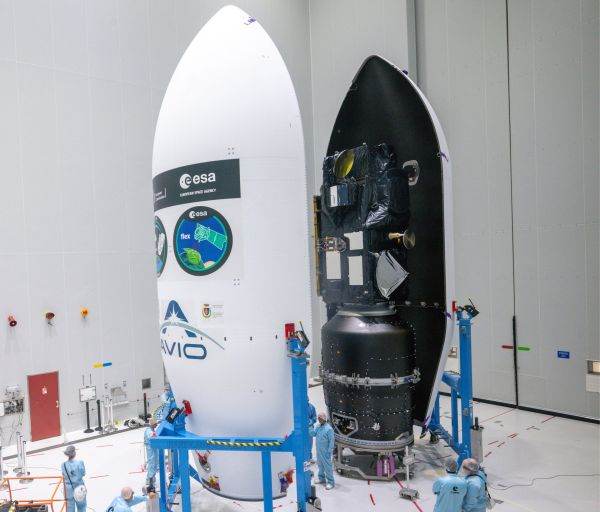
Europe could develop its own human spaceflight capability with an additional financial effort considered "very reasonable", according to Josef Aschbacher, director general of the European Space Agency (ESA). The statement comes ahead of the International Space Summit in Paris, where the future of European space exploration will be discussed in the context of the reassessment of the United States' involvement in lunar programs, AFP reports.
• Additional effort estimated at around 10% of the ESA budget
Until now, human spaceflight has not been a priority for ESA, with Europe relying heavily on the United States for access to space for European astronauts and for part of its lunar exploration projects. Josef Aschbacher told a meeting with members of the Association of Aerospace Journalists (AJPAE) that developing such a capability could require a relatively small increase in the agency's budget. "If we were to add a manned flight capability and a bit more ambition in the field of robotic activities," the increase in ESA's budget would be "very moderate," the agency's director general said.
Although he declined to give an official figure, Aschbacher indicated that a first estimate shows an additional financial effort of around 10% of ESA's current budget. "It would be a very, very reasonable cost," he said.
• Europe reassesses its dependence on the United States
The change in perspective comes amid changes made by the US administration to the Artemis lunar program. The European Union is participating in the US program, including by providing the service module of the Orion capsule, used to transport crews. Europe was also to contribute several components to Gateway, a space station designed to orbit the Moon and support missions to the lunar surface. In 2026, the US administration substantially modified the lunar program, abandoning the Gateway project in its original form and emphasizing a direct American presence on the Moon. The decision led European states to reassess their dependence on the United States and their own role in space exploration. In this context, ESA member states convened a ministerial conference in Rome in December dedicated to the future of European space exploration.
• Europe does not yet have its own human flight capability
Aschbacher stressed that Europe is lagging behind other space powers in terms of human flights. "The other two countries that currently allow human spaceflight are China and Russia, which is not an option for us. India is also preparing human spaceflight, but Europe does not yet have this capability,” said the ESA Director General. According to him, the development of a European human flight capability is among the topics that will be discussed at the Paris Space Summit. The event, hosted by French President Emmanuel Macron, is scheduled for September 9-10 and will focus on the future of European space exploration.























 Euro
Euro Dolar SUA
 Franc elveţian
 Liră sterlină
 Gram de aur





























