English


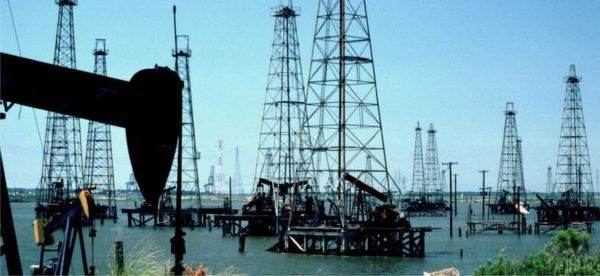
Energy ministers from the Group of Seven (G7) industrialized nations did not decide yesterday, in a telephone call following their online meeting on Monday, to release strategic oil reserves, but asked the International Energy Agency (IEA) to assess the situation before taking action. Thus, the G7 asked the main energy agency to prepare scenarios for the release of emergency oil stocks, in the context of the conflict in the Middle East.
The International Energy Agency will study the volumes that could be released, as stated by the French Economy Minister, Roland Lescure, emphasizing that "everyone is willing to take measures to stabilize the market, including the United States." "We have asked the IEA to develop scenarios for a possible release of oil stocks. We must be ready to act at any time," Roland Lescure said, quoted by marketscreener.com.
The French official, whose country holds the G7 presidency, also said that there are currently no supply problems in Europe or the United States.
The IEA, which oversees the use of OECD oil reserves, was due to discuss the G7 request in the second half of yesterday, and no information had emerged by the time of going to press.
"IEA member governments will assess current security of supply and market conditions to inform a subsequent decision on the availability of emergency stocks by member countries," Fatih Birol, the agency's executive director, said in a statement following the G7 ministers' meeting, quoted by theedgemalaysia.com.
"In oil markets, conditions have deteriorated in recent days,” said Fatih Birol, citing the blockade of the Strait of Hormuz and cuts in oil production in the region.
At a news conference ahead of the G7 meeting, Japanese Industry Minister Ryosei Akazawa said the group was ready to take necessary measures to support global energy supplies, including the possible joint release of strategic oil reserves.
• EU urges US to strictly enforce G7 price cap on Russian oil
The European Commission urged the United States on Monday to strictly enforce the G7 price cap on Russian oil after Washington announced on Monday that it was waiving some oil-related sanctions as a way to secure supplies and reduce prices, according to Reuters.
Crude oil prices rose to nearly $120 a barrel on Monday, their highest in nearly four years, on concerns about output cuts in the Gulf and disruptions to exports through the Strait of Hormuz. They have since retreated, falling back below $100 a barrel.
Yesterday, West Texas Intermediate (WTI) crude for April delivery was trading at $83.73 a barrel on the New York Mercantile Exchange at 10:45 a.m., down 11.7 percent from Monday's session, while Brent crude for May delivery was trading at $88.14 a barrel, down 10.9 percent.
"It is very important to strictly enforce the G7 price differential and possibly move to a total ban on maritime services to limit Russia's war revenues, because the opposite would be self-destructive,” said European Economy Commissioner Valdis Dombrovskis.
• Europe vulnerable
Even before the Iran crisis, European energy prices were higher than those in the US and China. In this context, European Commission President Ursula von der Leyen is set to propose measures at an EU summit scheduled for next week, according to Reuters.
"When it comes to fossil fuels, we are completely dependent on expensive and volatile imports, which puts us at a structural disadvantage compared to other regions,” von der Leyen said, adding: "The current crisis in the Middle East is a stark reminder of the vulnerabilities this creates. Reducing the share of nuclear energy was a choice. I think it was a strategic mistake for Europe to give up a reliable and affordable source of low-emission energy.”
Europe produced about a third of its electricity from nuclear sources in 1990, but that share has fallen to 15%, making Europe dependent on oil and gas imports, the prices of which have risen in recent days. The EU imports over 90% of its oil and around 80% of its gas.



















 Euro
Euro Dolar SUA
 Franc elveţian
 Liră sterlină
 Gram de aur