 English


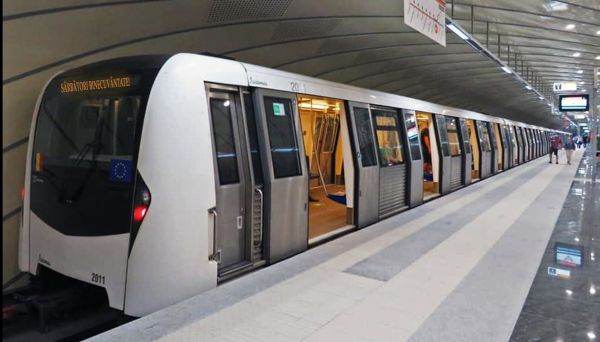
The Metrorex subscription comes with a simple promise: you pay and you have access to the metro for a month. In practice, however, the journey can begin with a small test of patience. The cardboard card deteriorates, the magnetic strip peels off, the device refuses to read it, and the passenger is left in front of the gate, with the valid subscription in hand and without the possibility of passing. The problem appears after a few days of use, when the cardboard on which the magnetic strip is applied begins to show signs that it was not exactly designed for the hectic life of a metro subscription. The strip can peel off, and the access device no longer reads the card. This is where the interesting part begins. If there is a security guard nearby, the passenger can try to explain the situation. Metrorex staff are familiar with the problem of damaged cards, so the situation is not necessarily a surprise to those who work in the stations. However, the agent does not actually have the right to turn an unread card into a valid pass with just the push of a button. And if there is no one at the metro entrance to intervene (other than the guard), the passenger is simply left in front of the gate and has to make a detour and try at the other end of the platform. In other words, the pass is valid, but access sometimes depends on the infrastructure and, possibly, on the presence of a person to notice the problem.
• The card breaks, the passenger commutes for it
There is, of course, also the official solution: changing the card. However, this cannot be done at every station. The traveler must arrive at one of the stations where the operation is available and, in all likelihood, have enough time for a new experience: standing in line, if there is someone present at the counter. It is a small paradox of public transport: you bought a subscription precisely to save time and to avoid buying individual trips, but if the physical medium deteriorates, you can end up wasting time proving that your subscription is actually valid.
• The "premium” variant: the plastic card
For those who are tired of cardboard, there is the plastic, rechargeable card. It sounds better. It is more resistant, more modern and, in theory, should save the traveler from the drama of the magnetic strip that starts to come off after daily use. But even plastic is not immune to the system. Sometimes even the rechargeable card can get stuck or may not be read by the access devices. Thus, the traveler may discover that he has gone from the problem of "bad cardboard” to the problem of "uncooperative plastic”.
• A small experiment of patience at each entrance
In essence, the problem is not only the material from which the card is made, but the fact that access to the already paid service can become dependent on the functioning of a physical medium and the availability of the station staff. The result is an almost Kafkaesque situation: Metrorex knows that there are damaged cards, the passenger knows that he has a valid subscription, the device only knows that it cannot read the magnetic strip, and the gate knows only one thing: it does not open. For a public transport service used daily, a monthly subscription should be one of the simplest forms of access. Perhaps, in the future, Metrorex will manage to find a solution through which the subscription is... usable. Until then, the traveler has a service with an additional feature, unannounced in the list of benefits: the monthly subscription also includes a small test of nerve resistance.
























 Euro
Euro Dolar SUA
 Franc elveţian
 Liră sterlină
 Gram de aur





























