English

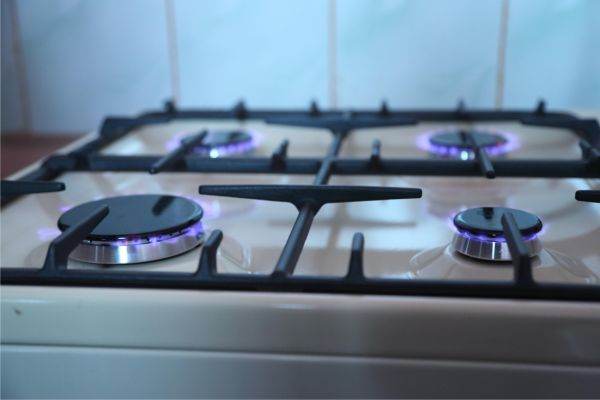
The natural gas bill will increase by 5% for the final consumer starting April 1, 2026, after the capping scheme ends on March 31, announced Laurenţiu Urluescu, president of the Romanian Energy Suppliers Association (AFEER), yesterday during an informal meeting with media representatives.
Laurenţiu Urluescu stated: "From April 1, 2026, there is a risk of price increases for end consumers on the gas market. Suppliers no longer purchase natural gas at the price of 120 lei per MWh (megawatt-hour), because the market is now 185 lei per MWh. However, I would like to mention that the increase will be lower than the increase for electricity, which occurred on July 1, 2025. We will not have a shock for end consumers, because we expect that the natural gas bill will increase, starting with April 1, 2026, by only 5% compared to the current price. However, the increase will be felt better in the bills for the 2026-2027 cold season. Therefore, a solution to protect consumers would be to provide vouchers for vulnerable consumers or increase liquidity to have a lower price on the wholesale market.”
The President of AFEER showed that, regarding natural gas prices, the products traded in November 2025 on the Romanian Commodity Exchange show a slight growth trend in the first quarter of 2026, followed by a substantial decrease, of almost 10%, in the second quarter, a slight increase in the third quarter and a decrease of 5% in the fourth quarter. According to a forecast made at European level, regarding the trend of electricity prices, they are expected to decrease in the period 2026-2029, and will stabilize at the same value from 2029 to 2035.
Regarding the price of electricity on the bill, Laurenţiu Urluescu mentioned: "Currently, the regulated components of the bill represent 60% of its price, and the electricity price is only 40% of the bill. Unfortunately, after July 1, 2025, some taxes have doubled - such as the cogeneration tax, and others have also increased significantly, such as the transport tariff and the value added tax. Moreover, in November, the cogeneration tax increased by another 50%. Therefore, we are concerned that, if there are further increases in the regulated part of the bill, the price of electricity would be less than 40% of the bill. (...) I would like to point out that, as of July 1, 2025, the price of the electricity bill has not doubled, but only the subsidy granted by the state has disappeared”.
He also offered solutions regarding the decrease in the value of the electricity bill. In this case, consumption could be reduced by increasing efficiency or through savings. Another solution would be to lower the price by searching for the best offers in the market or through modern products such as the differentiated tariff or demand response, or by decreasing regulated tariffs, taxes and other contributions calculated in the final consumer's bill.
• The State, owes over a billion euros to suppliers
The President of AFEER also showed that an important problem facing energy suppliers is the fact that the state has not yet paid the amounts from the electricity compensation-cap scheme, although, according to Laurenţiu Urluescu, in the period 2022-2024, the energy sector contributed taxes and duties totaling 80 billion lei (i.e. over 16 billion euros) to the state budget.
Regarding the state's arrears, Cristian Culea, member of the AFEER Board of Directors, stated: "The evolution of the subsidy settlements under the support scheme is wonderful, but it is completely lacking. The first quarter of 2024 has not yet been closed regarding the outstanding amounts to be paid, and the total until July 1, 2025 amounts to over one billion euros - only for electricity, to which is added the subsidy granted for natural gas. The speed of settlement is very slow, there is a large bureaucracy in the middle that delays the process a lot. Recently, contradictory messages have appeared regarding the budgets allocated for the settlement of the respective amounts, which casts doubt on our future plans. Although the electricity support scheme ended at the end of June, and the natural gas one will end on March 31, 2026, the arrears of over one billion euros lead to increased costs for suppliers under the respective scheme, through the perspective of the relationship with the banking system. Suppliers have made loans for the period in which they supported the support schemes, and those loans generate interest costs. Until the debt is paid off, additional costs will accumulate, i.e. amounts that could have been invested by suppliers in development and innovation. Those costs are not passed on to customers, but we bear them only to support the maintenance of these credits that the suppliers took them from the banks. As long as we are not paid, we keep the loans in force to have working capital. We are talking about interests of tens of millions of euros, interests accumulated in the entire market in the last two years in which the settlement from the state on the support schemes has almost stopped. There are interests that the suppliers continue to pay. The problem is that we do not have a clear horizon for the payment of these amounts from the state. We want a very good relationship with customers and to have the necessary funds to invest in improving services. Unfortunately, this lack of capital, combined with the operational costs generated by interest, prevents us from offering our customers something tangible”.
• Costs induced by prosumers transformed into producers, socialized in consumers' bills
The members of the AFEER Board of Directors also stated that the debate on the status and impact of prosumers is becoming increasingly intense in the context in which Romania's energy balance is changing rapidly under the influence of the growing number of photovoltaic installations. The central problem stems from the fact that the current legislation does not make a clear delimitation between prosumers who install panels strictly to cover their own consumption and those who, having a consumption of only one to two kilowatts, install two hundred kilowatt systems, transforming themselves, de facto, into hidden producers. AFEER representatives believe that this lack of differentiation creates a structural injustice and confusion in the market, because the two actors are placed in the same category, benefit from the same rights, but do not have the same energy behavior. Energy suppliers argue that, naturally, along with privileges, obligations should also be introduced, especially for those who produce significantly more than they consume.
Cristian Culea drew attention to the fact that the socialization of additional costs induced by prosumers transformed into hidden producers is mainly carried out at the expense of vulnerable consumers, who end up bearing the financial burden of imbalances in the system. He stressed the need for a balanced approach, in which the costs generated by some are not unfairly transferred to others.
AFEER representatives mentioned that the main dissatisfaction of prosumers is related to the fact that they do not receive the amounts related to the energy injected into the network, thus behaving more like traders than like true prosumers. From an operational perspective, this approach affects the functioning of the energy market, because it introduces commercial pressures and expectations where the legislative framework was designed for self-consumption and balance.
Energy suppliers emphasized that at the moment we are in a continuous increase in the number of prosumers and their impact on the energy balance, with estimates for August 2025 indicating the existence of 570,000 prosumers with an installed capacity of 3,000 MW. AFEER representatives stated that the employers' association maintains a constant dialogue with the authorities to integrate this new category of prosumers into a mature market. At present, prosumers are categorized by installed capacity, but the high volatility of prices, with negative values at lunchtime in the second and third quarters, followed by prices of thousands of lei in the evening, creates additional risk factors. Storage also comes with high costs, both through the initial investment and through the materials involved, and its integration becomes a challenge.
The contractual relationship between the prosumer and the supplier represents another sensitive point, because the prosumer contract follows the supply contract, without the possibility of independent negotiation. Thus, real risks of distortion arise, fueled by the regulated prices for the energy taken from prosumers and by weighted average of OPCOM transactions, which generate cost transfers including from the balancing area, costs that are shared throughout the chain and are borne by prosumers who consume locally, as well as by the rest of the consumers.
Therefore, AFEER proposes that the purchase price of electricity from prosumers be negotiated separately from the supply contract, in order to increase flexibility and allow for the personalization of offers. Unfortunately, the purchase price remains regulated even when the market is no longer regulated, which discourages investments in batteries, because prosumers have no real economic incentive to store energy. In this context, the quantities of energy injected into the grid increase monthly, and these additional injections generate costs that are, again, socialized in the consumer's final bill. In the absence of a clear differentiation between types of prosumers, a flexible contractual framework and intelligent automation of consumption and storage, the energy system risks becoming increasingly unbalanced, with signed by AFEER representatives.
• Dialogue blocked at the Ministry of Energy
From the statistics presented yesterday by the AFEER leadership, we noted that the employers' association sent 110 notifications or requests to the state authorities between January 1 and November 30, 2025, of which very few received a response. In first place in terms of lack of cooperation with the business environment in the field is the Ministry of Energy itself, which, out of the 22 addresses received from AFEER, provided approximate answers to only two.
Otherwise, ANAF responded to 78% of the requests sent by AFEER, Parliament to 75%, the Ministry of Finance responded to 57% of the requests, distributors and market operators to 50%, with the mention that the latter resolved all the problems reported through a permanent dialogue with the representatives of the suppliers.
We also mention that the Presidential Administration has not contacted AFEER either: the only notification sent by the employers' association has not yet received any response from the Cotroceni Palace.












 Euro
Euro Dolar SUA
 Franc elveţian
 Liră sterlină
 Gram de aur