 English

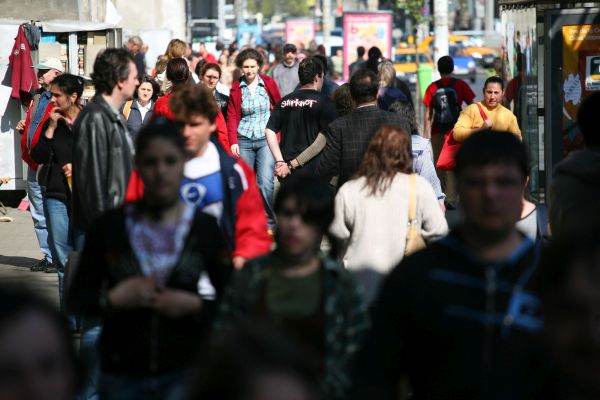
Patriotism is the mask under which Romanian anti-Semitism hides, a phenomenon that has experienced an unprecedented escalation in the last year, according to the Monitoring Report for the period May 2025-April 2026, a document published yesterday by the National Institute for the Study of the Holocaust in Romania "Elie Wiesel". The cited source shows that, unfortunately, anti-Semitism is no longer a marginal phenomenon in our country, isolated in obscure circles, radical groups or clandestine publications, but has aggressively penetrated political discourse, in Parliament, in the press, on social networks, in public institutions, in schools, in cultural spaces and in stadiums, where messages against Jews, conspiracy theories, the cult of legionnaires and attempts to rehabilitate war criminals are spread in front of audiences of tens or hundreds of thousands of people.
At the same time, the figures in the report demonstrate that propaganda has profound effects on society: at the end of 2025, 40% of Romanians believed that Jews "act to destabilize the society in which they live", 18 percentage points more than in 2021, 35% supported limiting the number of Jews in certain professions, 29% blamed them for the establishment of communism, and 11% considered the Jewish minority "a problem" or "a threat", a share almost double that recorded four years earlier.
The survey conducted by Social Monitor for the "Elie Wiesel" Institute, between November 1-15, 2025, on a sample of 1,004 people, shows how much the anti-Semitism has spread in a society bombarded daily with disinformation. No less than 56% of respondents believe that Jews "only pursue their own interests", 42% accept the conspiracy theory according to which Jews own three million apartments in Romania, 39% believe that Jews use the Holocaust for their own interests, 30% claim that they use the Holocaust to blackmail Romania, and 25% believe that they do it to denigrate the country. In just four years, the share of those who believe that the memory of the victims of the Holocaust must be kept alive has decreased by 18 percentage points, even though this remains, for now, the majority, at 82%. The figures do not describe only an information crisis, but the cracking of historical memory and the transformation of prejudices into an acceptable social perception. The cited document mentions that social networks have become the main conduit through which anti-Semitic theories are pumped into society. Accounts with tens or hundreds of thousands of followers spread theories about an alleged Jewish domination over Romania, about millions of apartments prepared for a so-called invasion from Israel, about Jewish control over the press, finance, justice, secret services, the political class or major technological platforms. Some messages reach tens of thousands of views, and others exceed the threshold of one million. Instead of being pushed to the edge of the public space, they are taken up in online talk shows, transformed into TikTok clips, distributed on Facebook, X, Telegram, YouTube, Instagram or Rumble and legitimized by the presence of former parliamentarians, journalists, reserve officers, teachers, lawyers, artists and political leaders.
A monitoring carried out through NewsVibe identified 1,900 posts and articles about characters associated with Romania's fascist past or the Holocaust. Of these, 67% had a neutral tone, 28% negative and 5% positive, but only the 91 positive or apologetic materials generated an estimated impact of almost 900,000 views. The assessment does not even include audio-video content on YouTube and TikTok, where audiences for some denialist or anti-Semitic shows frequently reach tens of thousands or exceed 100,000 views. The report identified 34 websites and blogs that published anti-Semitic, conspiratorial, denialist or apologetic content towards the Legionary Movement and war criminals, some of them publishing such materials with a frequency of one or two times a week.
The Elie Wiesel Institute experts argue that the new regulatory act on the matter, law no. 241/2025, which updated OUG no. 31/2002 and law no. 157/2018, became the detonator of the largest wave of hatred recorded during the monitored period.
In February 2026, the New Right and the Romanian Identity Community organized a protest in front of the Institute for the repeal of legislation against anti-Semitism, fascism, legionnaires'ism and Holocaust denial. The increase in hatred was accompanied by the return of the cult of legionnaire figures and people convicted of war crimes. Radu Gyr, Mircea Vulcănescu, Valeriu Gafencu, Corneliu Zelea Codreanu, Octavian Goga, Vintilă Horia and Nichifor Crainic were presented in various public contexts exclusively as poets, intellectuals, anti-communist martyrs, patriots or defenders of the faith, with the deliberate elimination of their involvement in fascist movements, anti-Semitic propaganda or convictions for war crimes. Public institutions hosted commemorative events, libraries organized apologetic book launches, and the Romanian Academy and affiliated structures celebrated personalities whose role in consolidating the interwar far right was passed over in silence, the cited report shows.
The experts of the Elie Wiesel Institute are also dissatisfied with the fact that the city halls of Bucharest, Cluj-Napoca, Timişoara and other localities continue to preserve streets, busts or names associated with people from the fascist past or convicted of war crimes. The cited document shows that the educational system in our country fails to repair this memory deficit, unlike the one in Germany. In Romania, information about the Holocaust is provided mainly through television, the internet and social networks, while the role of education remains reduced. In the reserve version of the Romanian Baccalaureate subjects of June 10, 2025, a fragment of Nichifor Crainic's memoirs was introduced, without contextualizing his role in fascist propaganda and in the governments of the extreme right. In some textbooks on the History of Communism, the legionnaires are presented exclusively as victims of communist repression, without differentiating between the democratic and fascist opposition.
The report notes, however, that the reaction of public authorities has become more visible, but remains disproportionate to the scale of the phenomenon. The Prosecutor General showed that, before November 2024, an average of 21 cases were registered annually regarding anti-Semitic speech, incitement to hatred and the promotion of legionnairesism, while after the end of that year the average rose to 682 cases. However, experts from the Elie Wiesel Institute believe that the increase in the number of criminal cases does not automatically mean efficiency, because in practice many cases remain unresolved for years, others are dismissed, and final or first-instance convictions frequently end with suspended sentences. For example, according to the data in the report, a man who had made 540 ads and 356 sales through OLX of fascist and legionary objects was sentenced to two years in prison with a suspended sentence. Other examples in this regard are a young man who vandalized the Jewish Cemetery in Bacău and who received a year and two months with a suspended sentence, the author of the threats against the "Elie Wiesel" Institute, Theodor Paleologu, Dana Hering and Marcel Bartic was sentenced to a year and five months with a suspended sentence and was banned from using social networks for the purpose of publishing content for three years. Moreover, a complaint against a religion teacher accused of spreading pro-legionnaire messages in class was closed, with the prosecutor and judge assessing that there was not sufficient public interest in continuing the criminal prosecution.
The European Digital Services Regulation did not stop the avalanche of anti-Semitism either. According to the data in the document published yesterday, the "Elie Wiesel" Institute, as a trusted notifier, reported a number of 113 posts in 2025: 48 on Facebook, 30 on X, 28 on TikTok and seven on YouTube. Two of the platforms did not take action in approximately half of the reported cases, and some communicated that they had removed materials that remained accessible. Out of 60 orders issued by the CNA based on articles on incitement to violence, hatred, discrimination and racist, anti-Semitic or xenophobic manifestations, only 35 led to the removal or restriction of the content. In 11 cases, the platforms did not respond, and in another ten they invoked the vagueness of the requests.
From the conclusions of the report, we note that the Romanian anti-Semitism of the years 2025-2026 no longer always bears the label in plain sight. It is camouflaged in the rhetoric of "anti-system”, in accusations against "globalism”, in the false defense of freedom of expression, in the glorification of the anti-communist resistance, in the alleged protection of the national culture or in the replacement of the word "Jew” with "Zionist”. Legitimate criticism of the policies of the state of Israel is transformed into a vehicle for resuming prejudices about Jewish control over the world, the press, finances and governments.
The Holocaust is compared to austerity, political adversities, the Gaza war or communist repressions, until the uniqueness of the extermination is diluted and the memory of the victims becomes a mere rhetorical weapon.
• Silviu Vexler, the target of an anti-Semitic campaign
Deputy Silviu Vexler, president of the Federation of Jewish Communities in Romania, became the main target of the wave of hatred triggered around Law no. 241/2025. The messages directed against him quickly surpassed legislative criticism: "Out with Vexler and his slaves from Parliament”, "Stop Vexler”, "the governor of Romania”, "satrap”, "foreign agent”, "the most anti-Romanian man” or "Jew with Romanian citizenship” are just a few of the formulas recorded. In an image shared by a radical Telegram channel, Vexler appeared as a target for archery, alongside representatives of the "Elie Wiesel” Institute and journalists. On December 17, 2025, an AUR MP spoke from the Parliament rostrum about "Vexler's masters”, and the political campaign "Stop Vexler”, launched by the Conservative Action party, continued the attacks even after the law was promulgated. The demonization of the MP functioned as a bridge between opposition to the normative act and conspiracy theories about Jewish control over Parliament, the press, the judiciary and the Romanian state.
• Diana Şoşoacă: "Shout out to the "Jews' non-stop” and "Long live the Legion and the Captain!”
MEP Diana Şoşoacă, president of SOS Romania, occupies a central place in the cited report due to the number, violence and audience of her messages. In a video from June 11, 2025, shared over a hundred thousand times through online views and interactions, she addressed Silviu Vexler, stating: "The Legionary Movement is a historical movement that we are proud of", "Corneliu Zelea Codreanu was the man who defended you", "Marshal Ion Antonescu saved your Jewish assets", "you should kiss our hands and feet because thanks to us you exist", ending with "Free Palestine, Long Live the Legion and the Captain!". In a clip from August 14, 2025, which garnered approximately 2,000 shares, the message sent by Diana Şoşoacă was more explicit: "Shout: Jews, Jews, Jews, non-stop, write everywhere Jews, Jews, Jews, Jews". At the SOS Romania summer school, Şoşoacă said: "Free Palestine, Jews!”, "Stop dividing the world into Jews and Gentiles” and "we do not believe in your criminal God”. The same meeting also included speeches on "the difference between Khazars and Jews”, delivered by Vasile Zărnescu, convicted of Holocaust denial, and speeches on the Legionary Movement. In September 2025, the Prosecutor General's Office requested the lifting of his immunity for 11 crimes, including promoting the cult of persons convicted of genocide and war crimes, promoting fascist and legionary doctrines and spreading anti-Semitic ideas. The European Parliament approved the lifting of immunity on April 28, 2026.
• AUR supporters: "Get the Jews out of the country!”
The report records several interventions by AUR parliamentarians who went beyond political criticism and entered the area of anti-Semitism, denialism or legionary apologia. On December 17, 2025, an AUR deputy declared from the Parliament rostrum that he had "a dedication to Vexler's masters and to him", a formula that activates the stereotype of occult control exercised by Jews. AUR Senator Sorin Lavric used the phrase "Marxist Masoretes" in several speeches, described in the report as an adaptation of the thesis of "Judeo-Bolshevism", called Elie Wiesel an "impostor" and falsely claimed that he had not been to Auschwitz. At a launch organized by the Neamţ County Library "G.T. Kirileanu", Lavric declared: "I took issue with their enemies, with Alde Vexler, Alexandru Florian and Alde Elie Wiesel", after which he continued with the accusation that the "Elie Wiesel" Institute would know about the alleged imposture.
At the protest of AUR supporters in Constitution Square, on June 22, 2025, chants such as "Get the Jews out of the country!" and "The perverts, get out!" were recorded, and the press reported that anti-Semitic messages were circulating unhindered on private groups associated with local branches of the party. The AUR Baloteşti organization even requested the dissolution of the "Elie Wiesel" Institute and the abandonment of the National Museum of Jewish History and the Holocaust, the management of the county branch subsequently distancing itself from the initiative and proposing the exclusion of the author of the initiative.
• Ion Cristoiu, one of the journalists who suggests the existence of an occult Jewish influence
Journalist Ion Cristoiu is mentioned in the report for messages in which he minimizes the responsibility of some representatives of the extreme right and suggests the existence of an occult Jewish influence on the press, culture and history of Romania. On his YouTube channel, CristoiuTV, watched by over 89,000 users, he referred to the trial in which Nichifor Crainic was convicted of war crimes as a trial of "thought criminals,” a formulation that, according to the report, obscures his fascist biography and contribution to anti-Semitic propaganda.
Furthermore, according to the report published yesterday, Ion Cristoiu stated that, even during the Ceauşescu regime, it would have been "very difficult to speak or publish books contested by Jewish circles,” suggesting that such circles would have exerted an influence capable of blocking the appearance of certain works. In the same vein, he sarcastically treated criticism regarding the rehabilitation of Marshal Ion Antonescu, reducing the condemnation of fascism and Antonescu's policies to a Soviet position or the discourse of a press that he derogatorily calls "Tefelist.”
In the context of the controversies triggered by the decoration of retired Colonel Ion Vasile Banu, a former soldier of the 89th Infantry Regiment, whose units were involved in the Iaşi Pogrom and in the persecutions against Jews in Bessarabia and across the Dniester, Cristoiu claimed that there was a "campaign against the Romanian Army” and "some obscure forces interested in Romania and abroad”, which would use the Tefelist press as a "fifth column”. He accused these forces of seeking to accredit the idea that the Romanian Army was as "cruel”, "sinister” and "anti-Semitic” as the German army, although the public debate was aimed at historical documents regarding the involvement of some Romanian military units in crimes during the Holocaust, not the overall culpability of the Romanian Army.
The report also mentions an article originally published by Cristoiu in 1993, entitled "The Eternal Jewish Issue”, which was brought back to attention on his blog in October 2025. In that text, the journalist criticized President Ion Iliescu's reaction to the publication of the book "Mein Kampf” in Romania and claimed that the head of state's intervention had taken place under pressure from Rabbi Moses Rosen and "international Jewish circles”.
The report notes that Ion Cristoiu's blog also hosted texts by other authors with explicit anti-Semitic messages, an example of which is Marian Nazat's article entitled "Jews, the "lighthouse' of the peoples”, built around references to the legionary ideologue Nae Ionescu and some anti-Semitic characterizations. Experts from the Elie Wiesel Institute believe that through the audience that Ion Cristoiu enjoys and the prestige he has accumulated in the press, such messages acquire a much greater legitimacy and propagation power than if they had remained limited to radical publications or neo-legionary circles.
• Anti-Semitism in stadiums, unsanctioned by the authorities
Stadiums and ultras groups have become an increasingly visible area for the spread of anti-Semitic, racist, xenophobic and pro-legionary messages. The report indicates that in December 2025, the online channel Casus Belli published photos of banners attributed to the North Galaţi Lawn and the "Red Caps" Lawn of the University of Cluj, denouncing the alleged "falsification of history", "erasure of memory" and "suppression of Romanianism". The banners featured portraits of figures associated with fascism and antisemitism, including Octavian Goga and Nicolae Paulescu, alongside lyrics by Radu Gyr.
Furthermore, in a file from December 2025, a man who the press reported was a member of the CSA Steaua gallery was investigated after allegedly publishing materials promoting the cult of Adolf Hitler, Nazi, anti-Semitic and disapproving messages about the Holocaust. The cited report also shows that groups of young people who practice MMA-type contact sports or physical training in tandem with the promotion of anti-Semitic, neo-fascist and white supremacist messages are multiplying, but it specifies that this trend is not specific to the Romanian space, being increasingly popular in many Western societies, a situation that makes the phenomenon even more worrying.
Under these conditions, Elie Wiesel experts believe that stadiums risk becoming not only a place to display hatred, but also a space for recruiting and socializing a new radicalized generation.















 Euro
Euro Dolar SUA
 Franc elveţian
 Liră sterlină
 Gram de aur





























