 English


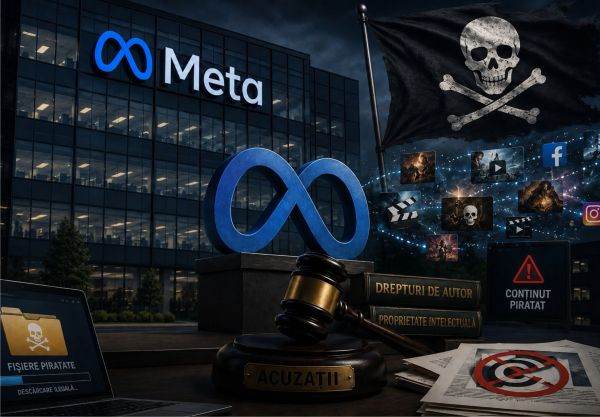
A group of major international publishers - Elsevier, Cengage, Hachette, Macmillan and McGraw Hill - have filed a lawsuit against Meta in a federal court in Manhattan, accusing the company of using their content without consent to train its artificial intelligence model, Llama. The lawsuit, reported by Reuters, is also supported by writer Scott Turow and concerns the alleged use of millions of works, from textbooks and scientific articles to literary works, without the consent of the rights holders.
• Dispute over "fair use" and the financial stakes
The publishers claim that Meta has "pirated" content to train its linguistic models so that they can generate complex responses to user requests. The works cited in the complaint include The Fifth Season by N. K. Jemisin and The Wild Robot by Peter Brown. Meta, on the other hand, invokes the principle of "fair use,” arguing that training AI systems on copyrighted material can be legal because it contributes to innovation and the development of new technological products. The company has announced that it will vigorously contest the allegations in court. The plaintiffs are seeking unspecified financial damages and approval to represent a broader group of copyright holders, which could significantly increase the stakes in the lawsuit.
• A broader conflict between creators and the tech industry
The case opens a new chapter in an increasingly intense global dispute between creators and technology companies over how artificial intelligence models are trained. In recent years, numerous authors, artists and media organizations have filed similar lawsuits against companies such as OpenAI and Anthropic. The US courts have yet to draw a clear line: recent decisions have been contradictory, which maintains legal uncertainty in this area. An important precedent was set when Anthropic agreed last year to pay about $1.5 billion to settle a class-action lawsuit with a group of writers, thus avoiding even greater financial risks.
• At stake: the future of AI models and copyright
The dispute between publishers and Meta could have major implications for the entire artificial intelligence industry. The court's decision will help define the legal boundaries on the use of protected content and could influence how future AI models are developed. In the absence of clear rules, the conflict between the need for innovation and copyright protection remains open, and the outcome of this trial could redraw the balance between the two.























 Euro
Euro Dolar SUA
 Franc elveţian
 Liră sterlină
 Gram de aur





























