English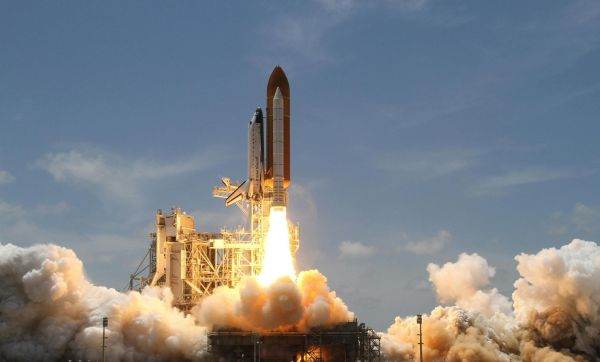
The Ministry of Education and Research (MEC) announces that Romania has initiated discussions with the European Space Agency (ESA) to reschedule commitments and redefine the projects in which the country participates, given that contributions for optional programs have increased in recent years to 250 million lei annually. In a statement, the MEC states that Romania has consistently paid its mandatory ESA membership fee, but the problem is the additional commitments assumed in the past for a series of optional programs of the Agency, programs that have significantly increased annual costs.
"In recent years, a series of additional commitments have been signed for various optional programs, which have increased the annual contribution to ESA to approximately 200-250 million lei, almost as much as the financing of all competitions in PNCDI IV held in 2025", the ministry emphasizes.
According to the MEC, the National Research Authority (ANC) has held discussions with ESA representatives in recent days regarding a rescheduling of financial obligations and a redefinition of the projects in which Romania participates. According to the press release, ESA responded favorably to the proposals of Romanian officials. The approach aims to adapt Romania's participation so that: the funded projects are aligned with the needs of the state and society, the institutes and the academic environment can absorb and use the funds, the rate of return (benefits vs. contribution) is comparable to the European average.
The Ministry recalls that in the last budget amendment, the MEC and the ANC received additional amounts necessary for: renegotiating the relationship with ESA, paying the obligations assumed for ELI-NP - the Magurele Laser, one of the most important research infrastructure projects in the region.
Participation in ESA optional programs is essential for Romanian researchers to access space missions, cutting-edge technologies and international partnerships. However, in recent years, the high level of contributions has put pressure on the national research budget, while the rate of return - contracts and projects won by Romanian institutions - has remained modest. Through the ongoing renegotiation, the MEC is pursuing a strategic participation, focused on programs in which Romania can obtain concrete benefits and capitalize on existing expertise.



















 Euro
Euro Dolar SUA
 Franc elveţian
 Liră sterlină
 Gram de aur