English

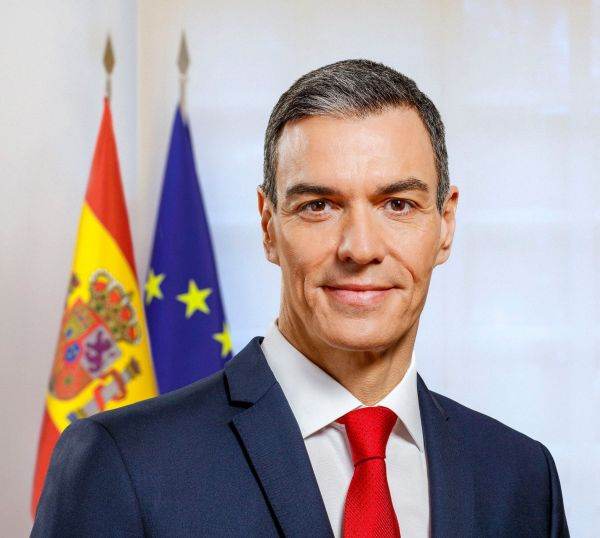
The Spanish government decided not to allow the United States to use the joint military bases for operations against Iran, accentuating a major divergence within the Western alliance. Foreign Minister Jose Manuel Albares stated that the bases in Rota and Moron "are not being used and will not be used” for this military campaign, since any action must respect the bilateral agreements and the UN Charter (according to Al Jazeera, on March 2, 2026).
Prime Minister Pedro Sanchez described the American-Israeli attacks as an "unjustified and dangerous military intervention”, a position also confirmed by Defense Minister Margarita Robles, who specified that any possible support could only be provided for humanitarian purposes, according to the same source.
Data provided by the monitoring platform FlightRadar24 nevertheless indicate that 15 American aircraft left the bases in southern Spain after the strikes began, at least seven of which arrived at the Ramstein base in Germany, according to Al Jazeera.
The Guardian report from March 2, 2026 shows that Madrid's refusal contrasts with the positions of other European powers. The United Kingdom later authorized the use of its bases for "collective self-defense”, following the Iranian retaliatory attacks, while France and Germany declared themselves willing to cooperate with Washington in countering the threat of missiles and drones.
Transatlantic tensions intensified when US President Donald Trump threatened a total trade embargo against Spain, accusing it of being a "terrible partner” in NATO, according to The Guardian.
In response, Sanchez reaffirmed his opposition to the war and invoked the need to respect international legality, emphasizing that opposition to the Iranian regime does not justify a unilateral military intervention, as reported by the same source.
The crisis generated reactions of solidarity at the European level. French President Emmanuel Macron and the President of the European Council Antonio Costa sent political support to Madrid, while the European Commission called for a lasting diplomatic solution to the conflict, The Guardian also notes.
Spain's refusal thus highlights a strategic fragmentation within Europe regarding the way the military escalation in the Middle East and the legal and geopolitical risks associated with Western interventions should be managed.

















 Euro
Euro Dolar SUA
 Franc elveţian
 Liră sterlină
 Gram de aur