English

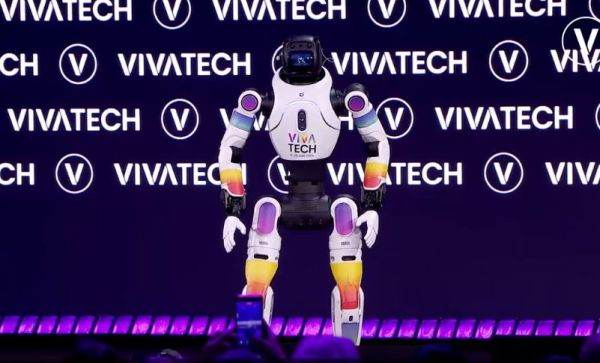
At the VivaTech 2026 trade show in Paris, around 15,000 start-ups presented technologies that seem like they came straight out of science fiction movies: 3D-printed bone implants, systems capable of detecting false voices generated by artificial intelligence, or smart patches that analyze athletes' sweat. AFP has selected some of the most interesting innovations. German company Blueprint Biomed has presented an artificial substitute for bone implants used by millions of patients every year. The solution could eliminate the need to harvest bone tissue from one's own body, a procedure that involves additional intervention and associated risks. "We no longer need to add an autologous bone implant," explained the company's CEO, Aaron Herrera. The implants are made by 3D printing, using collagen and polycaprolactone, a resorbable biopolymer. Collagen is eliminated from the body in about three months, and polycaprolactone in about two years. The German start-up plans to attract investments of 2.5 million dollars to launch clinical trials on humans, with the goal of having the first implants used in patients in 2028.
• Revolutionary engines for drones and flying taxis
The Austrian company CycloTech promises to change the way drones fly. Its cylindrical engines, with an unusual design, allow movements impossible for classic systems. "It can stay still like a helicopter, fly forward like an airplane, but also brake suddenly or even go backwards,” explained Andrea Marchsteiner, the company's marketing director. The new technology could be used both for urban deliveries and for future aerial vehicles designed to transport people. CycloTech, which has 65 employees, has already attracted 40 million euros in financing and is looking for new industrial partners.
• AI fights AI-generated voices
Amid the proliferation of audio "deepfakes” scams, French startup Whispeak has developed technology capable of identifying and filtering fraudulent phone calls. "With less than ten seconds of voice recording, you can imitate anyone, often for free,” said CEO Florent Van Calster. The company claims to have created one of the most advanced systems for detecting fake voices, after three years of research. The technology is currently being tested with operator Bouygues Telecom, and users can receive alerts when a call seems suspicious. According to the company, the average error rate is below 1%, but Van Calster admits that the fight against AI-generated fakes is "an endless race between gendarmes and thieves.”
• Smart patches that read athletes' sweat
Hong Kong startup PointFit has unveiled an adhesive patch equipped with sensors that can analyze sweat and determine glucose and cortisol levels, providing important information about athletes' physical condition. The company's founder, Kenny Oktavius, has been working on the project since 2019, when he was a student. Using artificial intelligence, the system builds a "personalized sweat index” that is tailored to environmental conditions and the characteristics of each user. PointFit is already working with Red Bull and Puma and is looking to expand to major retailers, with potential partners including Decathlon and EssilorLuxottica.
From implants that gradually disappear into the body to systems capable of detecting a relative's fake voice and patches that convert sweat into medical data, this year's VivaTech confirms the accelerated pace of innovation. Many of the technologies presented are still in the development phase, but some could reach the market in the next few years.


























 Euro
Euro Dolar SUA
 Franc elveţian
 Liră sterlină
 Gram de aur