English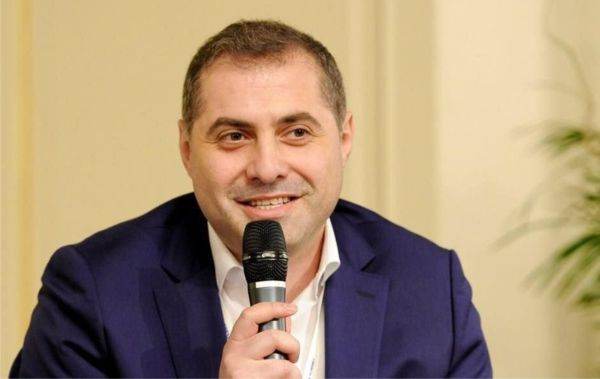
The political crisis triggered by the PSD's decision to leave the government, if Ilie Bolojan does not resign from the position of prime minister, affects the entire society, including the business environment, Florin Jianu, president of the National Council of Small and Medium-sized Private Enterprises in Romania (IMM Romania), declared yesterday during a press conference.
Florin Jianu said: "We observe that, in general, Romanian society is moving from the concept of weather-dependence to political-dependence. Unfortunately, we are all affected, the entire society, not only companies, not only enterprises. And this is because there are shortcomings in the implementation of programs, such as the PNRR, there are shortcomings in the implementation of European funds, there are shortcomings in the regulations regarding the control of costs in the sphere of fuels, energy and so on. We are all affected, whether we are talking about companies or citizens. (...) I believe that, after 20 years of representing the business environment, we can appeal to all forces. And, especially, to the President of Romania: he must intervene directly at this moment, to bring everyone to the table and find the necessary solutions before it is too late. Too late in the sense that, in our opinion, the bridges may break and then there will be no more dialogue between them, no more the president has someone to sit at the table with. It seems to me that this dialogue, in which everyone finds the guilty in the other side, should stop and we should focus, in fact, on what unites us all and on what we need to do in the economy, namely an economic recovery and focus on SMEs”.
• Three urgent solutions to recover the situation
The President of IMM Romania also presented three urgent economic solutions to recover the business environment.
"We know economics, and the three things that need to be done in the economy are the following. First of all, working capital for SMEs, because revenues have decreased, companies no longer have money, no longer have the ability to pay. Therefore, we believe that an IMM Invest type program is the zero urgency in the economy. Secondly, we need to support deficit sectors and massive investments in agriculture. We are in the spring work period. The high costs of diesel and fuel affect them directly and clearly. Then, we need energy production and storage. Let's manage to produce as much energy as possible and store it, because now the high price of energy is driving inflation and other prices up. If the parties from the political spectrum leave together with these three desiderata on the economic side, I think they will sit down at the table and manage to find a common denominator. But if they sit down at the table each with their own and divergent interests... We have not seen an extraordinary performance from either side lately, and there was not much talk about the real problems of the people,” said Florin Jianu.
He specified that IMM Romania wants stability and predictability and that he does not believe that there is a need to organize early elections. The President of IMM Romania specified: "I have seen in the public space the launch of ideas regarding early elections; I do not believe in this, I think we are going too far. We had elections a year ago. They should sit down at the table, find the best solution, with the most competent people. But I think that here too we have a problem: we did not see the best and most competent people in the positions they occupied. They were just political appointments, not necessarily with a CV in the respective field.”
• Minimum turnover tax, maintained under pressure from PSD communicators
Therefore, the representatives of entrepreneurs state that some PSD politicians have not yet understood that the minimum turnover tax (IMCA) harms Romanian companies with a turnover of over 50 million euros and not corporations, as the social democratic leaders want.
Florin Jianu stated: "I was somehow bothered by last night's event (ed. - Monday evening) of the PSD, that it seemed like a kind of celebration, with lights, many speeches and big screens, given that I believe that the economic and social situation is completely different at the moment. (...) Returning to the IMCA, I went and spoke to both the PSD and the PNL; they all initially agreed to the exclusion of this tax. Then the political roller coaster began, with a few PSD communicators, and no one had the courage to carry out the work already agreed upon. The impact of this minimum turnover tax (IMCA) for fuel is major. We are talking about companies that produce and distribute fuel and that, in addition to excise duties, taxes and VAT on excise duties, must also pay this minimum tax. One of the solutions that we offered to the prime minister was to at least abandon this minimum turnover tax. According to the calculations of our colleagues, along with a decrease in excise duty and VAT, the price could decrease by up to 1 lei, looking, by comparison, at what is happening in Bulgaria and Hungary. When the budget was established in December, the IMCA calculation also included excise duty, which I drew attention to: it is not right to pay a tax on a state excise duty. Unfortunately, neither the Ministry of Finance nor the prime minister have seen an opening to not calculate this tax in relation to excise duty. What I can promise you is that, at the meeting we will have with the PSD and the other political parties, the first thing we will raise is this IMCA again and all the related arguments. We are waiting for a meeting from the President of Romania, but I am convinced that we will also meet with the parties. I think there should be more positive dialogue. In the economy, when someone negatively affects our business and we have a negative advertisement, our sales are also affected. In the political area, recently, mainly negative things have been promoted, which only affects us. When we have a crisis, we try to discuss with partners and suppliers to solve problems with positive solutions and approaches, not to recall the mistakes of 10 years ago”.
• Listing of state-owned companies on the Bucharest Stock Exchange, a measure that comes too late
Another topic that the PSD invoked in accusing Prime Minister Bolojan was the listing of state-owned companies on the Bucharest Stock Exchange, a listing that the president of IMM Romania says comes too late, because it is a milestone in the PNRR, which must be completed by August 31, 2026, and the procedures for listing the respective companies take between one and three years.
Florin Jianu specified: "This measure must be judged coldly. It starts from the fact that it is a milestone in the PNRR (the listing of a minimum of three companies), not from anywhere else. What I have seen in the public space, with invectives and invented things, has no connection with reality. Listing on the stock exchange is a complex process that takes time. It seems to me that the necessary explanations were issued much too late. In reality, I do not think that this listing will be carried out, because a political roller has been created. When you list on the stock exchange, you do not list bad companies; they have to reach certain indicators. I have not seen this type of listing accompanied by reforms for companies that do not function. I remember that the prime minister gave the objectives of making Romanian companies more efficient to deputy prime ministers Dragoş Anastasiu and, later, Oana Gheorghiu, but nothing has been done in this regard. If the listing takes between one and three years, it is clear that we will not complete the process by the end of the PNRR and we will lose money. Even shorter listings have been achieved, in four to six months, but I do not think that we will close the process now. It has unfortunately turned into a political issue”.
• Risk of losing half of the amount allocated through the PNRR
He mentioned that the current political crisis represents a huge risk for the absorption of the remaining 10 billion euros from the National Recovery and Resilience Plan and for the interest on the state's current and immediate future loans.
"Without a doubt, only if we refer to the PNRR, which still has three months of implementation, under the current conditions, in which we do not know how long the political crisis will last (a week, a month, 45 days), the reinstatement of the new ministers in areas such as energy, transport or state-owned companies will result in the loss of significant amounts, almost 10 billion euros from the PNRR. We still have a chance that, for the cohesion funds and those regarding the common agricultural policy, we will have a few more years at our disposal, until 2029. But be careful, during this period the strategy for the future multiannual financial framework 2028-2034 is also being created, and there we risk being delayed. We will be concerned about this aspect and we will go public with Romania's position regarding the future programming period. As for the public debt, political decision-makers must think very carefully about how they manage to stop this volume of loans and interests that we pay them. We ended up paying almost 3% of GDP on interest alone. It is a discussion that we should all have: the private sector, the political sector, the Government. We pay huge interest as a share of income and we need to find a formula for this to stop”, said Florin Jianu.
Regarding the PNRR, Mr. Jianu said that there is a high risk of non-implementation for approximately 65 targets and milestones out of the almost 180 related to payment request number five, thus representing one third of the milestones that are considered at risk of non-fulfilment. The IMM President stated: "It is possible to lose at least 30% of the 10 billion euros remaining for absorption in the coming period. A number of 14 reforms are at risk, according to the data we have, because it is very difficult to find public data for the PNRR, both regarding implementation and absorption. The areas in which these reforms are not achieved are energy, transport and governance of state-owned companies. In fact, the public struggles that we have seen in the recent period regarding state-owned companies actually refer to these targets and milestones. They have somehow become a political ping-pong, but, unfortunately, they are related to the PNRR. (...) Regarding payment requests, four were submitted, of which three were collected, and two more are being submitted (one at the end of last year and one at the beginning of this year), and for the third quarter, another payment request is approaching, request number six, of approximately 8.8 billion euros."
• The Digitalization of SMEs through the PNRR, a failure from the perspective of SMEs in Romania
The representative of small and medium-sized entrepreneurs showed that, from the perspective of SMEs, the PNRR did not mean a real reform.
"The amount of direct funding initially allocated was less than four times the real need, that is, 1.3 billion euros allocated compared to our needs and analyses, which we presented publicly in the debate, of approximately 5.1 billion. There were several calls for projects, but here too I confess that it was very difficult for us to find data. We know about that call regarding the digitalization of SMEs, from which a lot of money was transferred through the renegotiation of the PNRR, because the Romanian state failed to absorb it. This is happening even though the need for digitalization and Romania's positioning in the European rankings regarding the integration of artificial intelligence or technology is well below the European average. For example, in Romania, the adoption of cloud technologies is somewhere around 16%, compared to the European average of 36.8%. Through this process or through these digitalization funds, we were precisely aiming to increase this percentage of Romanian companies that use and integrate technology. We had proposed, at that time, a different program, which involved digitalization vouchers and which reached a much larger number of small and medium-sized enterprises. In our calculations, we could have reached 100,000 SMEs benefiting from such programs. We had also proposed Tech Nation-type programs, because, at that time, we had launched, under the patronage of the Presidency of Romania, a program to support startups with a digital component. IMM Restart Romania was another of our proposals, regarding state-guaranteed loans, but here IMM Invest intervened and I think we covered this range of needs well at that time. There was also an allocation for which we did not find public data, regarding the launch of equity-type investment funds, which were intended to be supported through the EIF (European Investment Fund). We had proposed that these be supported through the National Credit Guarantee Fund for SMEs, in order to strengthen the institutional capacity of this institution, which, by the way, was evaluated on pillars in the last years. We don't know what happened to these things,” said Florin Jianu.
Therefore, IMM Romania believes that an immediate reallocation of the respective funds is needed. According to IMM Romania representatives, using the FNGCIMM pillar assessment, up to 1-2 billion euros of PNRR grants can be saved by reallocating these funds to the respective guarantee institution.
The President of IMM Romania made an appeal to the business environment and entrepreneurs: "To try to disconnect from what we see on television, from the political approaches of this period, and to focus on their own businesses, on continuing to support the economy. An approach of trust in society is needed. Our appeal is equally, of course, to stability and predictability, because it is a difficult period in which a lot of words are thrown around, a lot of scenarios are thrown around; we see all kinds of scenarios thrown around in the public space. Romania's economy needs stability and predictability, and we will repeat this whenever necessary. Of course, in the coming period, something will be needed that, unfortunately, we have not seen lately, namely a concentration, a greater focus on what the economy means, on what the real economic recovery of Romania means, supported by both European and national statistical data. Romania needs economic recovery, concentration on what what small and medium-sized enterprises mean, the backbone of the economy”.
Mr. Florin Jianu reiterated that the representatives of entrepreneurs are ready to dialogue during this period with political parties and, in particular, with President Nicuşor Dan, because the economy and the future of the economy are much more important for society than the current political disputes.


















 Euro
Euro Dolar SUA
 Franc elveţian
 Liră sterlină
 Gram de aur