 English


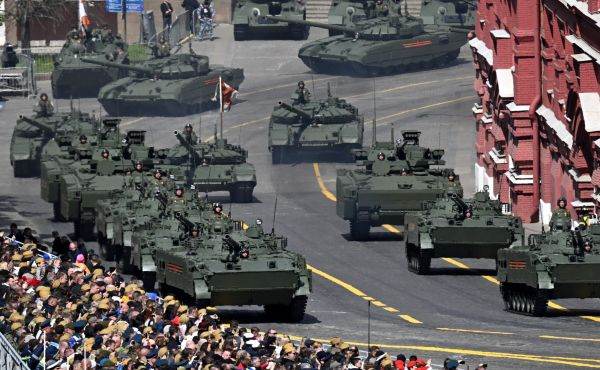
Faced with the European concept of "peace through strengthening defense and deterrence," Moscow can only respond by raising security, based on "animal fear" of Europe, the deputy chairman of the Security Council of the Russian Federation, Dmitry Medvedev, told Russia Today yesterday, a statement taken over by the Russian publication Vedomosti.
"Neither persuasion, nor demonstrations of goodwill, nor unilateral steps to strengthen confidence should no longer be our tools for preventing a great slaughter," Medvedev said, arguing that only the awareness by Germany and the "united Europe" of the inevitability of a devastating response from Russia can prevent the emergence of a "Barbarossa 2.0" operation.
Moreover, the former Russian president states that "Russia has always come to Europe only as a liberator, not as an occupier."
Medvedev's statements represent perhaps the most brutal formulation coming from Moscow since the beginning of the war in Ukraine, because they almost completely abandon the classical diplomatic language and move the Russian strategic discourse into an explicitly psychological and existential area: peace is no longer described as the result of negotiation or balance, but of fear. Not of mutual fear formulated technocratically, as appeared during the Cold War in the doctrine of "nuclear deterrence”, but of a deliberately cultivated, almost primitive fear, which Europe should feel towards Russia in order to avoid war. In essence, Dmitry Medvedev is reviving the brutal geopolitical logic of the 20th century, at a time when the European continent is talking more and more loudly about rearmament, strategic autonomy, war economy and preparation for a possible direct conflict with Moscow. His reference to an operation "Barbarossa 2.0” is not accidental. In the Russian strategic imagination, Operation Barbarossa - the Nazi invasion of the USSR in 1941 - remains the founding trauma that justifies the Kremlin's obsession with "buffer zones”, strategic control and offensive security. From this perspective, NATO expansion, the militarization of the eastern flank and the European discourse on "peace through strengthening defence and deterrence” are reinterpreted in Moscow as the beginning of a new Western siege against Russia.
But beyond the propagandistic and emotional dimension of his statements, Dmitry Medvedev touches on a crucial point in contemporary geopolitics: all great powers legitimise their military force through a moralising discourse. And here one of the most uncomfortable symmetries between Russia and the United States emerges. When Medvedev states that "Russia has always come to Europe only as a liberator, not as an occupier”, his speech bears a striking resemblance to the rhetoric used by Washington for decades to justify US armed interventions.
The United States built an entire global doctrine after 1945 based on the idea that the American army does not conquer, but "liberates”, "protects democracy” and "defends freedom”. In speeches about World War II, American leaders constantly spoke of the "liberation of Europe” by US troops, a theme recently taken up by Donald Trump. During the Cold War, Ronald Reagan described America as "the last great hope of humanity”, in opposition to the Soviet "evil empire”, thus legitimising Washington's global role as a moral and civilising actor.
After the attacks of 11 September 2001, the George W. Bush administration justified the invasion of Iraq by the idea of "liberating the Iraqi people” and exporting democracy. President Bush declared that "the United States has no intention of deciding the composition of the new Iraqi government”, insisting that the military intervention aims at freedom, not domination. The same logic was used in Afghanistan, Kosovo or Libya, where the official American and Western discourse emphasized the "protection of civilians”, "stopping ethnic cleansing”, "fighting for freedom” or "building democracy”.
This rhetoric reappears today in the new American-Iranian confrontation. In early March 2026, after launching the American military operation against Iran, Donald Trump declared that the objective of the intervention was "freedom for the Iranian people” and directly appealed to the Iranians to "take control of their own government”. In his public messages, Trump called on the Iranians "to be brave, to be bold, to take back their country”, presenting the American-Israeli military campaign as an action of liberation, not conquest. Even the name later assigned to the American naval operation in the Strait of Hormuz - "Project Freedom”, a project suspended yesterday, shows how central the idea of "freedom” remains in the strategic legitimization of Washington's interventions.
In fact, from a narrative point of view, the differences between Moscow and Washington are much smaller than they seem at first view. Both Russia and the US present their military actions as defensive, moral and necessary to save a threatened order. No great power defines itself as an aggressor empire. All talk about security, freedom, stability, peace or liberation. The real difference appears in the external perception of these interventions. What Moscow calls the "liberation of Europe from fascism” is perceived in many Eastern European states as the beginning of the Soviet occupation. What Washington describes as the "export of democracy” is seen by its critics as military interventionism and regime change. However, Dmitry Medvedev's statements show something deeper than simple Russian propaganda: the world is entering a new era of brutal deterrence, in which the great powers are gradually abandoning the universalist language of globalization and returning to the logic of strategic fear. Europe talks about rearmament. Russia talks about "animal fear”. The US is strengthening its nuclear umbrella and global military presence, justifying them in the name of freedom. China is accelerating the modernization of its army and preparing for a systemic conflict with the West. All of these powers claim to be acting defensively. All of them claim to be trying to prevent war. But all of them are investing heavily in the capacity to wage it.
In this context, the old European concept of peace through economic integration, diplomacy and interdependence seems to be collapsing under the pressure of the new geopolitical reality. In its place, the classic doctrine of the last century is reappearing: peace is not guaranteed by trust, but by fear. And when the great powers come to believe this simultaneously, history shows that the world is entering one of its most dangerous periods.

















 Euro
Euro Dolar SUA
 Franc elveţian
 Liră sterlină
 Gram de aur





























