English



The emerging order is neither a new American order, nor a Chinese one, nor a multilateral one.
For now, it is fragmentation - and fragmentation naturally favors exactly those actors with the highest tolerance for chaos: authoritarian regimes, criminal networks, speculative capital, oligarchies.
A U.S. president - Donald Trump - who attacks Venezuela and arrests its president.
He launches an uncalculated strike against Iran.
He threatens the annexation of Greenland and the absorption of Canada.
He speaks about the forced takeover of the Panama Canal and, eventually, of Cuba.
He imposes tariffs on allies like whip strikes - Mexico, Canada, the European Union, Japan, whoever crosses his path. China.
He insults heads of state in press conferences.
He suspends aid in the middle of wars.
He withdraws the United States from agreements that the United States itself had drafted.
He challenges American institutions - the judiciary, the press, federal agencies, the university system - with a virulence that, until recently, was not associated with the leadership of a constitutional democracy.
The temptation is to treat all this as the drift of a difficult personality, replacing with an elegant euphemism descriptions that, if not grounded, would otherwise be considered insulting.
Donald Trump is, without doubt, a crude man. But an explanation based on character is insufficient, because it does not explain the entourage that, beyond ideological diversity, aligns around a distinct ideology - "accelerationism.”
Vice President JD Vance (combining industrial conservatism with anti-globalist critique) coherently articulates a vision in which the post-1945 American international order is not to be repaired, but abandoned.
Elon Musk (eclectic and ideologically opportunistic), in the first year of DOGE, applied a logic of demolition instead of reform: dismantling instead of transition, shock instead of adjustment.
Peter Thiel (technolibertarian) has for a decade financed political reflection along this direction.
Curtis Yarvin (explicitly anti-liberal and neo-reactionary), read by an entire generation within the administration, theorizes the withdrawal of the U.S. from its global role and the dismantling of liberal institutions as a rational project.
Steve Bannon (relatively nationalist-populist) already spoke, in Trump's first term, about the "deconstruction of the administrative state.”
These people are not impulsive.
They are calculated.
And what unites them is the intellectual current that in recent years has come to be known as accelerationism.
The central premise: American institutions and the international order supported by the U.S. are irreversibly exhausted; gradual reform is impossible; the only rational path is to hasten collapse so that something else can emerge more quickly in its place (a thesis based on a misinterpretation of a biblical verse).
Trump's seemingly chaotic behavior acquires, within this framework, an unexpected coherence.
It is not simple chaos - it is a deliberate strike at the joints of a system that an entire circle of the American elite believes can no longer be saved.
Trump appears to be executing, abruptly, what a sophisticated segment of the political class has decided must be done.
But why now?
Why has accelerationism gained ground precisely at this historical moment?
The answer is not ideological.
It is economic.
The figure that surfaced
On March 31, 2026, U.S. federal debt held by the public exceeded, for the first time, the country's nominal GDP - $31.27 trillion in debt versus $31.22 trillion GDP, according to data synthesized by the Committee for a Responsible Federal Budget and reported by Fortune on May 1. Total national debt had already surpassed $39 trillion.
The 100% threshold is not a fiscal red line.
The U.S. issues the world's dominant currency and can operate with much higher debt. Japan does so with a public debt around 240% of GDP.
However, the threshold carries a signaling force: it marks the moment when a slow transformation of the American economy becomes visible in a single figure.
Net interest expenditures have exceeded $1 trillion annually, according to the Congressional Budget Office, and are becoming one of the largest federal budget items.
The Treasury estimates annual gross financing needs above $10 trillion when refinancing of maturing debt is included.
The federal deficit stands at around 6.2% of GDP for the current fiscal year. The U.S. is adding new debt at a pace no longer matched by real growth capable of sustaining it.
Something has quietly changed in the function of debt.
It no longer primarily mobilizes productive capital. It has become, to a large extent, a tool for refinancing its own existence, stabilizing aggregate demand, sustaining financial asset values, and maintaining internal fiscal peace. Credit still works, but no longer operates as an engine of expansion.
It operates as a self-maintaining mechanism of an economic regime that has exhausted its internal conditions for growth.
This is not a policy error.
It is the loss of the operating conditions of an entire model - the model of global integration and low interest rates that defined the post-2008 order and, in earlier forms, the post-Bretton Woods era.
Interest rates say what is not being said
The yield on 10-year U.S. Treasury bonds has stabilized in recent months around 4.3-4.6%, according to the Treasury and the Federal Reserve Bank of St. Louis.
In the 2010-2021 decade, the same yield was often below 3%.
For a state refinancing trillions annually, this difference reshapes budgetary mathematics.
More important is why rates have risen. The standard explanation - tighter Fed policy, higher inflation, higher risk - is correct but partial.
The structural theory of interest rates suggests that within the effective rate of a great power lies the price of fragmentation: the cost of traversing an economic space where legal barriers increase, sanctions multiply, geopolitical risks accumulate, and institutional predictability erodes.
The American interest rate silently incorporates the tax its own institutions pay for the deterioration of the order that once sustained them.
The circle closes
Four decades of globalization compressed the margins that made American productive expansion possible.
Production was outsourced, costs converged, marginal returns declined.
This produced the opposite of what it promised: it reduced the U.S. system's capacity to generate sufficient internal growth to sustain its financial obligations.
Debt increased precisely because the differentials enabling real productive accumulation disappeared.
The system can no longer continue in its current form. There are two paths: gradual adjustment - politely called "fiscal discipline” - requiring decades of austerity, or forced rupture, recreating the differentials a debt-based financial system needs to keep functioning.
Tariffs recreate trade differentials.
Sanctions recreate legal differentials.
Breaking alliances recreates institutional differentials.
Trade wars are not an error.
They are, brutally, a survival mechanism of a financial regime searching for new margins.
Accelerationism as political vocabulary
Here accelerationism finds its real utility.
It provides the political vocabulary and intellectual legitimacy for a transition that the system was already being pushed toward.
A Democratic successor to Trump would not stop the transition.
It would fragment the international order more politely, but it would still fragment it.
The structural constraint remains.
Only the form would change; not the substance.
This is the harshest observation imposed by honest analysis: the behavior of the Trump administration does not cause the transition.
It provides its language.
And the chosen language is deliberately crude, because crudity itself is part of the method - a signal sent to markets and allies that the old rules no longer apply.
No more time is spent on politeness.
The periphery pays first
The hegemon is not experiencing isolated convulsions.
The U.S. is the central economy of the global financial system, issuer of the reserve currency, host of much of the world's financial infrastructure, and, until recently, author of international rules. The spasms of the hegemon spread from center to periphery with a brutality proportional to distance from power.
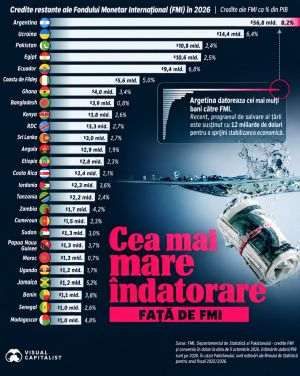
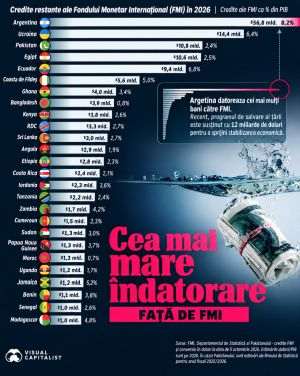
The consequences are already visible. Emerging countries face higher financing costs, as American institutional uncertainty feeds into the risk premium demanded across the global dollar system.
Traditional allies - Europe, Japan, South Korea, Australia - are forced to rebuild, hastily and unprepared, the strategic autonomy they delegated to Washington for decades.
Global supply chains are breaking and reassembling into more costly, redundant, less efficient configurations. Inflation, once exported outward, returns to the center and the periphery with renewed force.
The historical irony is that this transition empowers exactly the adversaries the U.S. claims to confront.
China receives, unasked, geopolitical justification to strengthen its alternative payment system, yuan-based financial infrastructure, and Global South alliances.
Russia, isolated but not suffocated by sanctions, finds that the international order it challenged for two decades is now being dismantled by those who built it.
India, Brazil, South Africa, Indonesia - all middle powers once potentially drawn into the American orbit - are pushed toward multipolar positions, as U.S. bilateralism becomes too unstable to sustain commitments.
The emerging order is neither American, nor Chinese, nor multilateral. It is, for now, fragmentation - and fragmentation naturally favors exactly those actors with the highest tolerance for chaos.
The American center, claiming to regain sovereignty, is in fact losing it - transferring, through its own convulsions, political and economic oxygen to the very actors it declares adversaries.
The debt threshold as signal
The 100% GDP threshold should not be read in isolation. It should be read alongside daily headlines about tariffs, sanctions, threats, and the breakdown of international order.
They are the same story, seen from two angles: economic and political. Accelerationism provides the vocabulary.
Debt provides the pressure.
Trump provides execution.
The world provides shock absorption.
What the U.S. is undergoing is not a debt crisis nor a leadership crisis.
It is a regime transition - the loss of the conditions that made the American model of recent decades functional.
The Trump administration does not produce this transition.
It makes it visible, brutal, urgent.
And the question that truly matters for the rest of the world is not how much the U.S. will go into debt, but what international order will emerge on the other side of the transition that the hegemon, consciously or not, is carrying out - and that the periphery is enduring every day without ever having been consulted.




















 Euro
Euro Dolar SUA
 Franc elveţian
 Liră sterlină
 Gram de aur