 English

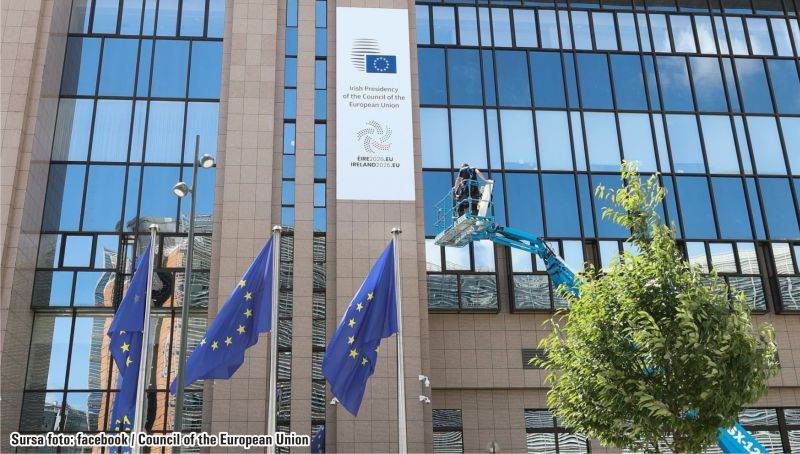
The European Council meeting, held in Brussels on Thursday and Friday, was tense. The "frugal' European states - Germany, Sweden, Finland, the Netherlands, Denmark, and Austria (notably excluding France) - argue that the European Union requires a smaller, more balanced budget than the euro2 trillion figure proposed by the European Commission. The European Council meeting on October 15-16 concluded without reaching a resolution on the budget. At stake is the nearly euro2 trillion proposed by the Commission for 2028-2034, alongside the European Parliament's ambition to increase the budget by approximately 10%, bringing it closer to euro2.2 trillion. The Irish Presidency of the Council of the EU proposed a budget of euro1.62 trillion in 2025 prices (8% less than the Commission's proposal), which amounts to euro1.8 trillion in nominal terms.
For our country, a smaller European budget could mean a delayed motorway, a hospital left with a funding shortfall, reduced investment in energy networks, and less money for people who cannot afford decent housing. Based on the allocation of approximately euro60 billion earmarked for our country in the European Commission's proposal, a hypothetical 8% reduction - applied proportionally - would translate to euro4.8 billion less over seven years, or roughly euro686 million less per year. At a 10% reduction, the shortfall would reach euro6 billion. These are potential scenarios rather than confirmed losses; Romania's specific allocation and the distribution of any cuts are still under negotiation. Nevertheless, they illustrate the scale of the "bill" that could be hidden within the compromise reached in Brussels - a compromise that the Council, the Commission, and the European Parliament are expected to finalize by the end of this year. For citizens, the "bill" will not necessarily take the form of a new tax; instead, it may manifest as a failure to expand services, more stringent project selection, support for fewer beneficiaries, or the shifting of investment costs onto the national budget. The government would then be forced to choose between self-financing, borrowing, deferring expenditures, or abandoning projects altogether.
Across all 27 member states, a less ambitious common budget would limit Europe's capacity to simultaneously address rising costs, the housing crisis, regional disparities, and security pressures. For some communities, savings on national contributions could translate into a tangible loss in terms of the European investments they might otherwise have received.
• The cost of a less ambitious Europe
Should the more powerful member states succeed in pushing through cuts to the multiannual European budget proposed by the European Commission, Romania would feel the impact of reduced funding in two ways. The first is the national allocation for development, agriculture, and other objectives outlined in the future partnership plan. The second concerns the access of Romanian companies, universities, and institutions to competitive European programs. The national allocation -projected to reach euro60 billion - does not represent the full funding potential; the Minister for European Investments, Dragoş Pîslaru, recently pointed to an additional target of approximately euro10 billion from the Competitiveness Fund - funds that must be secured through successful project proposals, rather than being automatically earmarked for Romania. Consequently, a smaller overall European budget could also narrow these opportunities. In the transport sector, the risk is an exacerbation of existing gaps: the modernization of rail links may be delayed, road connections postponed, and investments in urban mobility drawn from a smaller pool of resources. In healthcare, the pressure could affect facilities, infrastructure, and community services. In the energy sector, it may delay grid modernization, interconnection projects, and investments aimed at reducing import dependency. The impact on utility bills would not be immediate or uniform across the board; however, deferring improvements in energy efficiency and infrastructure could leave consumers vulnerable to price shocks for a longer period.
The allocation of funds for the Common Agricultural Policy will also be affected - though farmers may not feel it directly, as the subsidy rates per hectare will remain unchanged. Instead, the reduction will apply to the budget earmarked for farm investment, rural development and the ability of producers to remain competitive - a situation that leads to delays in modernization, especially given that access to credit is more difficult in rural areas.
The social dimension also risks being affected by a reduction in the budgetary proposal put forward by the European Commission. The EU executive has earmarked at least 14% of the eligible base of national and regional plans for social objectives - excluding direct support for farmers and the Social Climate Fund from this base. The Commission estimates social investments of at least 100 billion euros, covering areas such as employment, education, skills, inclusion, and poverty reduction. However, a protected percentage does not guarantee the same absolute amount if the total resources to which it applies are reduced. For an unemployed person, this pressure could mean fewer opportunities for professional retraining. For a vulnerable child, it could mean more difficult access to educational and social services. For a person with a disability, it could mean a slower development of services that enable independent living. While there is no European decision yet to cut all these interventions, there is a risk that, within a constrained budget, they may receive less funding than the original proposal intended.
Citizens of net contributor states are also beneficiaries of European programs. Research, vocational training, and cross-border investments do not stop at the boundary between net contributors and net beneficiaries. Any government seeking to save money by reducing its contribution must also weigh the opportunities lost for its own researchers, entrepreneurs, and communities.
• Affordable housing - a promise that may lack sufficient funding
The housing crisis brings budgetary disputes directly into the lives of young people and families. The European Commission reports that housing prices in the EU have risen by over 60% since 2013, with average rents increasing by approximately 20%. The European plan for affordable housing seeks to address this through investments, capital mobilization, and regulations that facilitate public support. For Romania, this presents an opportunity concerning social and affordable housing, as well as renovation, energy efficiency, and the infrastructure that makes an area livable. The future European budget does not offer a blank check for purchasing an apartment. Social and affordable housing are explicit objectives within the proposed national and regional plans, and budgetary guarantees could attract additional investment. Funding will depend on established priorities, specific projects, and the instruments adopted. If the overall budget envelope shrinks without safeguarding these investments, construction and renovation efforts may slow down, and authorities with limited internal resources will have fewer options for intervention.
The more than 43 billion euros mobilized by the EU for housing for the 2021-2027 period - along with an additional 10 billion euros envisioned for 2026-2027 - do not constitute a separate, guaranteed allocation within the future financial framework. Furthermore, loans and attracted investments are not equivalent to grants; while they can expand available funding, they require viable projects and, in some cases, repayment. This highlights the limitations of a Europe that multiplies its objectives without securing the necessary resources. The same funding must support regional development, the energy transition, social integration, and affordable housing.
• Who is calling for a smaller EU budget, and what is Romania trying to save?
Opposition within the EU regarding the multiannual budget for the 2028-2034 period is clearly taking shape. On Thursday, at the European Council, Swedish Prime Minister Ulf Kristersson stated that "a 60% increase in the Swedish contribution is unacceptable,” referring to the net contribution his country would be expected to make toward a larger EU budget. German opposition leader Friedrich Merz asserted that no member state can afford contributions at the proposed levels. Dutch Deputy Prime Minister Rob Jetten called for a smaller, modernized total budget envelope. Danish Prime Minister Mette Frederiksen deemed the Irish proposal unacceptable, questioning the significant share of the budget allocated to the Common Agricultural Policy and Cohesion Policy relative to the funds earmarked for defense and competitiveness.
Finland is open to an increase over the current budget but rejects the hike proposed by the European Commission and the European Parliament, as well as the proposal put forward by the Irish presidency of the Council of the EU. Austria is also pushing for a much more modest increase. "We are talking about a 49% rise in the EU budget; that is simply too much,” declared Chancellor Christian Stocker at the European Council meeting last week. Austria is advocating for a significantly smaller EU budget, while simultaneously defending funding for agriculture and the maintenance of current national contribution levels for the 27 member states. As for France, President Emmanuel Macron has called for the agreement to be concluded by the end of this year, with Agence France-Presse, cited by Euronews, indicating that the central authorities in Paris support a ambitious European budget, which would also include additional European revenue.
Against this backdrop, Romania is seeking to strengthen its position through alliances. Nicuşor Dan and Giorgia Meloni brought together the "Friends of Cohesion" group, calling for sufficient resources, the protection of agriculture and cohesion policy, fair contributions, and the elimination of budget rebates. President Dan also advocated for Romanian companies to have access to funding for competitiveness.
In the European Parliament, EPP Vice-President Siegfried Mureşan, who serves as a negotiator for the budget in question, rejected the Irish proposal and requested additional resources to fund shared priorities. Following the EPP summit on October 15, Mr. Mureşan emphasized the need to fund agriculture, cohesion, defense, and the strengthening of the economy.
Victor Negrescu, a Vice-President of the European Parliament, announced that over 50 Members of the European Parliament (MEPs) from 13 member states have mobilized to protect agriculture and cohesion policy. The proposals put forward include securing additional "own resources" (EU revenue), eliminating budget rebates, and exploring a more gradual repayment schedule for NextGenerationEU loans. Education, healthcare, and affordable housing are among the priorities championed by these 50 MEPs.
European Council President Antonio Costa has been given the mandate to continue the negotiations. An agreement by the end of 2026 would allow for the adoption of legislation in 2027 and the commencement of funding without interruption in January 2028.















 Euro
Euro Dolar SUA
 Franc elveţian
 Liră sterlină
 Gram de aur































Reader's Opinion