English


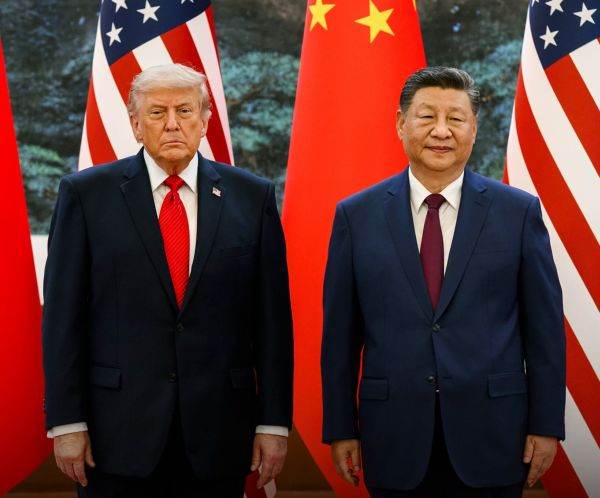
As world leaders gather at the United Nations for the traditional annual round of diplomacy, two of global politics' most influential figures are shifting their focus elsewhere: to the White House.
US President Donald Trump and Chinese leader Xi Jinping are meeting on Thursday for the second time this year, at a time when Washington and Beijing are striving to keep the world's most important bilateral relationship on an even keel-despite the numerous domestic and international challenges facing both powers, according to Reuters.
Trump welcomed Xi to the White House for a lavish state summit, where symbolism and ceremony are expected to play a greater role than any concrete outcomes. Both leaders aim to project an image of stable relations, even as the strategic rivalry between the US and China remains deep-seated.
At the same time, the contrast with the UN gathering raises questions about the relevance of the international institution established in the wake of the two world wars. While UN delegates discuss "multilateralism" and debate global conflicts, Trump and Xi-meeting as what the US president calls the "G2"-will address topics such as artificial intelligence, trade, and defense.
This meeting marks the second encounter this year between the leaders of the world's two largest economies, yet it represents Xi's first visit to Washington in over a decade.
According to the cited source, Trump welcomed the Chinese leader upon his arrival on Wednesday evening. It was the first time in 11 years that a US president had personally greeted a foreign leader at Joint Base Andrews. The precedent dates back to 2015, when Barack Obama welcomed Pope Francis there, according to C-SPAN.
In a statement made upon arrival and broadcast by the Chinese agency Xinhua, Xi expressed hope for a more stable relationship between the two countries. The Beijing leader stated that the US and China should be "partners, not rivals" and that the "historical logic of peaceful coexistence" between the two nations has not changed.
For Trump, known for the importance he places on ceremonies and personal relationships with strong leaders, the visit represents both a matter of national prestige and an opportunity for high-level diplomatic negotiations.
The US President is thus seeking to reciprocate the grand reception he received in China in May and to impress Xi with a ceremony held on the White House South Lawn, the State Floor, and in the Rose Garden.
However, no major breakthroughs are expected.
Analysts estimate that concrete results could be limited to extending the trade truce expiring in November and reaching an agreement to examine threats associated with artificial intelligence, Fox News reports.
US Treasury Secretary Scott Bessent told Fox News on Wednesday, following discussions with Chinese Vice Premier He Lifeng, that the two sides had agreed to extend until January 10 the agreement that suspended a trade war in which reciprocal tariffs had exceeded 100%.
According to individuals familiar with the summit preparations, the negotiations could also lead to agreements on tariff reductions, combating drug trafficking, and expanding dialogue between the two countries' military establishments. Trump is also expected to call for the release of American citizens and other individuals detained in China.
Former Deputy Secretary of State Kurt Campbell believes the summit is less about concrete negotiations and more about the opportunity for the two leaders to project strength.
"This is, in fact, the historical reincarnation of what in ancient times was called single combat-two truly powerful men, each representing his civilization, sizing each other up and facing off directly," Campbell stated.
• Maintaining stable relations
Xi appears to be in a stronger position, following China's robust trade growth and given Beijing's control over the supply of rare earth elements-a factor that provides the Chinese leader with a significant bargaining chip.
Both Trump and Xi have reasons to avoid a deterioration in relations. The U.S. president is grappling with the fallout from the unpopular war with Iran, while the Chinese leader is attempting to manage domestic economic challenges.
However, beneath the appearance of stability lie numerous issues that could reignite tensions, including Taiwan, export controls, and competition in artificial intelligence.
Taiwan-the democratically governed island that China claims as part of its territory-remains the most sensitive of these issues.
U.S. allies from Asian nations are concerned that Trump might be tempted to reduce Washington's support for Taipei in exchange for economic gains in negotiations with Beijing.
Xi is expected to ask Trump to halt US arms sales to Taiwan and could raise the issue on Friday during the two leaders' planned visit to the US National Archives, according to sources familiar with the discussions. In return, China would offer support for exerting pressure on Iran.
After the summit in May, Trump stated that he had put on hold an arms package worth approximately $14 billion, describing it as a "very good bargaining chip."
The conflict involving Iran is also expected to be on the agenda. However, there are currently few indications that Beijing is willing to pressure its ally to accede to Washington's demands, despite the disruptions the conflict has caused to energy supplies and trade.
• Potential trade agreements
Trade is one area where the prospects for an agreement are higher.
Trump is seeking trade wins ahead of the midterm elections, and US Trade Representative Jamieson Greer stated this month that the two countries would make "some announcements regarding agriculture and non-tariff barriers," according to CNN.
Greer said on Monday that Beijing is making progress on its commitment to purchase 200 Boeing aircraft, though he offered no indication that additional orders would follow soon. Artificial intelligence could serve as another area of cooperation, given its implications for national security, economic competitiveness, and military capabilities, as well as the shared concerns of the US and China regarding the misuse of this technology.
Bessent discussed AI with He Lifeng over the weekend, and US Secretary of State Marco Rubio stated that preliminary talks are underway to establish "the equivalent of a hotline like the one we had during the Cold War," intended to prevent dangerous incidents that "could harm economies or societies and even lead to conflict between states."
However, intense competition between Washington and Beijing in the field of artificial intelligence could limit potential agreements to predominantly symbolic measures, according to analysts.
Guests at Thursday's state dinner include numerous leaders of major technology companies, such as Apple's Tim Cook, Amazon's Jeff Bezos, Alphabet's Sundar Pichai, OpenAI's Sam Altman, Tesla's Elon Musk, and Nvidia's Jensen Huang.
Despite the presence of these industry leaders, individuals familiar with the US administration's plans say Trump is likely to maintain strict controls on US technology exports-restrictions that Xi hopes to see eased.
• China's dominance in rare earths at the heart of Trump-Xi negotiations
US reliance on China for rare earth elements is likely to persist into the 2030s, even as Washington rapidly develops its own extraction and processing capabilities. This imbalance is one of the key issues Trump brings to the negotiations with Xi.
Rare earths are among the 60 minerals designated as critical by US authorities. These must be processed before they can be transformed into magnets and other materials used in the defense, automotive, and computer industries, as well as in numerous other products.
Although U.S. production of the two most commonly used types of rare earths has tripled since Trump returned to the White House last year, the U.S. can currently meet only 42% of domestic demand. Even five years from now, nearly a quarter of demand is expected to be met through imports, according to data from the consultancy Benchmark Mineral Intelligence.
China, the world's leading producer and processor of rare earths, agreed last year to postpone export restrictions until November 10. A further extension of this period is on the agenda for the meeting between Xi and Trump.
The White House had previously set a goal of blocking rare earth imports from China by January 2027, but achieving this target is considered nearly impossible.
"The goal is not for the U.S. to replace China as the dominant global supplier," said Coco Zhang, an analyst at ING. "The more realistic objective is to build a significant alternative supply chain capable of protecting strategic sectors during periods of geopolitical disruption."
Since returning to the White House, Trump has made rare earths a national security priority and directed billions of dollars in investment toward companies such as MP Materials, USA Rare Earth, and Energy Fuels, in an attempt to reduce China's dominance over the sector.
Investments have begun to yield results, yet a persistent reliance on imports highlights the challenges Washington faces in negotiations with Beijing, as well as the complexity of rebuilding a rare-earth industry that the U.S. largely abandoned toward the end of the 20th century.
"We need to build this system correctly and quickly," said Kunal Sinha, founder of the mineral processing startup Valor. "And once we build it, we will be able to meet that demand."
Furthermore, the United States processes very small quantities of so-called "heavy" rare earths, which are used in applications including military technology. U.S. production of these highly specialized minerals is projected to rise by 2031 but will remain below demand levels, according to Benchmark.
Developing rare-earth processing capabilities in the U.S. has proven difficult due to the chemical and mechanical complexities involved in separating the 17 elements that make up this category.
"Western nations are in a better position to reduce their reliance on China, but replacing Chinese supplies across the entire value chain is far more difficult," said Todd Downing, a minerals analyst at the consultancy Project Blue.
Nevertheless, the U.S. industry is beginning to grow. MP Materials, for instance, started delivering magnets made from its own refined rare earths to General Motors this month, under an agreement signed in 2021.
USA Rare Earth carried out a series of acquisitions this year after receiving U.S. government investment, purchasing a mine in Brazil and a processing facility in France. Energy Fuels also agreed this year to acquire a company that had built a major magnet plant in South Carolina.
"The reshoring of the rare earth industry to the US is moving forward," said Tim Moore, an industry analyst at the financial services firm Clear Street. "We are still in the early stages, but the process is underway."
Startups such as NthCycle and Ucore Rare Metals are also experimenting with new methods for refining rare earths.
"The US continues to make rapid progress in developing our capacity to produce materials across the entire supply chain," said Albert Gore, head of ZETA, an electric vehicle industry trade group. The electric vehicle sector is a major consumer of magnets made from rare earths.
However, some Chinese suppliers have already begun limiting shipments to the US, fearing a backlash from Beijing. The situation could pose a broader threat to US manufacturers if Xi were to decide to officially block exports.
Ford Motor, for instance, was forced to temporarily shut down some US plants last year after supplies of rare earths from China were interrupted.
"We are all working very hard to bring processing capabilities online as quickly as possible," said Megan O'Connor, CEO of NthCycle. The company has developed technology it claims can process rare earths and signed a $1 billion supply agreement with Glencore this week.























 Euro
Euro Dolar SUA
 Franc elveţian
 Liră sterlină
 Gram de aur