English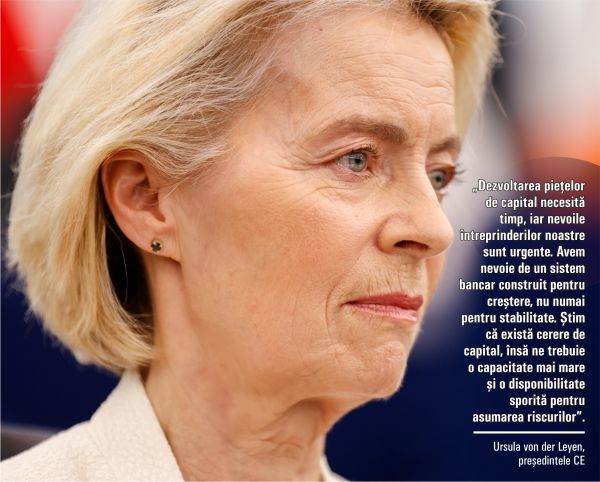
In the State of the Union address delivered yesterday before the European Parliament plenary, European Commission President Ursula von der Leyen outlined a vision for a European Union that must transform from an economic and regulatory power into an actor capable of defending its industry, security, social model, and technological independence.
Von der Leyen described a Europe that is stronger than in the past, yet simultaneously more exposed to war, high energy costs, competition from China, migratory pressures, hybrid attacks, and the changes brought about by artificial intelligence. The unifying theme across these issues is European independence-spanning energy, raw materials, technology, and military defense. The President of the European Commission reiterated that economic recovery is the top priority at a time when the effects of successive crises are being felt by both the population and businesses. Von der Leyen acknowledges that the European economy has held up better than anticipated and that unemployment remains near historic lows, yet she warns that this apparent stability masks serious pressures: "Our economy has withstood the effects of the wars in the Middle East better than we expected. And unemployment is near historic lows. However, citizens and businesses are feeling the strain of rising energy prices and borrowing costs. We will have to make clear budgetary choices to ensure the sustainability of public finances while protecting investments. That is why reviving the European economy is our number one priority."
According to the assessment made by the European Commission President in her State of the Union address, the bloc lacks not resources, but the capacity to concentrate and utilize them efficiently. The Union possesses one of the world's largest markets, high-performing industries, advanced services, substantial private savings, and an international reserve currency; yet, all of these remain fragmented by legal, fiscal, financial, and administrative boundaries. "We have a huge market, world-class industries and services, an impressive volume of savings, and one of the world's leading currencies. And yet, our capital, networks, and purchasing power remain fragmented," stated Ursula von der Leyen. The solution proposed by the Commission is to build an economy where energy, capital, and innovation flow more easily between states, and where the savings of European citizens play a greater role in financing the growth of EU companies.
• Reducing bureaucracy: a priority for the EU executive
In this vision, the Single Market is no longer merely a zone of free movement but the economic infrastructure of European sovereignty. A delayed permit, a blocked grid connection, or denied financing can determine whether an investment-and the associated jobs-remains in Europe or moves to the United States or Asia. "In today's economy, speed is essential. A permit or a form, a grid connection or a funding decision can determine where an investment is made and where jobs are created. We need to move much faster," stated the President of the European Commission.
Consequently, cutting red tape has been presented as a key solution for restoring competitiveness. According to the European Commission President, the 12 "omnibus" proposals set to become legislation aim to reduce the administrative burden by approximately euro17 billion annually. The direct beneficiaries will be small and medium-sized enterprises (SMEs), which struggle far more than large corporations to bear the costs of reporting, permitting, and compliance.
"Where the administrative burden slows down business activity-including for small and medium-sized enterprises-we must drastically reduce it," said von der Leyen, calling on EU member states to stop adding national obligations on top of european rules: "Yes, we are doing everything we can at the European level to reduce bureaucracy. However, I believe the time has come for Member States to shoulder their share of the responsibility. If we are serious about simplification, we also need a pact against over-regulation."
Yet, a contradiction arises that is hard to ignore. The Commission promises simplification but simultaneously announces new legislative acts, strategies, funds, alliances, institutions, and oversight mechanisms. For SMEs, competitiveness will not depend on the number of initiatives announced, but on the actual reduction of the time and money required for compliance. More extensive European legislation-even if well-intentioned-can continue to favor large companies capable of funding legal and administrative departments, to the detriment of small enterprises.
• euro90 billion: the additional bill paid by the EU following the closure of the Strait of Hormuz
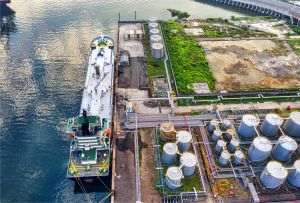
Energy represents another structural issue addressed in the State of the Union speech. Ursula von der Leyen acknowledged that the EU cannot remain an industrial power if energy prices are consistently higher than those paid by competitors. The European Commission President noted that, following the cutoff of Russian gas, the Union diversified its suppliers and invested in domestic capacity, yet it remains dependent on fossil fuel imports and vulnerable to geopolitical crises. The closure of the Strait of Hormuz once again demonstrated the costs of this dependency, with imported fossil fuels generating an additional euro90 billion in expenses without Europe receiving any extra energy. The European Commission's proposed response is the accelerated electrification of the economy through renewable sources, nuclear energy, biomethane, expanded grids, and storage capacities. The inclusion of nuclear energy alongside renewables-within an approach explicitly described as technologically neutral-is significant. "We must step up our efforts to secure clean, affordable energy produced in Europe. Whether we are talking about renewables and nuclear energy, biomethane, or other solutions, we must remain technologically neutral. However, these sources must provide us with independence," stated Ursula von der Leyen.
According to her, the goal is to double the share of electricity by 2040, a move that could cut the fossil fuel import bill by euro260 billion annually. The challenge lies in the fact that Europe already produces more renewable energy than it can integrate; capacity six times greater than what is currently connected annually is waiting for grid access.
One of the criteria used to assess EU competitiveness in the State of the Union address is its standing relative to China. According to the European Commission President, the European trade deficit has reached euro1 billion per day, prompting Ursula von der Leyen to state that the "second China shock" is no longer a future threat but a reality affecting European factories and industrial communities. "It is causing deindustrialization in the regions that form Europe's industrial core. This situation is unsustainable," the Commission President warned.
China remains an indispensable trading partner for the EU, yet it is also a primary industrial competitor and a source of strategic dependency. The EU relies on China for over 80% of numerous critical raw materials and for 90% of certain rare earth elements.
For this reason, Ursula von der Leyen aims to establish a new European Critical Raw Materials Corporation, which will coordinate the procurement and stockpiling of materials needed for the production of electric vehicles, chips, batteries, clean technologies, and military equipment.
• Von der Leyen: "We need a banking system built for growth, not just for stability"
On the financial front, Ursula von der Leyen reiterated that financing the European economy requires mobilizing the savings of citizens across the 27 member states. She noted that EU companies-particularly innovative ones-rely too heavily on bank lending and struggle more than their American competitors to secure capital for expansion. "We must create the conditions necessary for our businesses to attract investment and grow. That is why our work on the Savings and Investment Union is so important. However, developing capital markets takes time, whereas the needs of our businesses are urgent. We need a banking system built for growth, not just for stability," said Ursula von der Leyen.
Consequently, the Commission is preparing a new banking legislative package focused on simplification, reducing fragmentation, and increasing the willingness of financial institutions to fund higher-risk investments. "We know there is a demand for capital. However, we need greater capacity and increased willingness for taking risks,” stated Ursula von der Leyen.
The unresolved issue is how to finance the Union's own ambitions. Energy, defense, digitalization, artificial intelligence, social protection, climate adaptation, and enlargement all require vast sums. However, the Commission President limited herself to stating that "any modern budget needs new own resources,” without explaining whether these would come from European taxes, higher national contributions, or new joint borrowing.
• The EU is losing the global race for technological innovation but aims to lead in AI adoption
Artificial intelligence plays a central role in the EU's economic and security strategy, according to the State of the Union address. Von der Leyen describes it as a "foundational layer” of the European economy and security-capable of boosting productivity and improving public services, yet also capable of generating unprecedented threats. "I am optimistic that artificial intelligence has the potential to benefit humanity, if we get it right. Like any powerful new technology, however, artificial intelligence requires balancing opportunities and risks. If we do not manage these risks, we will never be able to harness the possibilities offered by artificial intelligence,” the European Commission President noted.
She also highlighted several risks, including cyberattacks, the use of models by adversaries, and the emergence of systems capable of self-improvement. "The models currently under development will enable cyberattacks on a scale we could not have imagined. Soon, they will fall into the hands of adversaries who view the world very differently from us. At the same time, the dangers posed by self-improving models are becoming increasingly apparent," stated Ursula von der Leyen.
Consequently, the European Commission President indicated that, through the Artificial Intelligence Act and collaboration with Canada, the United Kingdom, and other partners, the EU aims to help set global standards for the evaluation and security of advanced models.
Von der Leyen acknowledged that the EU is not leading the development of the most advanced models but believes it can capture a significant share of the economic value by applying them within the real economy.
"We do not necessarily have to be the ones developing frontier technology to be the ones deriving the greatest value from its use. What matters is creating value that artificial intelligence has not yet produced. We must move artificial intelligence from the screen into the real economy and society: into factories, hospital wards, precision agriculture, energy grids, autonomous driving, and defense," said Ursula von der Leyen.
She noted that the EU's advantage lies in its industries and the high-quality data they possess. A lingering vulnerability is the reliance on chips, cloud services, computing power, and models created predominantly by American or Chinese companies. Therefore, while applying the new technology can generate value, it does not guarantee technological sovereignty.
Furthermore, the Commission aims to leverage artificial intelligence to improve diagnostics. Von der Leyen stated: "Do I want my doctor to have instant access-with the help of artificial intelligence-to all the data needed to make the best diagnostic or treatment decision? Yes, of course. But do I want my doctor to be an AI-assisted robot? No, certainly not. I do not want a robot telling me whether or not I have cancer. The point is that artificial intelligence must empower our doctors, not replace them."
The approach is cautious and patient-centered, yet the speech offers no answers regarding liability for misdiagnosis, the protection of medical data, the costs of digitalization, or unequal access to technology.
• European security protocol, similar to Article 4 of the NATO Treaty
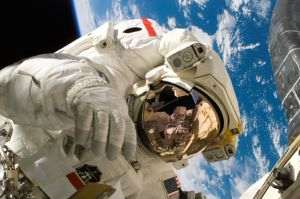
The economic and technological agenda is accompanied by a major expansion of the Union's role in defense. Ursula von der Leyen pointed out that, over the past five years, European defense spending has risen by nearly 80%, driving record investments in military capabilities. According to the European Commission President, the new European instrument for strategic enablers will fund air and missile defense, military transport, aerial refueling, space systems, and cyber capabilities. "These systems are essential, and we need more of them. Only by acting together does Europe possess the scale required to deliver them," said the Commission President, adding: "Only a strong and credible European defense posture will guarantee our security. And on this point, there must be no doubt: Europe will defend every square meter of its territory." Moreover, in the face of cyberattacks, acts of sabotage, arson, and .regarding drone incursions, Ursula von der Leyen proposed creating a mechanism similar to NATO's Article 4. According to her, a European emergency security protocol would allow a member state to convene all other states to coordinate a response, deter escalation, and limit the impact.
"Europe needs its own playbook for responding to hybrid threats. We urgently need a consensus on how we respond to specific incidents-those that fall below the threshold of armed aggression but clearly threaten our national security," Ursula von der Leyen stated.
• Anti-migration measures to strengthen EU border control
Regarding the issue of illegal migration-a topic that has fueled the rise of extremist and sovereignist parties across the EU in recent years-the European Commission President called on the 27 member states to fully implement the Pact on Migration and Asylum, strengthen Frontex, and accelerate returns.
"After years of work, we finally have a common European framework. A framework that assigns responsibilities to everyone and demands solidarity from all. It must now be fully implemented," said Ursula von der Leyen.
According to figures presented by Von der Leyen, illegal arrivals have dropped by 55% over the past two years and by a further 35% this year. Furthermore, the Commission seeks an emergency framework for situations where mass movements are instigated and used as a tool to exert pressure on borders. This would allow for temporary and strictly defined derogations from standard procedures. In essence, the President of the European Commission is attempting to reconcile humanitarian obligations with the growing demand for border control: "Europe's message is clear: we will always uphold our values and fundamental rights. However, we will never compromise on border protection. We, Europeans, decide who enters our Union and under what conditions-not smugglers and traffickers."
The policy proposed by Ursula von der Leyen combines border control and returns with legal migration pathways, early warning systems, and investments in countries of origin. The Commission promises access hubs in partner countries and a Mediterranean initiative focused on skills and jobs for young people. The stated goal is to enable them to secure employment, training, and apprenticeships without being forced to risk their lives. However, the possibility remains that the "flexibility" permitted during emergencies could evolve into a permanent derogation from standard asylum rules.
Overall, Ursula von der Leyen's speech signals a shift from a Europe defined by regulation to a Europe defined by power. The Union envisioned by the Commission President protects its industry, generates its own energy, mobilizes citizens' savings, supports SMEs, deploys artificial intelligence in factories and hospitals, invests in defense, and exercises firmer control over its borders. At the same time, it promises affordable housing, care services, education tailored to the new economy, and job protection. The vision is ambitious, and the diagnosis identifies some of the Union's most serious vulnerabilities: high energy costs, capital market fragmentation, dependence on China, the technology gap, defense weaknesses, and a loss of competitiveness. The major challenge lies in the gap between the scale of the promises and the available resources. Europe must rearm, reindustrialize, modernize its networks, finance technology, protect its population, and secure its borders-all simultaneously. Von der Leyen provides the political direction but not all the answers regarding costs, funding sources, the division of responsibilities, and public acceptance of this transformation. The success of this "independent Europe" will depend not on the number of strategies and legislative acts announced, but on the Union's ability to translate institutional projects into cheaper energy, accessible financing, better public services, more competitive businesses, and genuine security for citizens.
• What was left unsaid in the State of the Union address
After nearly seven years of Ursula von der Leyen at the helm of the European Commission, the EU has become more united in the face of external threats and more ambitious in the climate, digital, and military spheres, yet it has become more vulnerable economically, socially, and politically.
This is evidenced by Eurostat data showing that the European economy is advancing sluggishly. In the second quarter of 2026, GDP grew by 0.5% in the EU and 0.4% in the eurozone, while inflation rose to 3.3% in August, according to the cited source. Unemployment remains low, but high energy costs, insufficient investment, and weak productivity are weighing on industry. Europe regulates artificial intelligence and digital platforms but does not produce tech companies comparable to American and Chinese giants. The Green Deal accelerated the energy transition, yet obligations were introduced before the EU possessed the necessary infrastructure, raw materials, and technologies.
Compounding this is increasingly visible social pressure. According to data published on the European Commission's website, approximately 93 million Europeans are at risk of poverty or social exclusion; housing and rental costs continue to rise, and the cost of living is a primary concern for many citizens. The demographic crisis exacerbates the situation: the fertility rate has dropped to 1.34 children per woman, and the EU population is growing solely due to migration. Although Europe needs foreign workers to sustain its economy and social systems, this migration fuels the rise of sovereignist and radical parties.
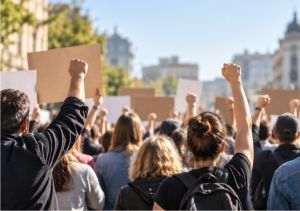
Politically, the EU is both more necessary and more contested. Radical and sovereignist right-wing parties hold approximately 26% of the seats in the European Parliament and seek to limit the Commission's power, strengthen nation-states, and slow down integration.
A lack of transparency regarding the European Commission's activities has led to growing distrust among a significant portion of citizens across the 27 member states regarding the Brussels-based institution. The "Pfizergate" scandal-sparked by the refusal to release text messages exchanged between von der Leyen and Pfizer CEO Albert Bourla-has severely damaged the institution's credibility. Furthermore, while the General Court of the CJEU found no evidence of corruption or illegality regarding the contract, it deemed the Commission's explanations concerning the disappearance of the messages unconvincing. The record of Ursula von der Leyen's tenure at the helm of the European Commission is marked by contradictions: the EU is aware of its vulnerabilities yet reacts too slowly; it has climate goals but lacks sufficient cheap energy; the bloc boasts significant private savings, yet capital markets remain fragmented; and the EU harbors military ambitions, while its production capacities depend on the United States.











 Euro
Euro Dolar SUA
 Franc elveţian
 Liră sterlină
 Gram de aur