English

The fire on New Year's Eve in the Swiss resort of Crans-Montana, which left over 40 dead and around a hundred injured, risks becoming not only one of the worst recent tragedies in the Alps, but also a textbook case of institutional failure, the disappearance of evidence and dangerous cracks in the justice mechanisms of a state considered, until now, a benchmark of rigor and transparency, shows an article published yesterday by the German website Welt.
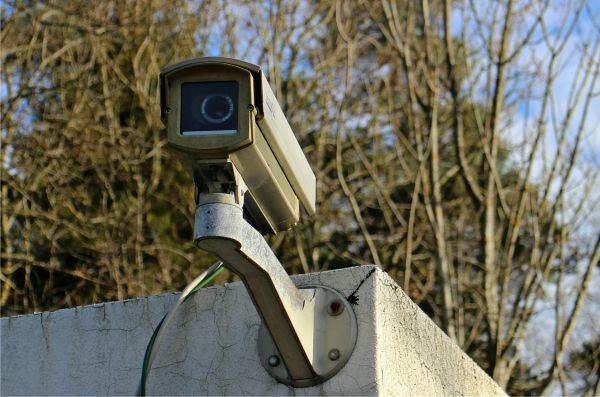
The cited source claims that, more than three weeks after the inferno that consumed the "Le Constellation" bar and lounge, the criminal investigation is already overshadowed by a shocking revelation: the essential images from public surveillance cameras, which could have reconstructed the exact chain of events, have been permanently lost.
According to information obtained by German journalists, citing Swiss sources, in the town of Crans-Montana, which has approximately 250 surveillance cameras, the authorities managed to secure only a limited fragment of recordings, strictly between midnight and 6 a.m. on the first day of the year, while the entire beginning of the disaster - the critical hours when the bar was filled to the brim, which led to exceeding safety conditions, and the moment when the first signs of danger were observed - was automatically deleted after seven days.
Although the Swiss police regulations explicitly provide for the possibility of suspending automatic deletion in cases of criminal investigation, this exception was not applied, the cited source states. Worse, the Prosecutor's Office in the canton of Valais requested extended access to the images only on January 15, 2026, when the data had already been lost, a fact confirmed even by the police commander, who admitted that he no longer had access to the video materials.
This timeline raises serious questions, especially since the victims' lawyers had been demanding from the very first days that all relevant recordings be preserved, warning of the risk of evidence being destroyed. The initial order from the Prosecutor's Office, issued on January 1st, provided for the securing and analysis of the images, but without indicating a clear interval, an ambiguity that proved fatal for finding the truth. In a case where every minute counts, the lack of administrative precision has practically turned into a potential shield for the guilty. Even more disturbing is the fact that the surveillance images from inside and outside the "Le Constellation" bar are also completely missing, claim the German journalists from Welt. No less than eleven cameras should have been filming the space continuously, but they all stopped simultaneously a few minutes before the fire broke out. The explanation offered by the owner of the place, Jacques Moretti, to investigators, is that the system had jammed and could not be reset. The coincidence is, for many observers, difficult to digest, especially given that Swiss law allows, in case of suspicion of a serious crime, the retention of video images for up to 100 days. The ambiguity regarding the timing and responsibility for applying this rule is now becoming a major vulnerability of the investigation.
The case, however, is not only unfolding on the technical coordinates of the disappearance of evidence. It is rapidly acquiring an international and political dimension. The authorities in Rome - most of the victims were Italian citizens - have publicly criticized the way the investigations are being managed and have called for the establishment of joint investigation teams. The Italian press, including "La Repubblica", has brought to attention details that amplify suspicions, such as the release of Jacques Moretti from preventive detention in exchange for a bail of 200,000 Swiss francs, money that was reported to have come from Dubai, from an "anonymous friend". The court preferred the vaguer formula of "close friend", without other public explanations, fueling the perception of an opacity that is difficult to justify in a file of such magnitude.
Against this background, elements from the past of the premises and its owners are also emerging that outline a worrying picture. According to reports in the Italian and Swiss press, in the last two years at least two other fires have occurred in spaces owned or operated by Moretti, without these triggering rigorous security checks. A French tourist is said to have documented a fire starting two years ago in the same sound-absorbing ceiling that, on New Year's Eve, burned violently, transforming the bar into a death trap. At that time, the fire was extinguished in time. Now, the consequences have been devastating.
The construction of the ceiling also raises serious questions. Installed in 2015 by Moretti himself, together with a worker without a legal contract, the structure became a central element of the investigation. The owner had already been convicted in 2016 for forced labor, and in recent hearings refused to reveal the identity of the worker involved, citing a desire to "protect” him. Prosecutors are now trying to identify him, in an attempt to determine whether the materials and assembly complied with safety regulations or whether they contributed decisively to the rapid spread of the flames.
Meanwhile, the victims' lawyers warn of the risk of influencing the evidence, in the context in which the Morettis are at their residence and are said to have had contacts with representatives of the local authorities. Each new piece of information seems to deepen the gap between the public expectation of justice and the reality of an investigation marked by delays, gaps and questionable decisions. In a tragedy that has left entire families grieving and a community traumatized, the disappearance of surveillance footage is not just a technical problem, but a symbol of an investigation that risks missing exactly what it promised: the full truth about how and why a night of celebration turned into hell.






















 Euro
Euro Dolar SUA
 Franc elveţian
 Liră sterlină
 Gram de aur